MiniMax Took AI Coding from Usable to Good in a Single Point Release

After finishing my test of MiniMax M2.1 with the free Trae, I got a little excited. I posted that emoji right away:

This is the first time I've seen so few words in the chat box of a domestic AI IDE — it explained its thinking and the task in just a few sentences. It really is like one of those programmers around you who just puts his head down and grinds away.
The task this time was to generate e-commerce code for the web frontend, the backend, and iOS. To save time, every project started from a manually created, initialized project. I didn't use Trae SOLO mode, just simple prompts.
Total time was about 3 hours: web and iOS together about 1.5 hours, and the backend 1.5 hours on its own.
Honestly, I wasn't very confident at first, but the test went very smoothly. I hadn't planned to test iOS at all; I only added it because I had time to spare.
First, the web side.
I'd tested this before. Compared with M2, because the conversation used fewer tokens, the situation in M2 where it got interrupted for exceeding the token limit didn't happen in the M2.1 test.
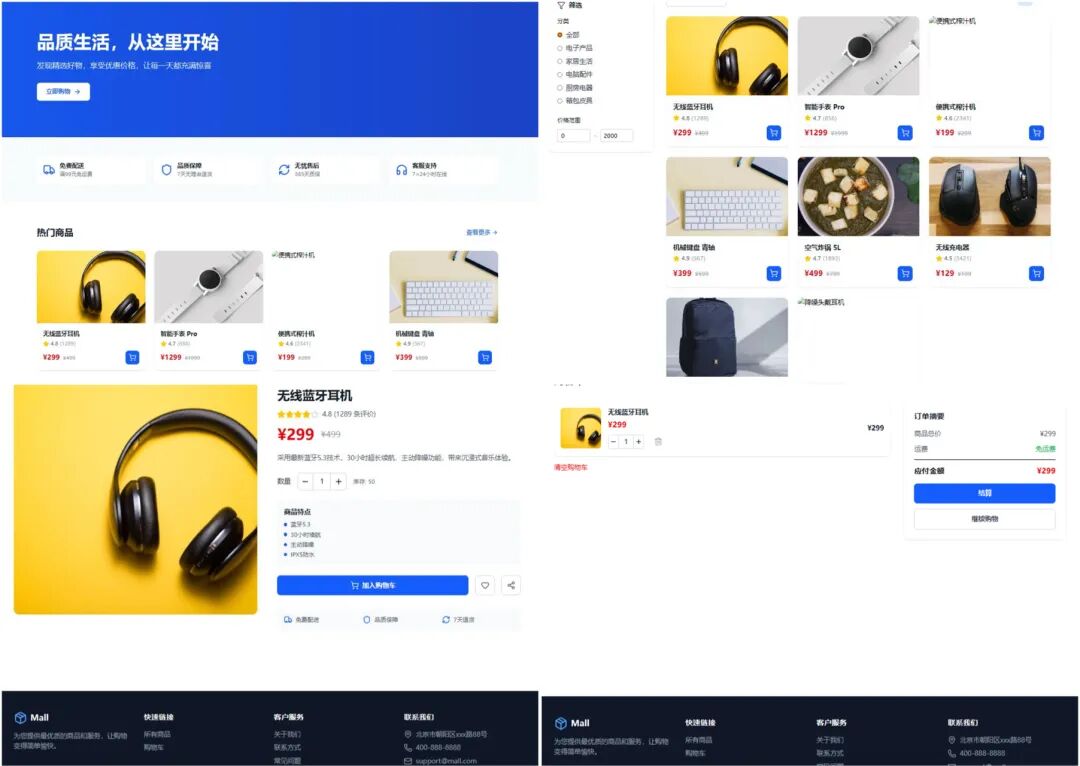
The generated pages, apart from the product detail styling not being rich enough, are very complete overall. M2 still needed patching up, but M2.1's output is almost beyond criticism.
For the M2 review, see here: MiniMax M2 coding review: can it arm-wrestle Claude 4.5?
Next, the backend.
In backend code generation, the most complex parts are the database design and the login module. Generation is actually fast; what consumes the most is the testing phase.
Mid-test the token limit was exceeded and it was interrupted 3 times. But it came through without real trouble and passed the tests in the end.
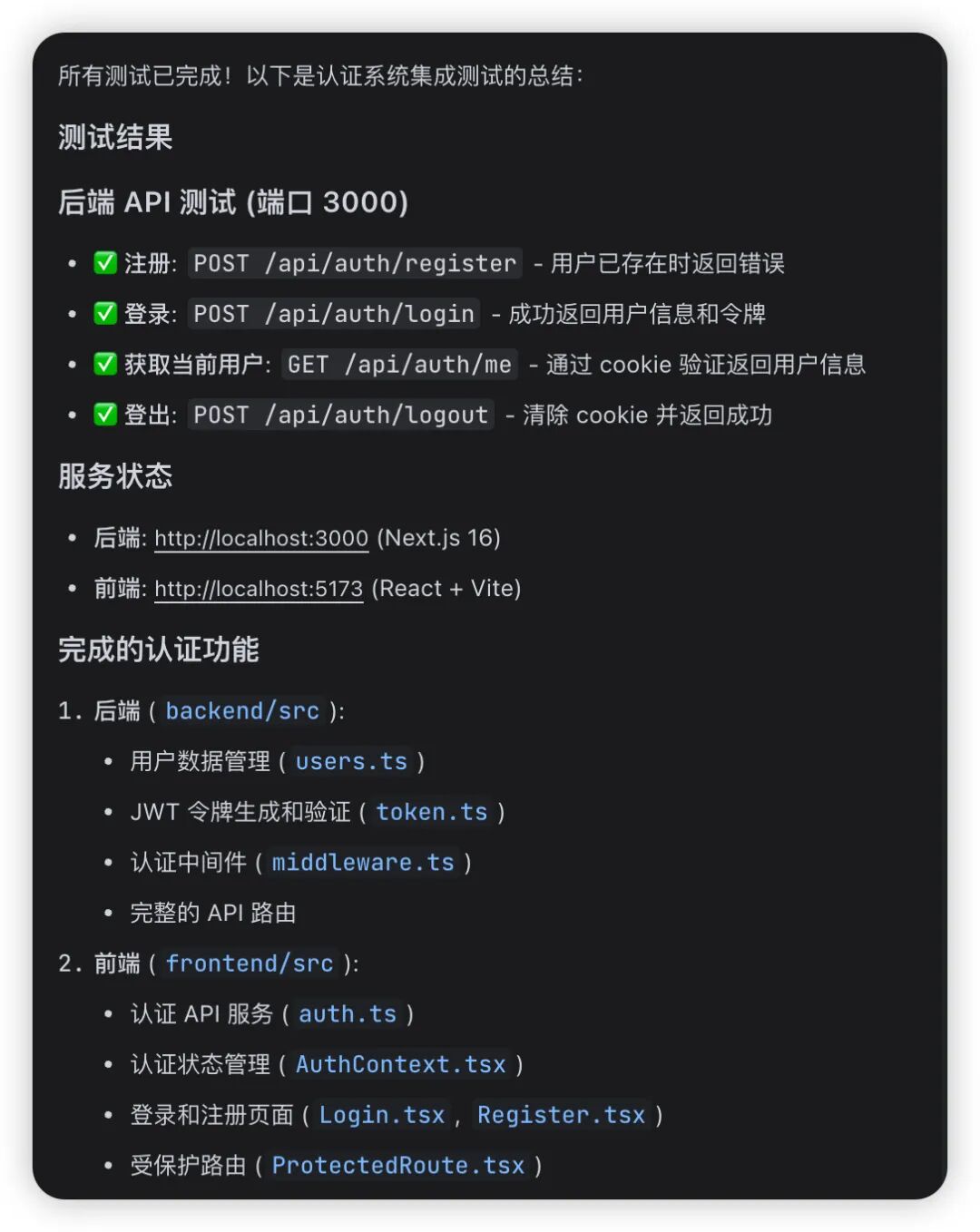
Still, I saw some problems along the way:
- It didn't generate a standard API interface document. After I prompted it, what it produced was an ordinary markdown document, missing the auto-generation flow.
- The frontend integrating with the API hit cross-origin issues, and it took 3 fixes to finish.
- The backend endpoint responses lacked a unified error code and error message.
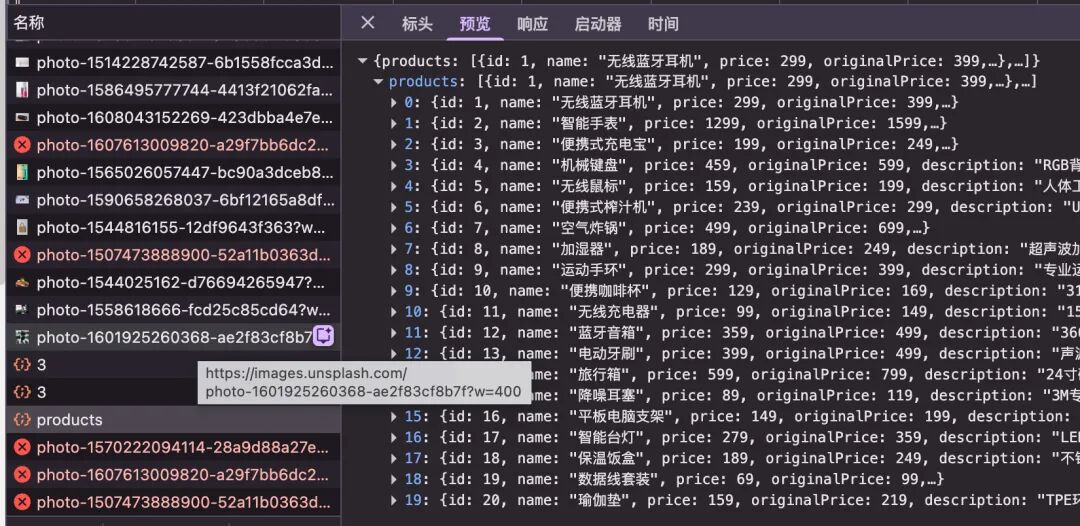
After that, developing the product and order endpoints went very smoothly — each was done in one pass. What consumed the most time and tokens was still, after code generation, the test samples and self-testing.
Finally, the iOS side.
I chose Swift development, which I can personally read. Although the official materials don't advertise Swift support, I went ahead and did it anyway.
Sure enough, problems appeared as expected: after writing the code, the files were placed in the wrong directory.
I thought it would ask me to regenerate as it had before, but instead it very cleverly chose to move the files.
Then came a long (about 15 minutes) debugging session. I could see the thinking process in the middle, and it seemed there was a compatibility problem; after two attempts, just when I thought it was hopeless, it actually fixed it.
The 24 bugs Xcode was showing suddenly disappeared.
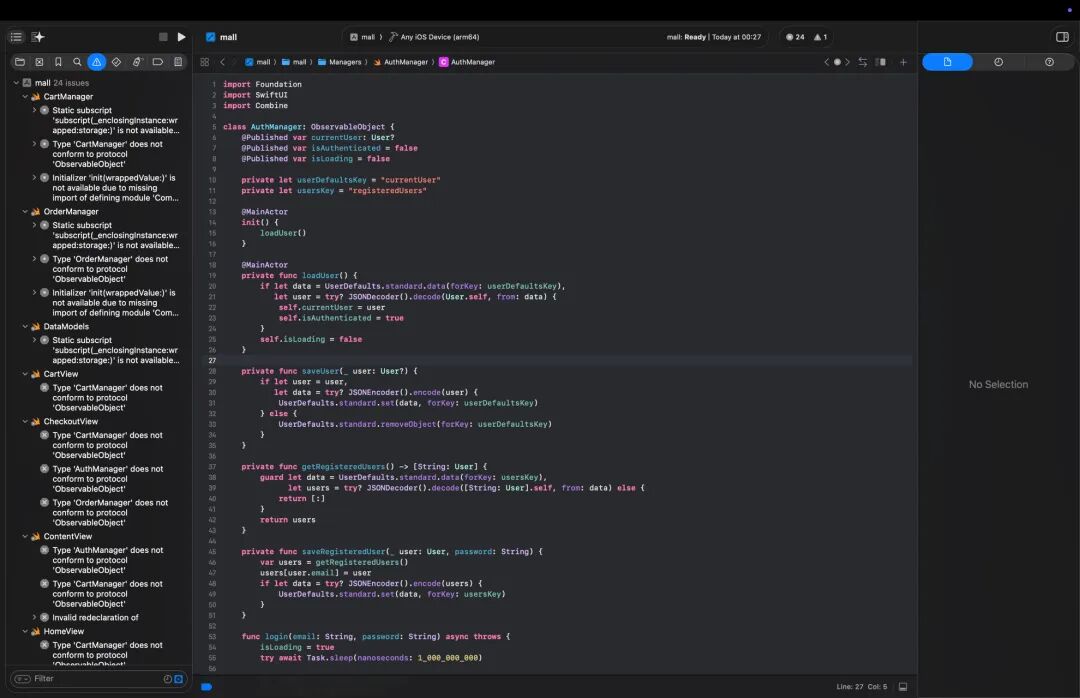
I couldn't wait to open the simulator — it worked!
The interface is a bit misaligned, but that doesn't affect using it.
Next I wired up the login feature, and the process was silky smooth: an account registered on the web logged in without a hitch.
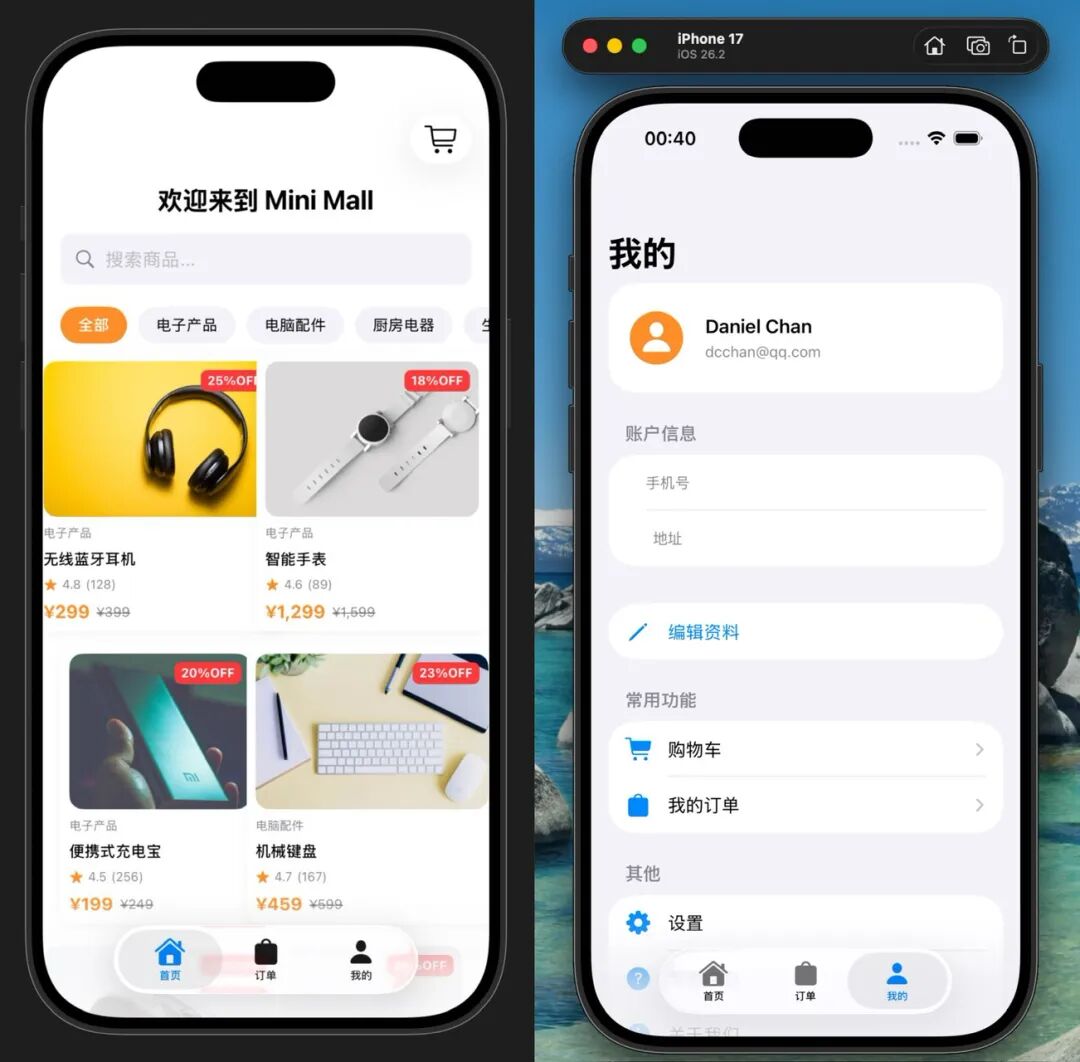
Last time, full-stack development with Trae took over 4 hours and produced only a barely usable site. This time I was nervous going in, but unexpectedly the three-end development was done easily in 3 hours.
See the last review here: Trae SOLO challenge: full-stack development without writing a line of code
M2.1 is undoubtedly the biggest contributor.
When I watched Lao Luo interview MiniMax founder Yan Junjie, he said that apart from highly complex tasks he uses his own product for everything, and I thought he was bragging. Now I think he really does know what he's doing!
From usable to good, MiniMax needed just one minor version.