Frontend Is Dead, but Frontend Is Everywhere
A tech conference that has run for twenty years changed its theme from "frontend technology" to "AI new." This isn't the end of frontend. It's frontend being reborn.
— How frontend "died and came back to life," seen through twenty years of D2
Last week I attended the twentieth D2 Frontend Technology Conference.
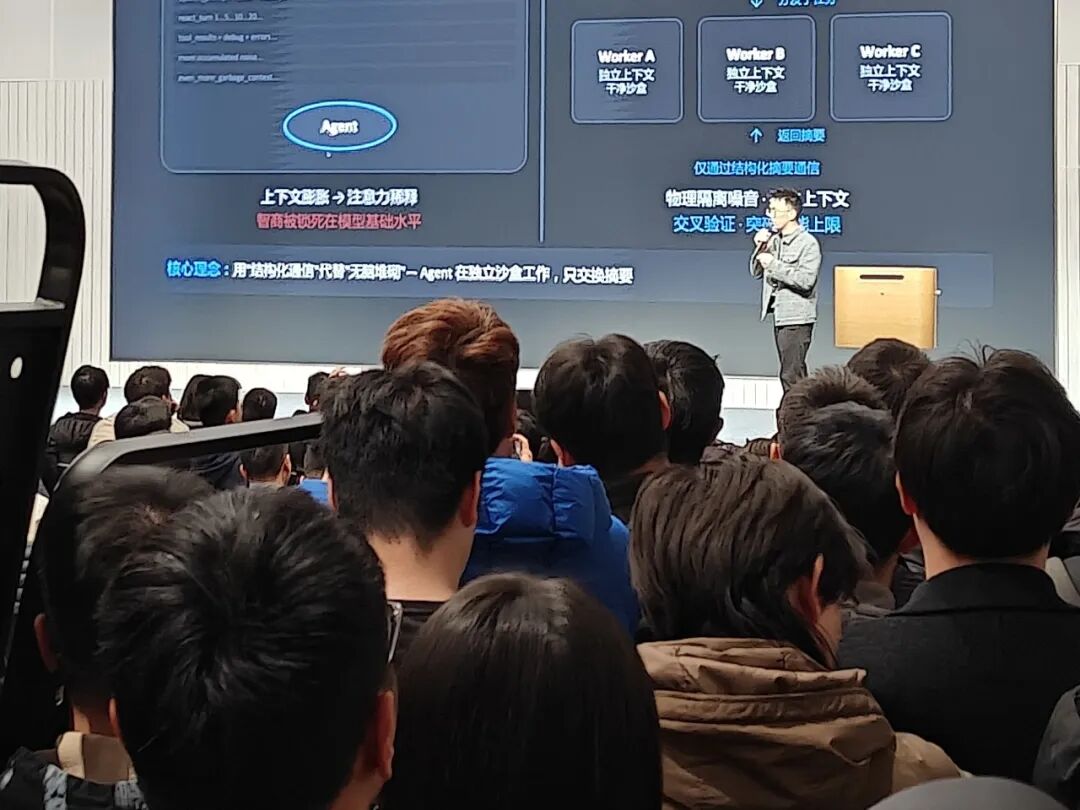
While moving between sessions, I noticed something interesting: you couldn't squeeze into the Agent track next door anymore. The people standing and listening stretched from the doorway all the way to the end of the corridor.
The scene was like a celebrity concert. Across the several sessions that followed, in multiple venues, it was rare to find a seat at all.
"Frontend is dead" — people have been saying it for years
The phrase "frontend is dead" has been circulating in the industry for years now.
People shout it once every time a new framework rises, again every time a "low-code" or "no-code" company closes a funding round, and even louder last year when AI code generation took off.
But the numbers don't lie.
According to the Octoverse 2025 report GitHub just published, the total number of developers on the platform has passed 180 million, with 36 million new developers this year alone — 23% year-over-year growth, the fastest in its history. 80% of new developers start using Copilot in their first week on GitHub.
And in the frontend world, TypeScript overtook JavaScript for the first time in August 2025, becoming the most-used language on GitHub.
If frontend "died," who are all these newcomers writing code for?
But it would be wrong to say nothing has changed
One speaker said something during his talk that left a deep impression on me:
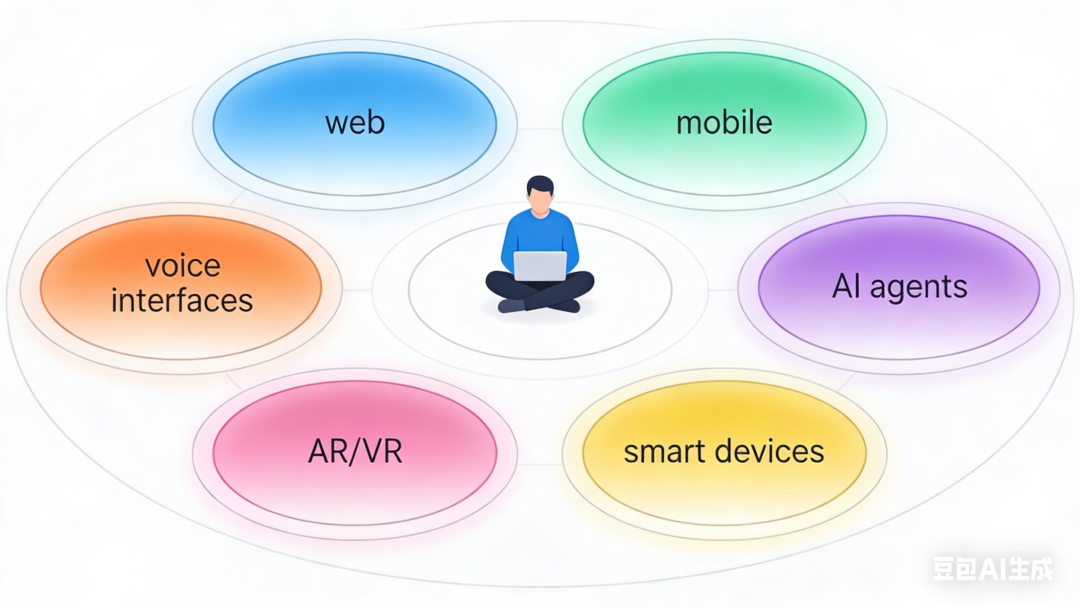
Frontend used to be mainly about enabling human-to-machine conversation; now it's about helping people talk to AI; and going forward it will also be about helping people communicate with robots.
It sounds like technology evolving, but I heard another meaning in it — the boundary of the word "frontend" keeps expanding.
Twenty years ago the first D2 was held in Shanghai under the theme "Frontend Technology: Development and Practice in the Next Year or Two." Frontend back then meant HTML, CSS, and a little JS, and what people cared about was what that web page in the browser looked like.
Today's D2 has seven tracks, and almost all of them revolve around AI:
- AI Coding is the main track, covering how AI gets into large-scale engineering and complex codebases;
- The AI innovative experience track covers changes in the interaction paradigm for Chatbot/Agent, multimodality, and 3D/XR experiences;
- AI Languages & Frameworks covers the structural changes in languages and frameworks in the model era;
- And one track is called "One-Person Company," about how AI lets one person do what used to take a team.
This isn't frontend. This is the full range of human-computer interaction in the AI era.
The frontend job didn't die. But the word "frontend" can no longer hold everything it now contains.
The tools changed, but the people who understand them didn't
Evan You (author of Vue and Vite) gave a talk at this D2 about where Vite goes next.
He said Vite Plus needs to go from a tool that's friendly to humans to a tool that's friendly to AI.
What most frameworks are working on is how to make things smoother for more human developers. He's already thinking about how to make AI use the tool more efficiently. That isn't competition on the same dimension.
What's truly frightening was never the claim "X is dead." What's frightening is saying that and then failing to find the next "X is alive in another form." Evan You found it. He found a direction about as clear as a direction can be, and then bet on it. He didn't just stand still waiting to be made obsolete.
The tools are changing, and so are the people.
Indie developers: no faith, only direction
Another observation from this D2 left an impression on me — quite a few of the speakers on stage are friends who used to do frontend at big companies.
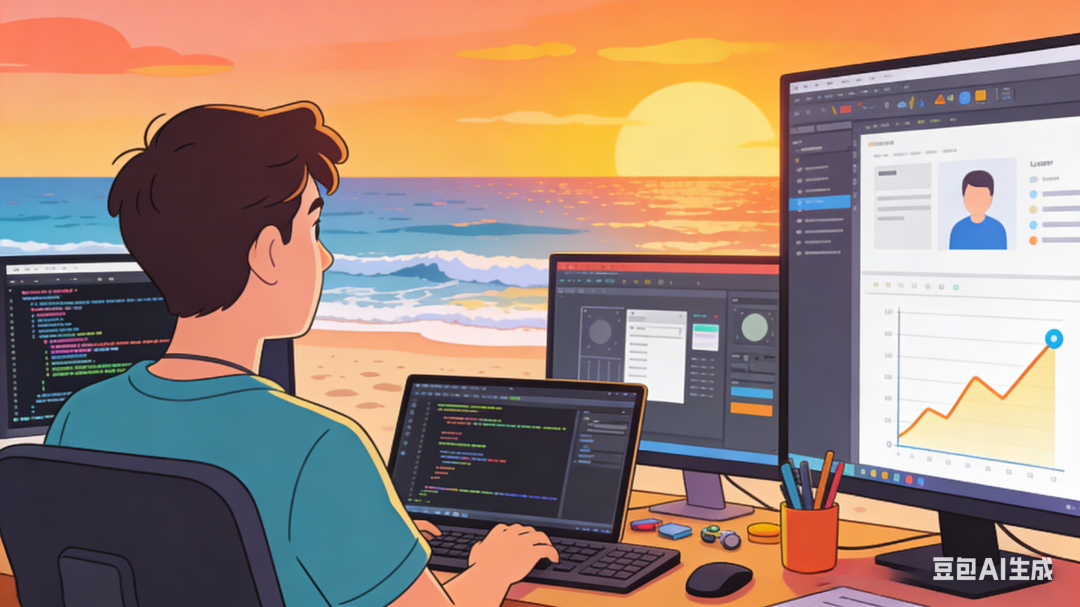
They're not at big companies anymore. Some started their own companies, like Yubo — a former frontend architect at Alibaba, now founder of YouMind. Leaving a big company wasn't for a bigger title; it was the feeling that some things you have to do yourself.
It isn't the lateral move of "escape one big company and join another" — they're genuinely doing it themselves. From frontend to backend to product design to operations, with full-stack skills plus AI tools, one person can now run more business than a five-person team could three years ago.
The "frontend" label stopped mattering to them long ago. They call themselves "indie developers," or simply "founders."
The industry didn't give them enough to believe in, but they used AI to find their own direction.
So, is frontend dead or not?
My judgment: frontend as a specific tech stack is shrinking. Frontend as the ability to create user experience is expanding.
"Frontend is dead, but frontend is everywhere" is really saying that the boundary of frontend as a profession is blurring, while demand for frontend as a capability is exploding.
Agents need interfaces. AI needs a conversational entry point. Robots need interaction design. In the 5G era every terminal needs a better user experience.
All of that is, at bottom, a frontend problem.
Today you talk to an AI assistant on your phone, control a robot by voice in an unmanned cabin, swipe through a virtual interface in AR glasses — all of that is frontend.
It's just that fewer and fewer people wear the "frontend engineer" label.
Twenty years, one full cycle
Back to D2 itself.
The first D2, in 2006, had the theme "Frontend Technology: Development and Practice in the Next Year or Two."
The twentieth D2, in 2026, put out its call for sessions under the theme "AI New."
Over twenty years the theme went from "practice" to "AI." But you'll notice one thing never changed — technical people have always cared about using better tools to build better human-computer interaction.
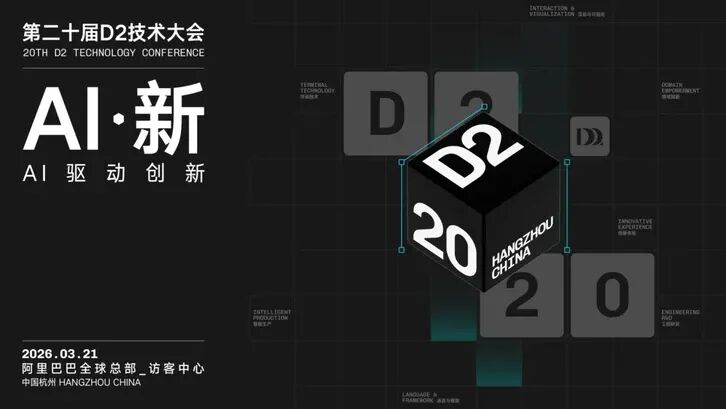
It's just that the definition of that interaction has grown from a single web page in a browser into all the possibilities of the AI era.
Frontend isn't dead. Fewer people wear the label, but more people use it to solve problems.
#AIcoding #D2Conference #Alibaba #EvanYou #vite #frontenddev #FrontendIsDead
Related posts:
TypeScript Becomes the Most-Used Language on GitHub — the Best Choice for AI Coding