What the Luo Yonghao and MiniMax Yan Junjie Conversation Reveals About Changing Roles at AI-Era Software Companies
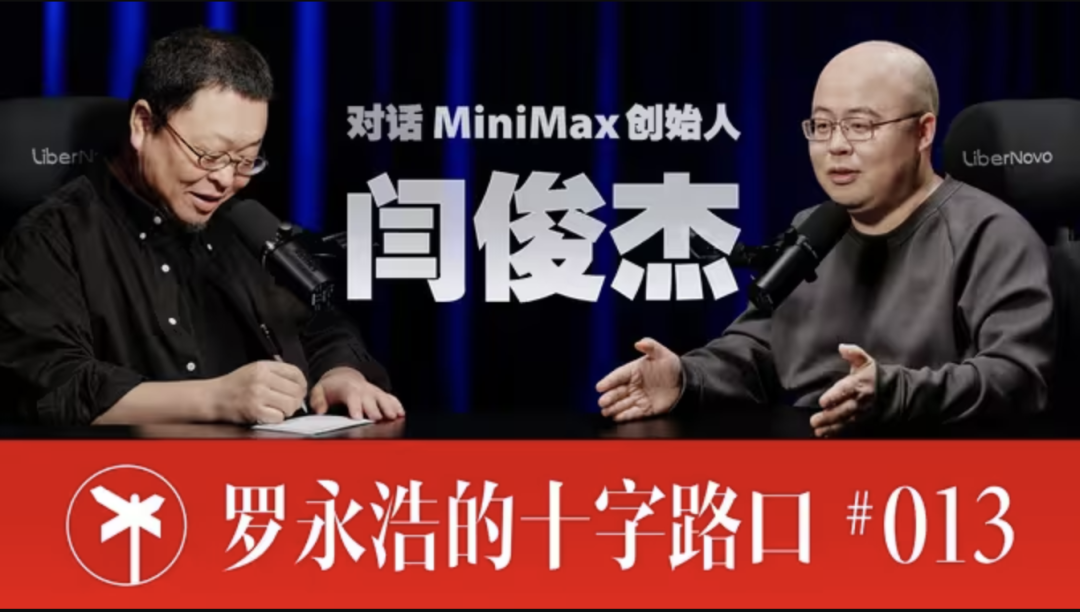
Episode 13 of Luo Yonghao's Crossroads featured Yan Junjie. Unlike the more entertainment-oriented guests of previous episodes, Yan Junjie is the hardcore founder of an AI company, MiniMax.
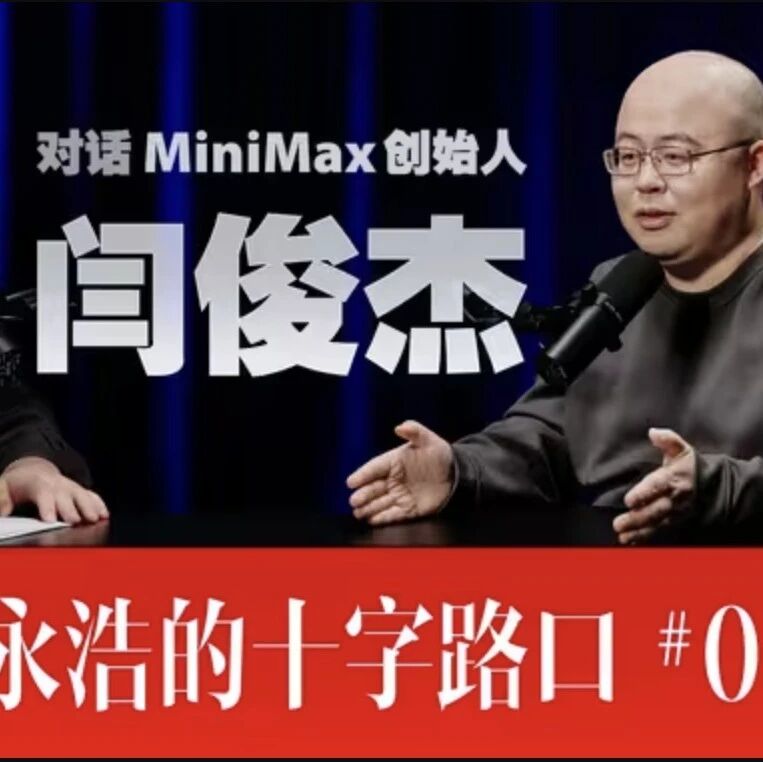
Episode 13 of Luo Yonghao's Crossroads featured Yan Junjie.
Unlike the more entertainment-oriented guests in earlier episodes, Yan Junjie is the founder of a hardcore AI company, MiniMax.
Over a conversation that lasted nearly four hours, I got to know this AI company better, and also caught a glimpse of some of the changes in the software development industry.
Role boundaries are blurring
MiniMax is an AI-native company with only 400-odd people, which is a very small scale compared with the big internet giants.
Yan Junjie believes the company doesn't have strict "job roles," but rather several different "talent profiles." The company pursues diversity of talent within the organization, which he thinks is similar to how AI models need diversity: it can raise the ceiling of both the company's and the individual's capabilities.
So the boundaries between roles at MiniMax have blurred. Although non-technical people (by the traditional definition) make up about one third, the line for "non-technical" is fuzzy here, and most members have solid technical understanding or hands-on ability.
Here is what the conversation revealed about a few roles:
- Product managers: many are very young product managers, distinguished by deep technical understanding and a flair for product. They can build prototypes themselves with AI.
- Development and algorithm engineers: not only responsible for implementation, but also able to take part in ideation and product design.
- Operations staff: a good operations person needs to be able to answer developers' deep technical questions about the model in the community, and has to understand the model itself well enough.
- To B solutions / pre-sales: the traditional role was drawing PPTs; now they need to write code themselves to build a demo for the customer, and sales roles also need technical understanding.
- HR: uses AI to help screen resumes and do the initial communication with candidates.
And this blurring of role definitions has also reshaped processes.
The development process is reshaped
Yan Junjie said explicitly that they had tried traditional internet management tools such as OKRs, but found that they didn't work.
He believes an AI-native company needs a completely new way of organizing collaboration.
At their company, there is in fact no fixed linear process of "product files the requirements, development schedules the work."
The development process is dynamic, and who leads changes. Depending on the stage of the project, the most suitable role leads while the others participate deeply:
- Brainstorming and exploration stage: everyone can have ideas, usually gathered under the leadership of product managers.
- Core technical R&D / algorithm breakthrough stage: algorithm colleagues lead, but development and product people participate deeply in the model R&D process instead of passively waiting to receive a finished model.
- Development and implementation stage: developers lead, with other roles collaborating.
The whole process emphasizes deep collaboration across the entire chain, rather than the traditional handoff in stages (product → development → testing).
Conclusion
Yan Junjie said we should not think of the AI industry as a continuation of the internet industry, and we also shouldn't care too much about how people divided up the work back in the mobile internet era.
Facing the integration of AI, we have to step outside the old frameworks of thinking and re-examine the nature of work and the way we collaborate.
That was the biggest insight for me.
If AI technology truly becomes deeply embedded in your company, the existing division of roles is very likely to be completely broken. So, given this change, how will you re-plan and arrange your own work?