A Reply to \"Frontend Is Dead\" and Career Advice for Math School Juniors
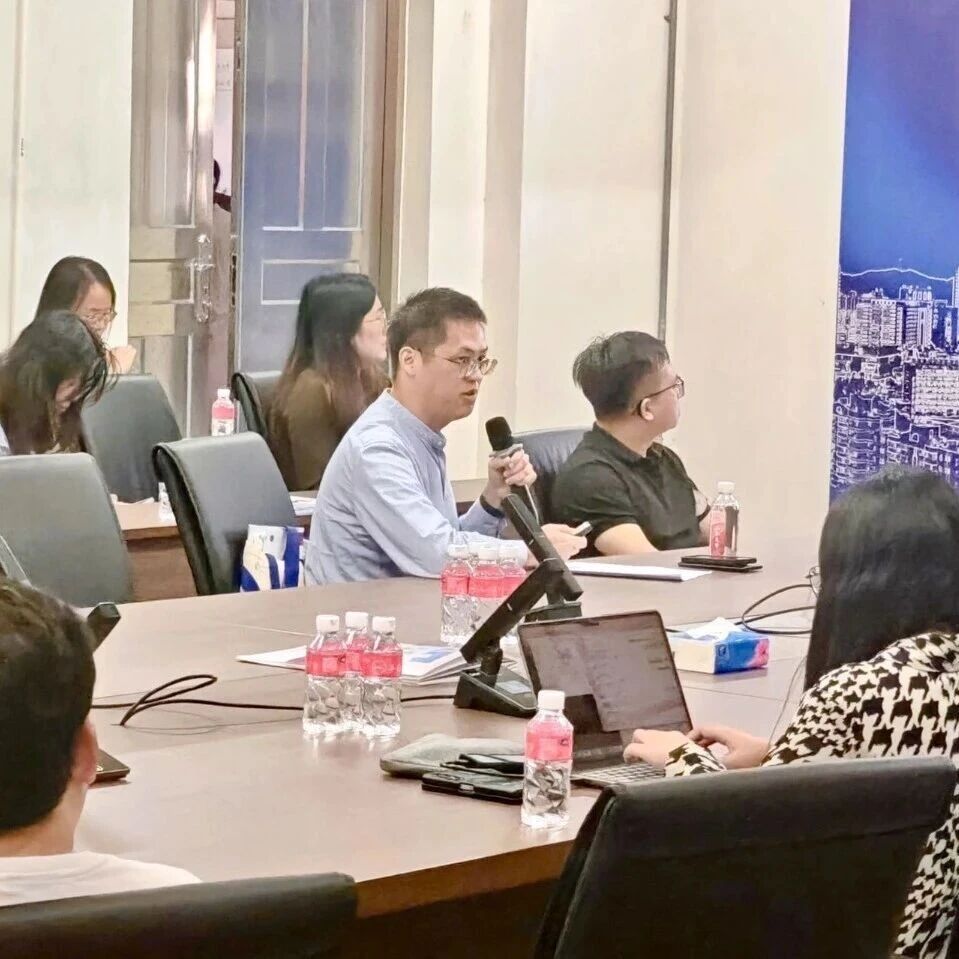
Last weekend was the 40th anniversary of my alma mater, Wuyi University, and I went back to give a talk to some juniors. This is the verbatim transcript of that talk.

Good afternoon, everyone.
Today I'd like to share some personal stories — and some personal accidents.
When I first started university, mathematical analysis stumped me on day one. At the time I planned to sit in the front row, patch up the math I hadn't learned properly in high school, and turn over a new leaf. But before long I had moved from the first row to the third row, then the fifth...
In the end, mathematical analysis became the first course I had to retake.
My mathematical analysis teacher, Shen Changxue, used to say that math is the foundation: once you learn math well, other subjects — and other things — all become easier.
So I gritted my teeth and stuck with it. I never had to retake another course after that, but finding my first job was hardly easy either.
Where data science graduates can work
In the end I spent half a year as a US stock trader at an investment consulting firm back home.
The company opened its first office in Yihua Plaza, just outside our school's north gate. Quite a few classmates from my year — seasoned stock investors with two and a half years of practice behind them — spotted the opportunity and interviewed their way in. I, however, kept hesitating.
Maybe people today would still consider that a disreputable line of work; I thought so at the time too. After joining, I even wondered for a while whether I'd gone down a crooked path. Why was the money coming in so fast? Buy and sell, and there's money? Is money in this world really that easy to make?
Then one day I learned about Jim Simons. In 1982 he founded Renaissance Technologies and set up its Medallion Fund, gathering a group of mathematicians and computer scientists to trade stocks, commodities, and financial derivatives on a large scale. Their returns far exceeded Buffett's.
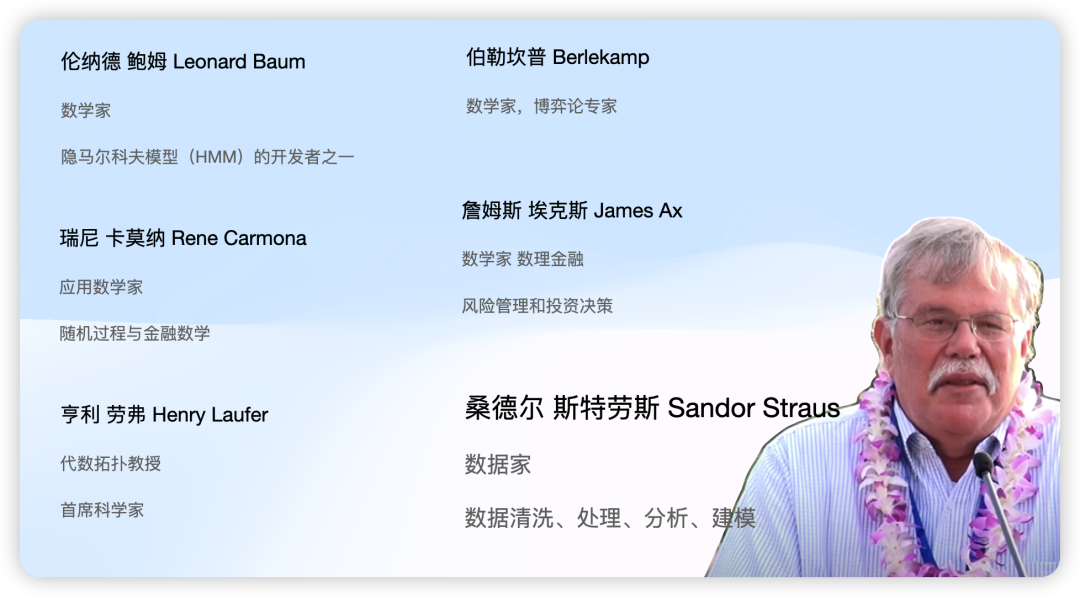
Among them was a legend named Sandor Straus. Back when the main storage medium was a disk holding only 1.4M, he was already doing market data collection, data cleaning, and data analysis down to the minute level.
You won't find his name on the Wikipedia entry for "data science," but he is, in the truest sense, the first practitioner of our discipline — its grand master.
And so, half understanding what we were doing, we students set off down the professional speculation path blazed by our founding ancestor.
Later still, another Chinese person did what Jim Simons did: founded a technology company, ran a quant fund, and along the way got into machine learning and AI. During the 2025 Spring Festival, it released an open-source large model that stunned the world: DeepSeek V3.
The world is a strange place: our major is both academic and lucrative.
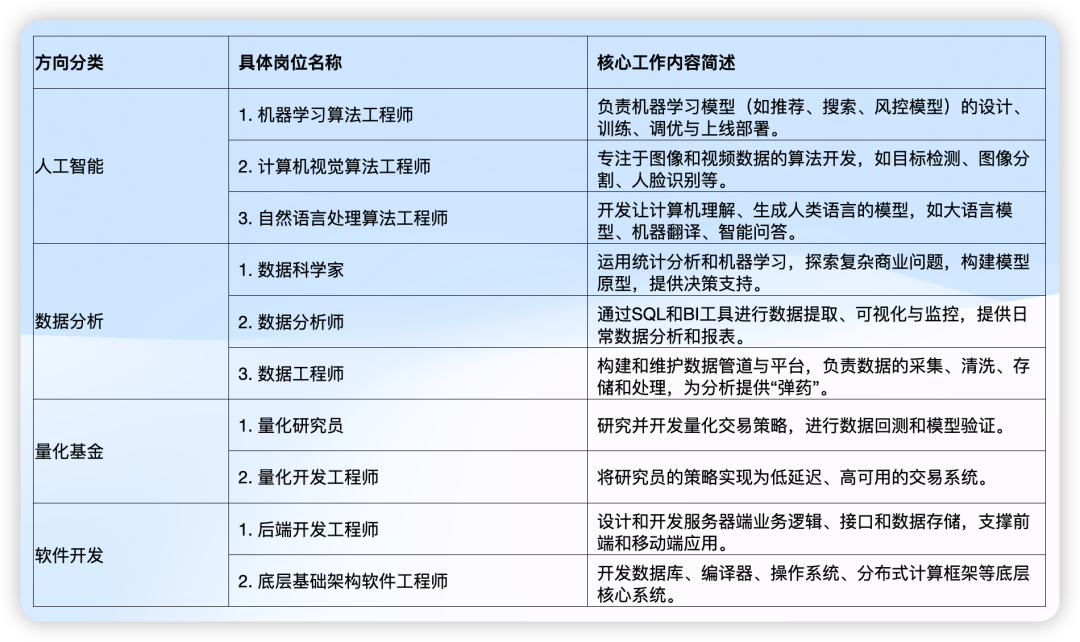
The career paths for our major are actually quite clear.
Three roads — artificial intelligence, data analysis, and quant funds — plus the related software development paths such as backend development and cloud computing.
If only things were that simple. Then my talk today would be over.
What if you can't work in your own field?
The truth is that most of us never get to choose a job in our major.
In my year, as far as I know, only four people ended up in data-related work.
You probably noticed the small print in my bio just now: frontend development. Why small print? Not because I'm imitating Xiaomi's small print, but because this isn't a field closely related to our major — that's a bit of my own insecurity.
As Teacher Shen Changxue said, once you've learned math, learning to program really is much easier. Under Teacher Zhang Ping's supervision, my educational administration system earned me an outstanding thesis award.
On the strength of that thesis and a very low salary, I got into my first IT company. Thanks here to Teacher Zhang Ping — though it may have been the very low salary that played the bigger role.
That first development job wasn't easy either. I still had to rely on night after night of overtime, even giving up weekend rest, to build up my technical foundation.
I even came down with a case of code cleanliness and, throwing caution to the wind, rewrote the entire existing website with new technology. So the overtime got worse.
Fortunately, each technical problem I solved brought a surge of accomplishment that washed away the pain of overtime and the fatigue in my body.
Maybe I actually like writing code, I told myself.
Later I joined a Huawei outsourcing company and met a Huawei liaison who had the same code-cleanliness affliction.
He felt we'd met too late. When he went abroad to Dubai, he pulled me along; when he came back and joined Midea, he pulled me along again. Two jobs that deeply shaped me both came from him.
We almost lived out some truly passionate days together.
But like me, he wasn't someone who enjoyed socializing upward, and his temper was far more intense than mine. When a leader's opinion clashed with his own, he would be convinced he was right. So he always left on his own initiative soon after — or got laid off.
Later he tried to pull me into China Merchants Fintech. I begged off, saying our birth charts didn't match.
So I stayed on at Midea. One day there, after a meeting, I started writing code again and that sense of accomplishment welled up once more. I knew I loved writing code.
In early 2024, my leader's opinion clashed with mine again. In that moment, I too was convinced I was right.
I said our frontend development team already had the fewest people, so we couldn't afford to cut anyone. So my leader cut me.
Today, in 2025, I'm still writing code. I think I really do love writing code.
So: do what you love. You'll have more passion, a healthier body and mind, colleagues who understand you better, and a longer career.
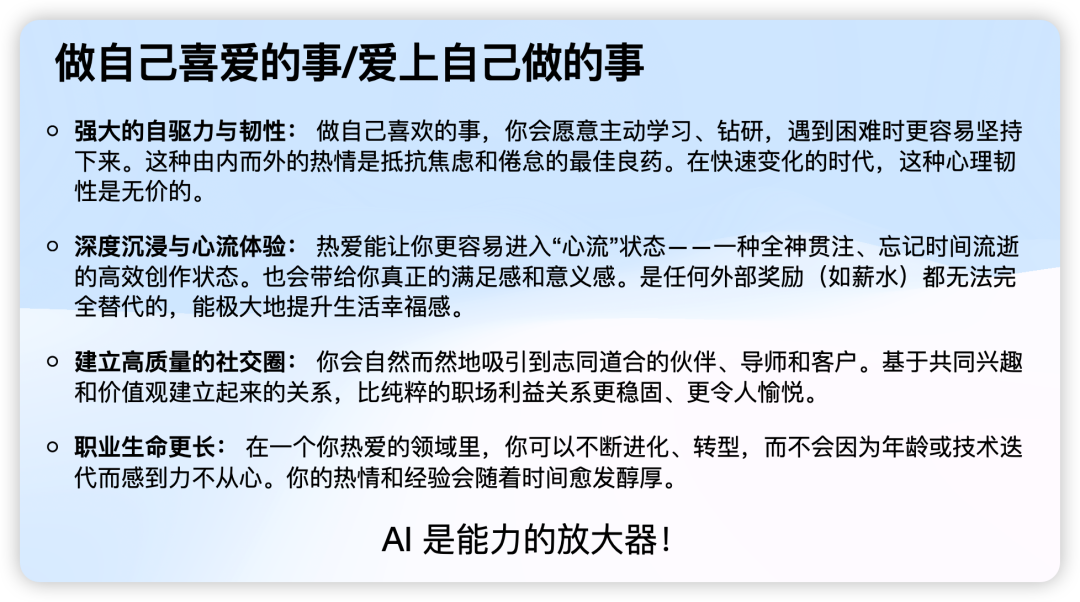
And in the AI era, it can amplify your preferences, your strengths, and your weaknesses tenfold or a hundredfold.
Which industry and which city should you choose?
I've loved rock music and Beijing since I was a kid, but being a pragmatic Cantonese, I took a trip to Shenzhen before graduating. It wasn't until the car turned onto Shennan Boulevard that I had a clear sense of what a big city was.
After I started working in Shenzhen, like other office workers I dreamed of earning over ten thousand a month. It felt far off, but I was inching closer.
Later there was a chance to go to Dubai. I couldn't imagine what a city in the desert looked like, and I hesitated for a moment on the phone — so the leader on the other end added 1,000 US dollars. Earning over ten thousand a month was no longer the goal.

Just as I was getting used to Dubai, a colleague I'd pulled all-nighters with in Shenzhen brought me into Baidu, an internet company. I came home with a pay cut, but soon got a 25% raise and my salary was back to where it had been.
Just when I thought big tech was everything it was cracked up to be, I got a quick slap in the face. I took another pay cut to join Midea, only to find that not every big company hands out big raises.
I even heard an HR person complain that the robot company next door at Country Garden was poaching people with high salaries again — they were ruining the market.
One day I read Charlie Munger — the man who just kept computing 1.15 to the nth power, a middle-school math problem — and he said something any elementary schooler understands: go fishing where the fish are.
That was when it hit me.
My luck didn't come from big tech. It came mostly from a city with a future and an industry on the rise.
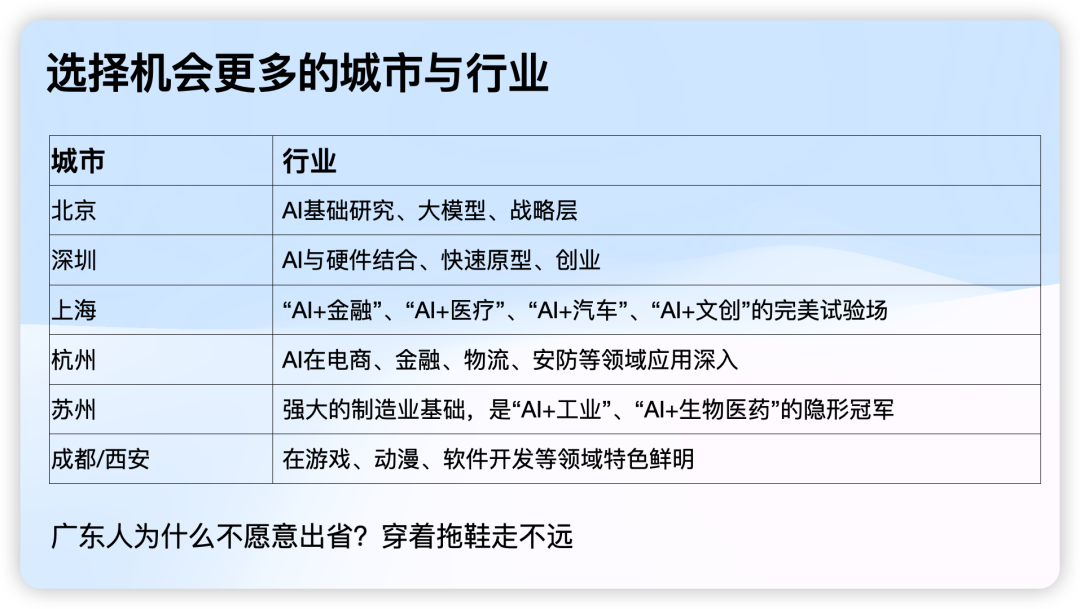
More than 75% of our school is probably Cantonese. People say Cantonese don't want to leave the province because you can't go far in flip-flops. If that's really the reason, switching to running shoes doesn't cost much. Go see other places — you might feel something different.
The normal distribution
Since I started working, I've needed math only a handful of times. One of them was at a car license plate auction.
Shenzhen plates were still valuable then, bid up past 100,000 yuan every year. To win one for less, I collected more than two years of data.
I assumed bids were normally distributed. There were two rounds of bidding, and I had to use the first round's average price to estimate the second round's average, along with the prices that would eliminate 68% and 95% of bidders. In the end, I won the plate for 2,000 more than the lowest price.
In that moment I thought I was a genius, that my use of probability theory had reached perfection.
A few years later, green-plate new energy vehicles became mainstream and blue plates were no longer valuable. I knew I'd been wrong.
Later still I read The Black Swan and learned about Taleb, an investment master who truly uses probability theory to perfection.
Only then did I really understand that I'd been wrong — wrong from the very first assumption.
Most of the time the world doesn't follow the normal distribution, and the impact of extreme events like black swans is often severely underestimated. A single illness or a single layoff can make our lives collapse.
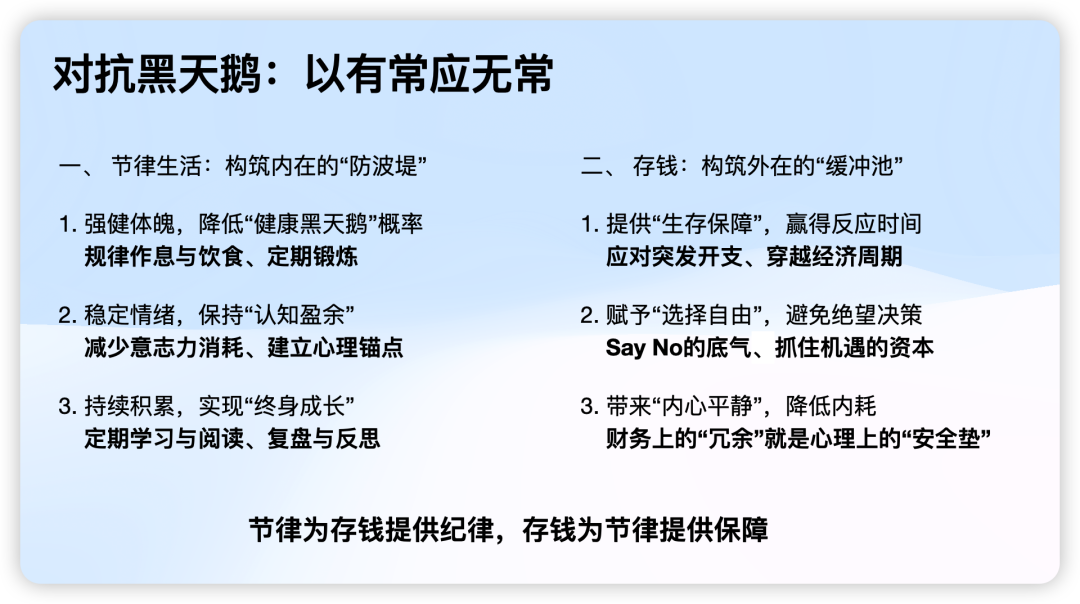
When impermanence is the norm in life, control the rhythm of your own life, keep to a steady cadence, take good care of your body, and put your money away.
Physical and mental health and financial health bring inner certainty, and only with inner certainty can we go further.
Taleb says the three most harmful addictions in the world are drugs, carbohydrates, and a monthly salary.
The First Industrial Revolution is only a little over 200 years old, and what we now call a job dates roughly from then. Yet today we've turned work — especially stable work — into an obsession. That's something worth thinking about too.
I'm glad we also have some entrepreneurial alumni here today who can tell us about the other road, the one less traveled, and help loosen that obsession.
Is frontend really dead? Where do we go now that AI is here?
Those of us born in the 1980s undoubtedly reaped the internet dividend.
When lightning strikes, make sure you're standing there! That's true, but not many people manage it.
Looking at my own role:
In 2008 there was no concept of "frontend development." I belonged to the design department and had to understand both design and code.
In 2010 the "frontend development" position was finally introduced. Without a JavaScript foundation, and unable to draw as well as the designers, you were soon eliminated.
In 2014 mobile development was in full swing and salaries were frighteningly high. If you didn't know Java or Objective-C, those opportunities were essentially closed to you.
In 2016 Baidu had already gone ALL in on AI. Consumer-facing frontend development was in decline, while enterprise (B2B) frontend development was booming. If you didn't know the new frameworks, you couldn't do B2B development either.
In 2018 people started talking about "big frontend," and mobile development became part of frontend development. Mobile developers with a single skill set were probably left behind too.
In 2023 AI coding took off and more and more frontend code was written by AI. Insisting on writing every line by hand actually held you back.
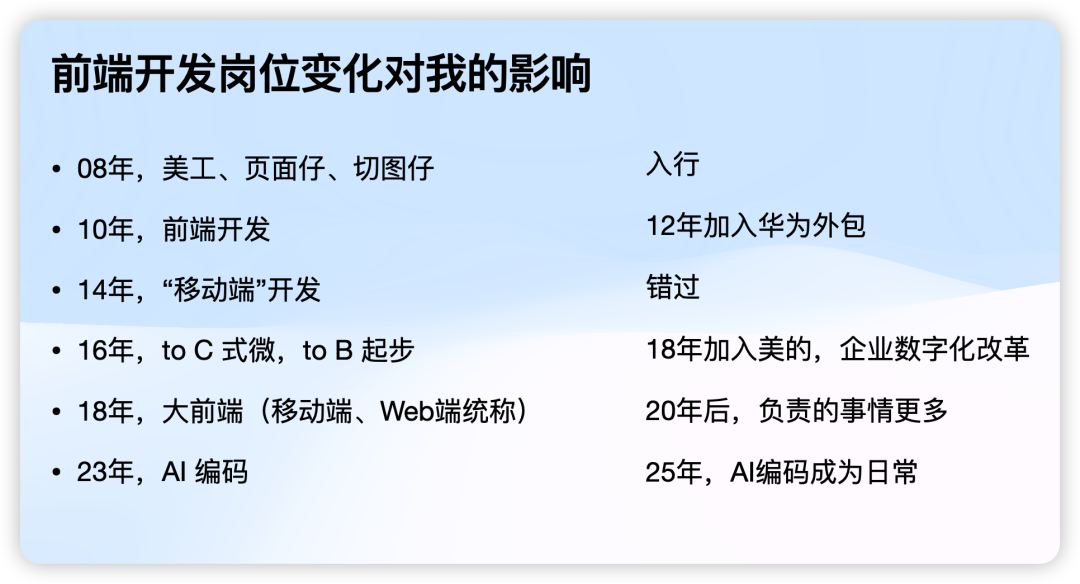
I was always half a beat behind. Every change in the industry reached me two years later. I missed some things, but got through without disaster. AI coding has now become part of my daily routine.
This rapid change in frontend has long been called "frontend is dead" within the industry.
But in 2025 frontend still isn't dead. A new phrase has appeared instead: "frontend is dead, backend is worked to death." The pressure of AI coding has been passed on to the backend as well.
Looking back over these years, the internet created more than ten categories of jobs. In the future AI era, even more will appear. Chances are those positions can't even be defined yet, and the process is likely to involve violent adjustments, because everything is new.

I've tried to avoid giving lots of specific, detailed advice here — like you must intern while in school, you must memorize canned interview answers, you must polish your resume. But some advice will inevitably go out of date.
So just hear out an old-timer like me, and I hope young people will forget every piece of advice I gave earlier.
Young people's fearless ignorance and their challenge to authority are what drive the world forward.
May your world keep getting bigger
Finally, I'll close today's talk with one sentence.
It comes from a 70-year-old man, Chen Yang, one of Guangdong's four great talkers. A traditional media person, at the age of 70 he's still trying to reinvent himself as a self-media creator. He said: my world is getting bigger and bigger.

I hope that someday I too will have the courage to say something like that.
And I hope your worlds all keep getting bigger.
Thank you for your time.