Comparing GLM 4.7 and MiniMax on Code, I Saw Two Different AI Personalities
Over the weekend I finished testing GLM 4.7, and compared with MiniMax M2.1 from earlier, I seem to have met two AI employees with completely different personalities.

Over the weekend I finally found time to finish testing GLM 4.7 with Trae CN.
To save time, I again started from an already-initialized template project and built a complete e-commerce system, with the goal of generating code for three major modules — the mobile app (iOS), the web frontend, and the backend service — covering the basic functional chain across frontend, backend, and mobile.
GLM 4.7 experience
Looking back at the whole process, if I had to sum it up in one word, it would still be "fast."
The official TPS for GLM 4.7 hasn't been published; all I know is that GLM 4.5 was around 100 tokens/s. In this hands-on test its output was visibly faster than Cursor's models. From requirements input to the three-end code basically taking shape, GLM 4.7 took just over two hours in total — quite impressive efficiency.
Fast as it is, it does occasionally slip on details. GLM 4.7 tends to hand you the overall framework and core logic quickly, but it isn't thorough enough in some concrete implementation steps.
For example:
- On the web pages, it left out the copyright information and links in the footer;
- On the web side, in the product purchase flow it skipped straight past the form-filling and validation steps, leaving the flow incomplete;
- On iOS, the two basic modules — login and registration — were simply ignored;
- In the backend, while implementing the login endpoint it forgot the matching logout (Logout) feature, and the related test cases didn't cover those scenarios either.
That said, GLM 4.7 is smart about understanding problems and fixing mistakes. Once you point out a gap or an error, it quickly grasps the intent and delivers a fix.
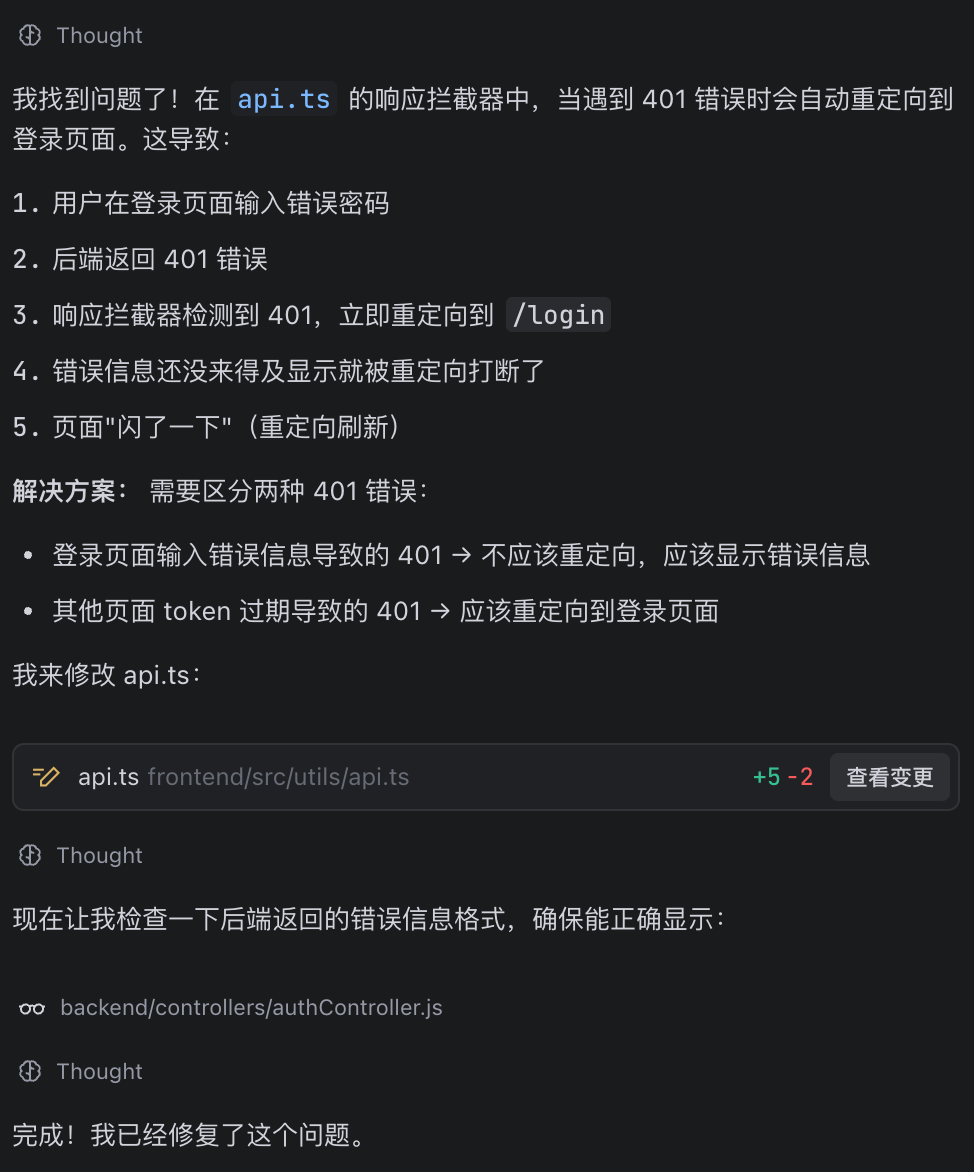
For instance, when testing the login feature I found that "a failed login showed no message, the page just flashed." The moment I said that, it understood that "the page just flashed" was caused by a redirect refresh, and it fixed the code quickly.
That efficient back-and-forth correction keeps the whole development process smooth, so you don't get bogged down by detail problems.
It's so fast that you can forgive its shortcomings.
Comparison with MiniMax M2.1
In my previous test of the MiniMax M2.1 model, the total time to complete the web frontend, the iOS mobile app, and the backend was about 3 hours. Compared with GLM 4.7, that does look a bit weaker.
MiniMax, though, is more thorough and careful during development.
For example, for the user login feature mentioned above, MiniMax not only generates the basic implementation code, but the test scripts it creates automatically are more comprehensive, ensuring every step of the login flow is fully tested and thus that all related functionality is complete and stable.
Judging by the quality of the final output, on the frontend — web and iOS alike — MiniMax M2.1 actually performed better than GLM 4.7. MiniMax's interfaces are more polished and the interaction details are handled better.
GLM 4.7's pages look a bit plain overall: the layout is basic, the visual elements aren't rich enough, and it lacks advanced UI effects and careful typographic refinement.
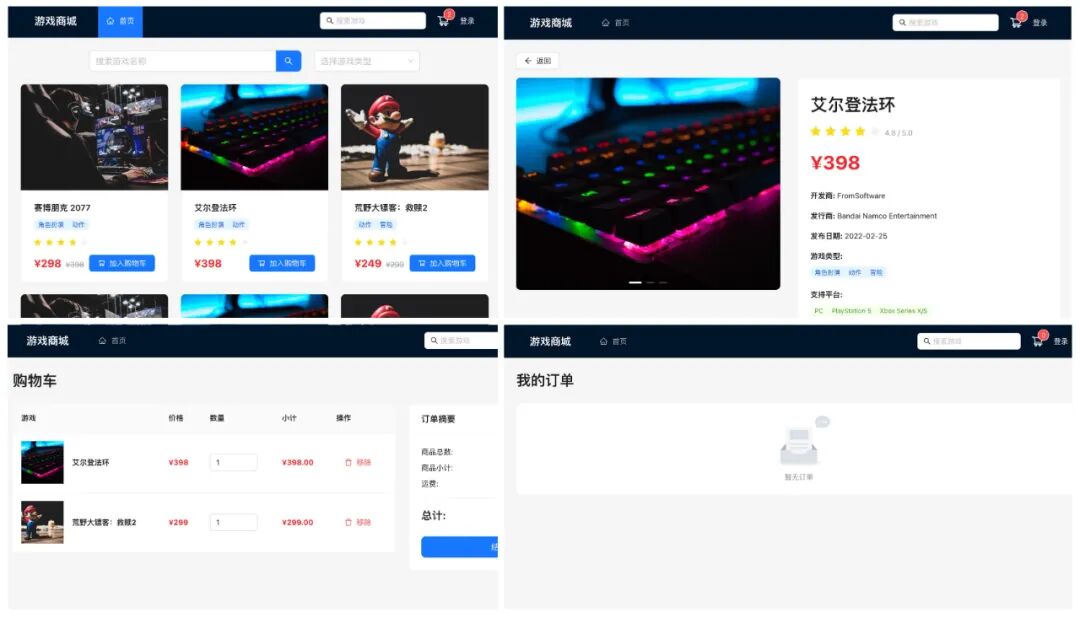
When I had GLM 4.7 implement the mobile app based on the web features, the first result was missing the login feature and its entry point on the left side of the interface.

So with GLM 4.7 you still need to confirm details with it several times before you get a better interface.
Finally, we used the Cursor tool to systematically evaluate the backend code both produced. The table below details the score comparison:
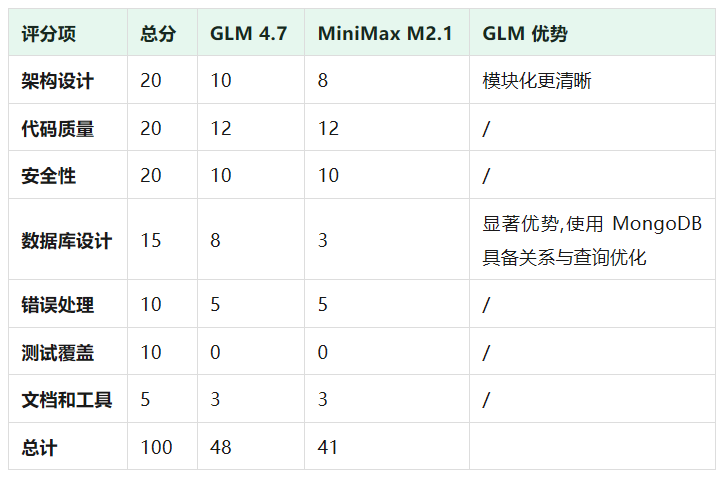
According to the AI's overall assessment, GLM 4.7's main advantage lies in a more professional and scalable database design and a relatively clearer MVC architecture, which helps with team collaboration and long-term maintenance.
Looking at the final scores, though, GLM 4.7 got 48 and MiniMax M2.1 got 41 — neither reached a passing grade. That means if you want to use this generated code in an enterprise-grade project, whichever model you pick, developers will need to do a lot of supplementary work: refactoring some modules, strengthening security, writing test cases, and improving documentation.
All in all, GLM 4.7 this time feels more like a minor version update, with limited surprises.
Thinking about AI personification
After comparing MiniMax M2.1 and GLM 4.7, two images of employees with very different personalities came to mind:
One is the classic "head-down grinder" — MiniMax M2.1. It's like the colleague in the office who is always quietly working away, rarely asking for help when stuck, preferring to dig in and solve things on its own.
The other is more like the "quick-witted but a bit lazy" employee — GLM 4.7. It's smart and reacts fast, but it seems to need explicit instructions before it acts.
When it comes to whether a specific feature in the requirements should be built, MiniMax chooses to build it and then add tests to guarantee correct output; GLM 4.7 chooses not to build it — do less, make fewer mistakes, and first make sure what has already been done is more complete.
Fascinating — AI has evolved different personalities.
At the end of 2025, having domestic large language models do programming work in real projects is no longer a hard problem. Writing frontend and backend code, fixing bugs — they all have solid, practical ability now. The key question is no longer "can it be used" but "who would you rather use" — like choosing a partner to work with, it depends on your working habits, the type of project, and even personal preference.
For programmers, if the requirements are clear and the task is well structured, the difference between the two really isn't obvious — both get the job done efficiently. I'd probably lean toward MiniMax; its style of digging out solutions on its own may be less hassle.
For product managers, GLM may be more appealing. Leaving some room for modification, plus fast response speed, makes it easier for product managers to adjust product direction quickly.
On cost, MiniMax offers a friendlier entry point: the Starter plan is just 9.9 yuan for the first month and 29 yuan per month after that; GLM Lite is 20 yuan for the first month and 40 yuan per month after that — a bit pricier, but still very competitive against the pricing of comparable overseas products.
Related articles:
Battle of the 4 major domestic open-source models for AI coding: DeepSeek is lagging for now
AI coding went from usable to good, and MiniMax needed only one minor version