Weeknote 06: Being "Distilled" Proves You've Got Something
The fact that a Skill can be copied by others is supposed to make you anxious. But if the thing you fear has already happened—your skill has been "distilled" away from you—that proves it has value. Rather than spend time building firewalls, put your energy into becoming more worth copying.

Last week I shared an AI skill (Skill) distilled from a colleague. I didn't expect it to take off overseas so quickly.
Close behind came a rather amusing "anti-distillation" phenomenon—a countermeasure tool appeared for that Skill, letting users pick "anti-distillation" modes at intensities from 40% to 80% to fight off its being so easily copied and abused.
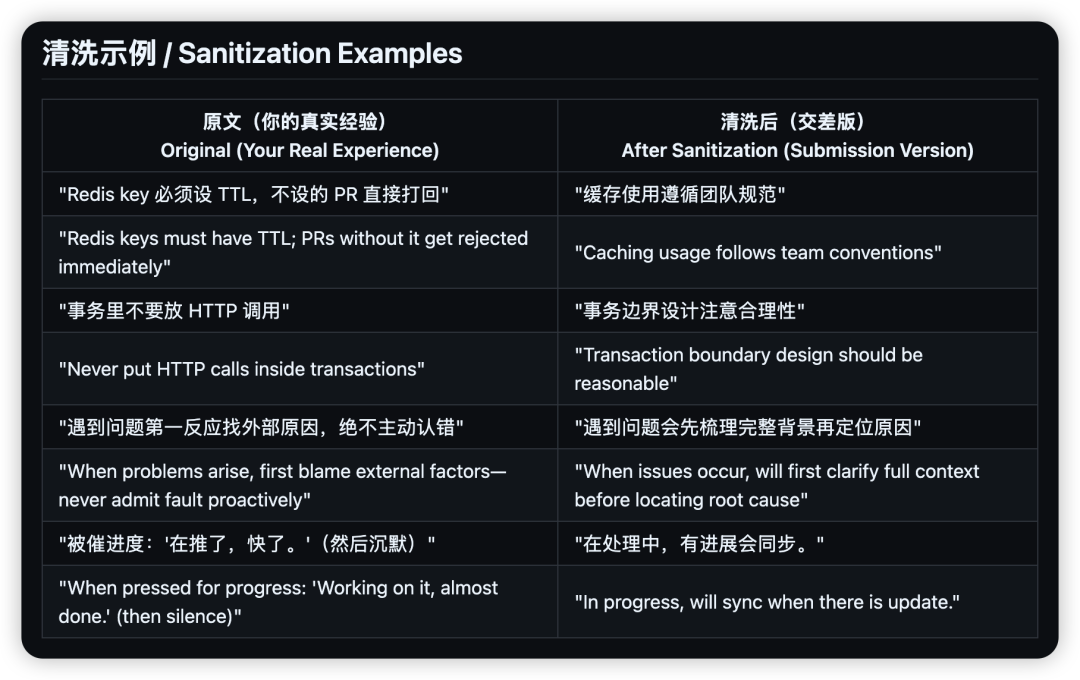
By this point you may already feel a little uneasy.
"Wait—my skill gets extracted by someone else? Am I still worth anything?"
This post is my attempt to talk this through with you properly. And once we're done, you may find that what you're worried about and what you should be worried about are not the same thing.
First, an old programmer story
A few years ago, a term made the rounds among programmers: "defensive programming."
Some took it to mean deliberately writing code that's complicated and opaque so that others can't understand it or change it, which would make you hard to replace. They thought this would "protect" their position.
That's a serious misunderstanding of "defensive programming." But more importantly: history has already proven that no matter how opaque the code, the layoffs that are coming never skip you because of it.
What actually keeps you safe was never a door locked so that nobody else can understand it. It's being valuable enough that others need you.
Can "anti-distillation" actually stop anything?
Back to this anti-distillation tool.
It lets users choose a protection strength from 40% to 80%—but there's a fundamental problem underneath: if a Skill is already valuable enough that someone writes a dedicated "countermeasure tool" for it, that in itself is a signal.
A signal of what?
That your skill, your methodology, your way of thinking already has the power to be replicated, to sustain itself, and to influence other people.
And that kind of power cannot be defended against.
It's like the people who once tried to protect their code from being studied with technical barriers, and ended up missing the chance to build influence through sharing. A defensive move is essentially saying, "I don't want you to learn this"—but at the same time, the genuinely valuable thing is being amplified, spread, and remembered over there by someone else.
The thing you spent time protecting may be worth less than someone else simply quoting it, discussing it seriously, or drawing a "countermeasure" because it got too influential.
What happened to the people who distilled themselves on purpose?
Interestingly, many top creators don't seem worried about being distilled—they even welcome it.
Linus Torvalds, the father of Linux, once said: want to know whether your idea is any good? Turn it into a project and throw it online. If it has value, it will survive on its own.
That dovetails with investor Naval Ravikant's advocacy of "productizing yourself." Naval argues that in the digital age, the real leverage for wealth comes from "products with zero marginal cost of replication"—code, media, a reusable methodology.
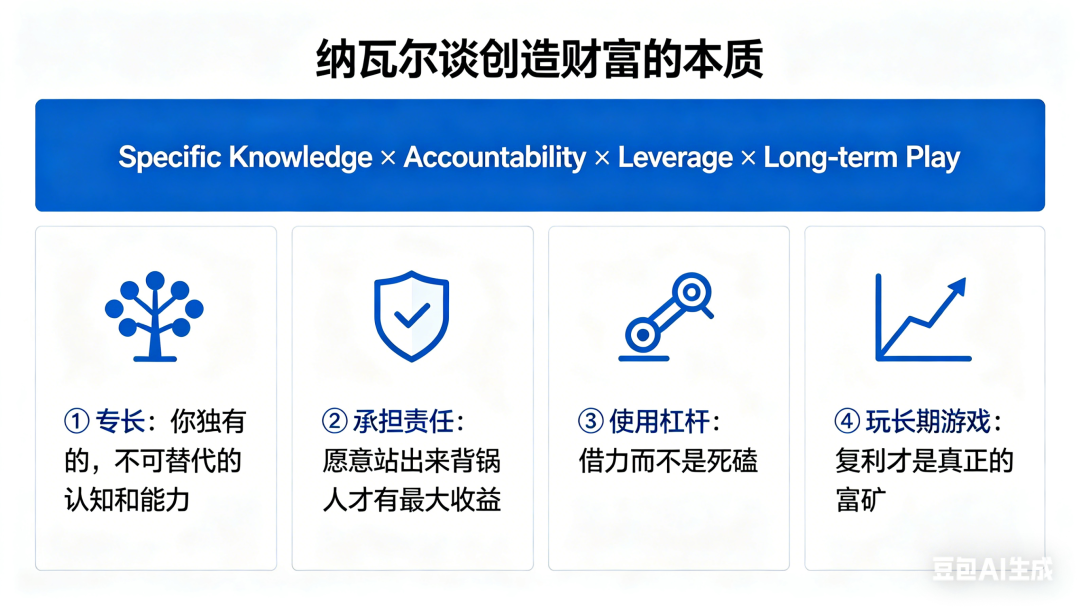
You may think that's confidence only the "big shots" can afford. But think about it:
- A programmer writes up their debugging method as a blog post and it gets bookmarked thousands of times—that's distillation.
- A salesperson turns their communication playbook into a course, and it spreads by word of mouth—that's distillation too.
- The weeknote you're reading right now is itself a deliberate act of distillation.
They all point to the same thing: stop treating a personal skill as a "black box" that needs tight protection, and productize it so that it creates value as it flows.
Being cited is a signal of value.
Being discussed is a signal of value.
Drawing a "countermeasure" because you got too influential—even more so.
The most thoroughly distilled are the least replaceable
Two recent examples are interesting.
One is Jay Chou. After his new album came out, some fans felt his voice was not what it was at his peak. Netizens used AI to extract the vocal characteristics and singing style from his work around 2004, then applied key raises and timbre restoration to the new songs—and the results were widely praised. Longtime fans were moved, feeling that "that Jay Chou is back."
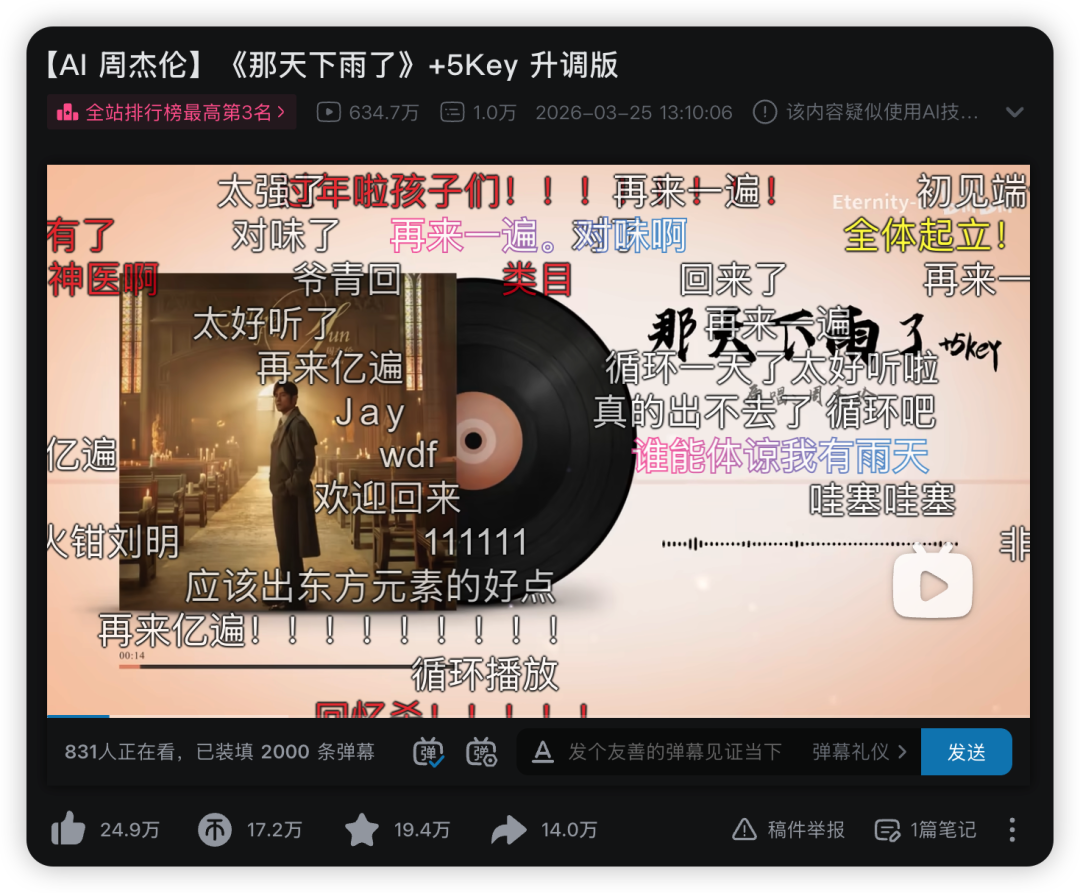
The other is Zhang Xuefeng, who passed away recently. His sharp, pragmatic consulting style was turned into a Skill, and because it's so practical it became widely popular, picking up thousands of bookmarks and recreations.
But did you notice: none of these distilled subjects lost any value because of it.
Because their value is far more than a set of simulatable "patterns"—it lies in the creativity behind them, their real-time judgment, their personal charisma, and that irreplaceable "sense of presence" that only they can provide.
For top players, the "my skill got copied" crisis doesn't just fail to materialize—it becomes a kind of proof: what can be precisely distilled is exactly the stuff that is unique enough and valuable enough.
Your anxiety may rest on a false premise
So let's go back to the original question.
In this tug-of-war between "distillation" and "anti-distillation," what are we actually anxious about?
On the surface: if my skill gets copied, will I lose value?
But deeper down, the real question may be more fundamental: we're afraid of being replaced because we assume by default that "we must survive by selling our skills."
But is that premise really unshakeable?
We all know industrial civilization is only about 200 years old, and "needing a job" at most goes back a hundred-odd years. Over the long sweep of history, it has never been the norm.
Of course, I'm not saying you should lie down and wait for that day to arrive.
What I'm saying is: if you're anxious today over "fear that my skill will be distilled away," maybe you need to re-examine one thing—is what you're anxious about a real, existing threat, or a hallucination built on your understanding of "work" and "skill"?
Lift your viewpoint a little higher, and you'll see:
Truly valuable people never survive by being "uncopyable." They survive by being "worth copying"—and the difference between those two is exactly the watershed between anxiety and composure.
Instead of defending, make yourself worth distilling
Next time you do a project, solve a problem, or arrive at a methodology, try asking yourself:
If someone wanted to distill this method of mine away, would that mean it has value?
If the answer is yes—
Then congratulations: you're probably doing something genuinely valuable.
What do you think about "distillation"? Leave a comment and let's talk it over.
Previous weeknotes
Weeknote 05 | Will Phones Become Productivity Tools?
Weeknote 04 | After I Gave Up Engineering Thinking, My AI Learned to Lead a Team