Weekly Notes 05: Will Phones Become Productivity Tools?
Time: March 30 – April 5, 2026. I'm still farming shrimp, but I've decided to let go of the name "Shrimp-Farming Weekly".

Time: March 30 – April 5, 2026
I'm still farming shrimp, but I've decided to let go of the name "Shrimp-Farming Weekly". Weekly writing turns out to be a good habit, so I'll keep at it. No idea where it leads, but Ruan Yifeng, a benchmark in this industry, has kept his weekly notes going for over ten years — I'd like to work toward that too.
Also, it isn't that AI tools are bad. It's that after chasing them for so long, I've gradually sorted out which needs are real and which are anxiety-driven illusions.
A lot of "trying the new thing" didn't actually raise my productivity; it just consumed the feeling of "I'm making progress". Once that feeling stopped, things became a bit clearer.
This week's industry news
Anthropic's crackdown escalated again. The OpenClaw folks stepped in hoping to slow things down, but the odds are slim. Compliance pressure doesn't back off just because a community objects.
The new OpenClaw release adds a moderation feature, which kicked off plenty of debate — some users see it as a betrayal of the efficiency-first design philosophy, but tools getting more "respectable" is the inevitable road from niche to mainstream.
Slack deleted its China-region workspaces. On April 1, workspaces in mainland China, Hong Kong, and Macao were suddenly disabled, with data to be permanently deleted after 90 days. No in-product notice; the data simply became a hostage. Yubo said "trust in Slack collapses in an instant" and announced that YouMind would build its own agent-native Slack.
Microsoft shipped three new AI models, aimed squarely at OpenAI and Google, building up for a fight over the enterprise AI market.
Back to the point: will phones become productivity tools?
I have never needed to write code on my phone. As a nine-to-six worker, I'm used to keeping work and life apart. I finish the code I owe at my desk during the day, and after hours the phone is just a phone — for scrolling, chatting, and lying down.
And it isn't only habit — the screen is tiny and input is so inefficient. I honestly can't imagine that writing code on a phone would be more comfortable than on a computer.
But I know that isn't the consensus.
Claude Code and OpenAI's Codex are both working out how to reach phones. The former shipped an iOS app, and the latter is reportedly building out mobile as well. More Agent tools want to plug into social apps.
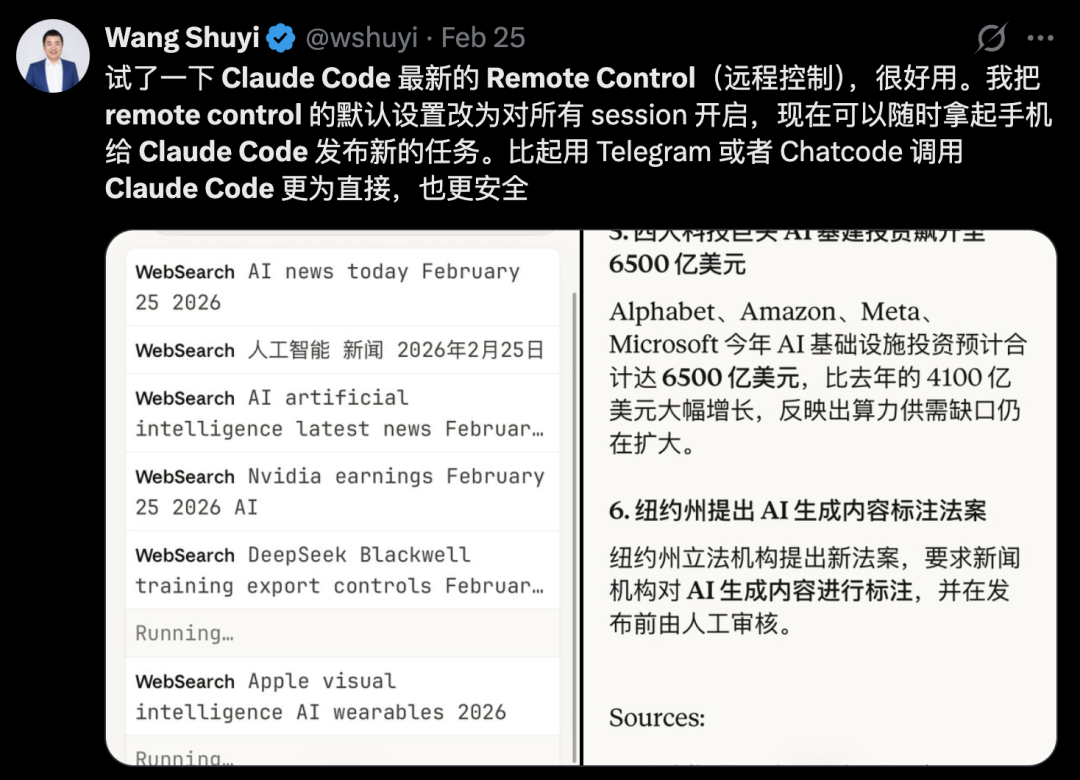
They clearly believe mobile work is the trend, and that mobile is a scene that has to be won.
Plenty of people really do work on their phones — on business trips, while out and about, or simply because they don't want to open a laptop. Tech companies aren't stupid; if they're willing to put money in, someone really is asking for this.
The problem is that this path hasn't actually been paved yet.
I've watched demos of "writing code on a phone" and tried it myself. The core contradiction is this: even if I can drive a coding tool through AI and get the code written, there's no way to see the result directly on the phone.
Where does the code run? Where does the browser open? Where is the server deployed? The phone itself can't solve any of that; it all depends on another terminal.
In other words, the current AI coding workflow is broken.
The concept of Harness Engineering makes one point: a real productivity tool has to close the loop — input, execution, feedback, none of them optional.
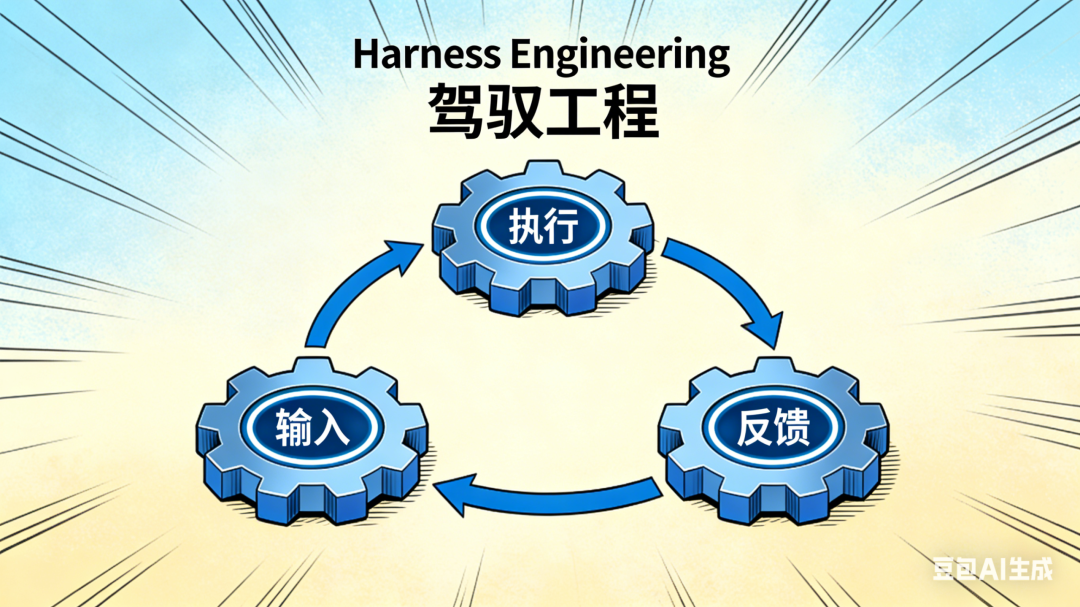
In today's AI coding assistance, input comes from a person typing (or talking), execution runs in the cloud, and feedback? Either you go back to the computer to look, or you wait for a developer on another device to send you a screenshot. Every break in between burns time and attention, and in the end the user finds that "it didn't really save me much".
But this discussion misses a more fundamental question: do you actually want your phone to become an efficiency tool?
That question is harder to answer than the technical one.
Bosses obviously want employees online and able to handle work at any moment — a phone that becomes a productivity tool means lower cost and higher output for employers. But what about employees?

The iPad has been running the same play for the past decade: the productivity demo at the keynote gets your blood pumping, and by the first week at home you're using it for iQIYI. iPadOS has been through round after round of productivity evolution — multitasking, split screen, the floating keyboard — and Apple Pencil has been updated generation after generation, yet the most popular use case is still watching video.
"Productivity before you buy, iQIYI after" has stayed in circulation this long because it describes real human nature.
People have psychological boundaries around their tools. In most people's minds the phone is "private space", the last barrier between them and work after hours. If that barrier is smashed for good, what's the cost? Employers are happy, sure, but what happens to employees' creativity and long-term retention? Nobody has ever done that math.
So whether phones become productivity tools may not be up to technology. Technology can close the loop, but whether people are willing to be strapped into it is another matter.
This week's open-source projects
Colleague.skill (titanwings/colleague-skill)
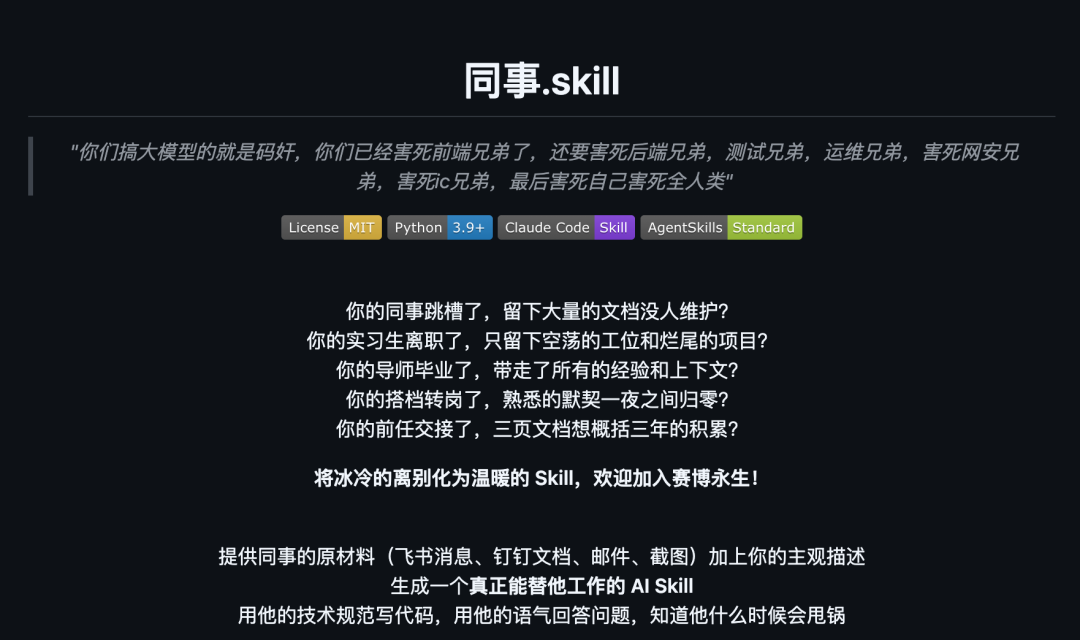
A colleague jumps ship and nobody takes over the docs; an intern vanishes and the project is left half-finished. This project extracts a person's working habits and technical standards from Feishu, DingTalk, and WeChat chat logs, then generates an AI Skill that can keep working in their place. The Work Skill handles technical standards, the Persona layer handles personality — pick "blame-shifting master", "perfectionist", or "procrastinator" as you like. In a sense, it's digital immortality for a colleague.
Ex.skill (therealXiaomanChu/ex-skill)
Feed in your ex's WeChat chat logs and Moments screenshots, and it generates an AI Skill that can "talk to you the way they did". One command is /let-go, alias "move on" — much gentler than delete.
Both projects got attention because they're funny, even a little absurd.
HauHauCS open model (Hugging Face)
Advertised as an uncensored version. Not many parameters, but its selling point is purity: more than enough for an internal company deployment, with no worry that API call logs get taken for training, and no worry that a policy update suddenly cuts off access. For companies that "don't want their data leaving the building", the value is excellent.
Jackrong's Qwen3.5 + Claude 4.6 Opus distilled model (Hugging Face)
It adds distilled Claude Opus knowledge on top of Qwen3.5, which strengthens the reasoning a bit. The moderation wasn't fully stripped out, but it inherits Opus's reasoning ability, making it a good fit for scenarios that demand more logic. Both are good choices for local deployment.