How Good Is the Late-Arriving Kimi K2.5 at Coding?
Kimi K2.5 only came out just before the New Year — how good is it at coding? This time I tested its ability to build a full-stack Node.js e-commerce site, and to reproduce a design mockup.
Compared with MiniMax and Zhipu, Kimi only released Kimi K2.5 just before the New Year.

How good is it at coding?
Once again, the test was to build a full-stack Node.js e-commerce site.
The new version of Trae also supports image uploads, so I ran a test of its code-to-design-mockup reproduction along the way.
The e-commerce site worked on the first pass
Overall it ran fast, finishing in about half an hour (interrupted by manual operations, so I didn't get an exact time).
Only 2 errors came up, and they were fixed quickly. The project ran through smoothly!
The project was still mostly JavaScript. Converting it to TypeScript took several more round trips and another 50 minutes. Long as that was, Kimi K2.5 was still smart about it:
- In some cases it could edit the JS files directly, instead of copying them and then modifying the copy as before.
- It could generalize from one example, quickly finding similar problems and fixing them together, without me having to point out each one.
Subjective take on the front end
Take a look at how the pages turned out:
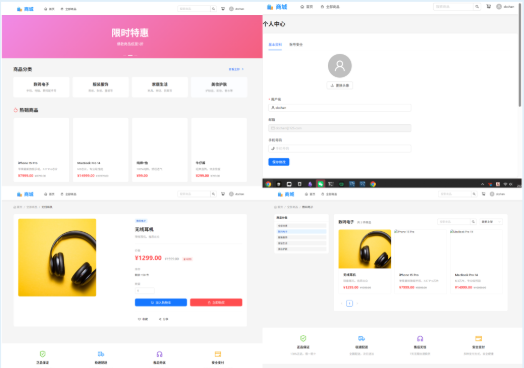
Overall it's not bad: the interface style is consistent, with no obvious AI purple.
The features are complete — login and purchase flows are fully covered, and every form has validation. The only two complaints: it didn't do any mobile adaptation, and the detail page content is too thin.
But getting this result in a single pass gives me a lot of confidence for later adjustments.
Objective backend scoring
I had Cursor's built-in model score the backend project across several dimensions. The final scores:
| Dimension | Max score | Score | Summary |
|---|---|---|---|
| Architecture design | 20 | 13 | Clear layering, but no service layer and no 404 handling |
| Code quality | 20 | 14 | Validation and transactions are in place; duplication and conventions could be tightened |
| Security | 20 | 11 | Good auth and injection protection; missing rate limiting, security headers, CORS |
| Database design | 15 | 12 | Good tables and relations; missing indexes and migrations |
| Error handling | 10 | 7 | Unified handling in place, but could be more consistent and leak less |
| Test coverage | 10 | 2 | Almost no tests |
| Docs and tooling | 5 | 2 | No README/.env.example/API docs |
| Total | 100 | 61 | Below average; fine for learning or small projects, needs work before production |
This is the first domestic model I've tested that broke 60 points.
Of course, there's still plenty to fix:
- Security: add helmet, rate limiting on login, registration, and sensitive endpoints, and a CORS allowlist; validate JWT_SECRET and the like at startup.
- Tests: write integration and unit tests at least for the auth, ordering, and inventory endpoints, and add npm test.
- Docs and collaboration: write a README under backend and add .env.example listing every required environment variable.
- Architecture: pull core logic such as orders and products into a service layer so it's easier to test and reuse.
- Database: add indexes for common queries and consider a simple migration approach (even a set of ordered SQL files).
Visual reproduction
For the image reproduction, I grabbed three YouTube pages — the homepage, a watch page, and a creator's profile page — and had it recreate them.
The result: the basic framework is right, but a great many details are missing, so it looks very messy.
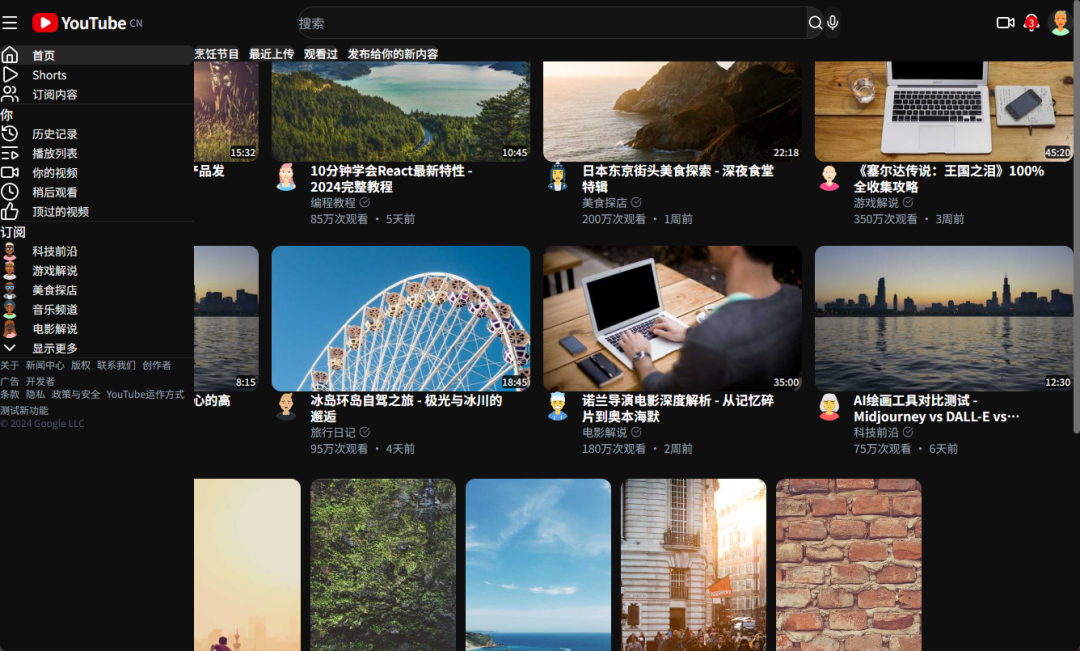
As for interactions, apart from links and page navigation, most weren't implemented — for example, the left-hand menu can't be collapsed.
Code-wise, it clearly spotted the repetition and extracted components, which is a point in its favor. The mock data is also done convincingly, which makes it easy to wire up real backend endpoints later.
Summary
Overall, Kimi K2.5 showed good efficiency and comprehension on coding tasks: it quickly generated a runnable project skeleton and understood what changes I wanted.
But there's still room to improve on visual reproduction and project completeness (security, tests, docs). For quick prototypes or learning projects, it's a powerful tool.
#AIProgramming #Kimi #LLMTesting #FrontendDev #BackendDev
Related posts:
A Guide to Domestic Alternatives to Claude Code: Easily Connecting GLM and MiniMax
Comparing GLM 4.7 and MiniMax on Code, I Saw Two Different AI Personalities
Going from Usable to Genuinely Good at AI Coding Took MiniMax Just One Minor Version