The Return of the King: DeepSeek V4 Solves a Problem That Bugged Me for a Month
Over the past month, several sites have needed to be converted from pure frontend projects into Node.js projects. For a complex task like this, most of the open-source models really did fall flat. So can the recently launched DeepSeek V4 Pro get the job done? And how well does it perform?
Over the past month, several sites have needed an SSR refactor: converting pure frontend projects into Node.js projects.
For a complex task like this, I didn't have high hopes for AI's abilities to begin with, especially on a website that already has dozens of pages. In fact, the open-source models available at the time really did fall flat.
The only success was an attempt at a small React project with Claude Sonnet 4.6 in Cursor, completed in 3 to 5 rounds of conversation. But in practice, the context ended up almost 100% full.
So that dozens-of-pages Vue site got put on hold, until OpenCode recently brought DeepSeek V4 Pro to its Go plan.
SSR refactor task
Obviously, using OpenCode + DeepSeek to pull off the Vue SSR conversion is even harder.
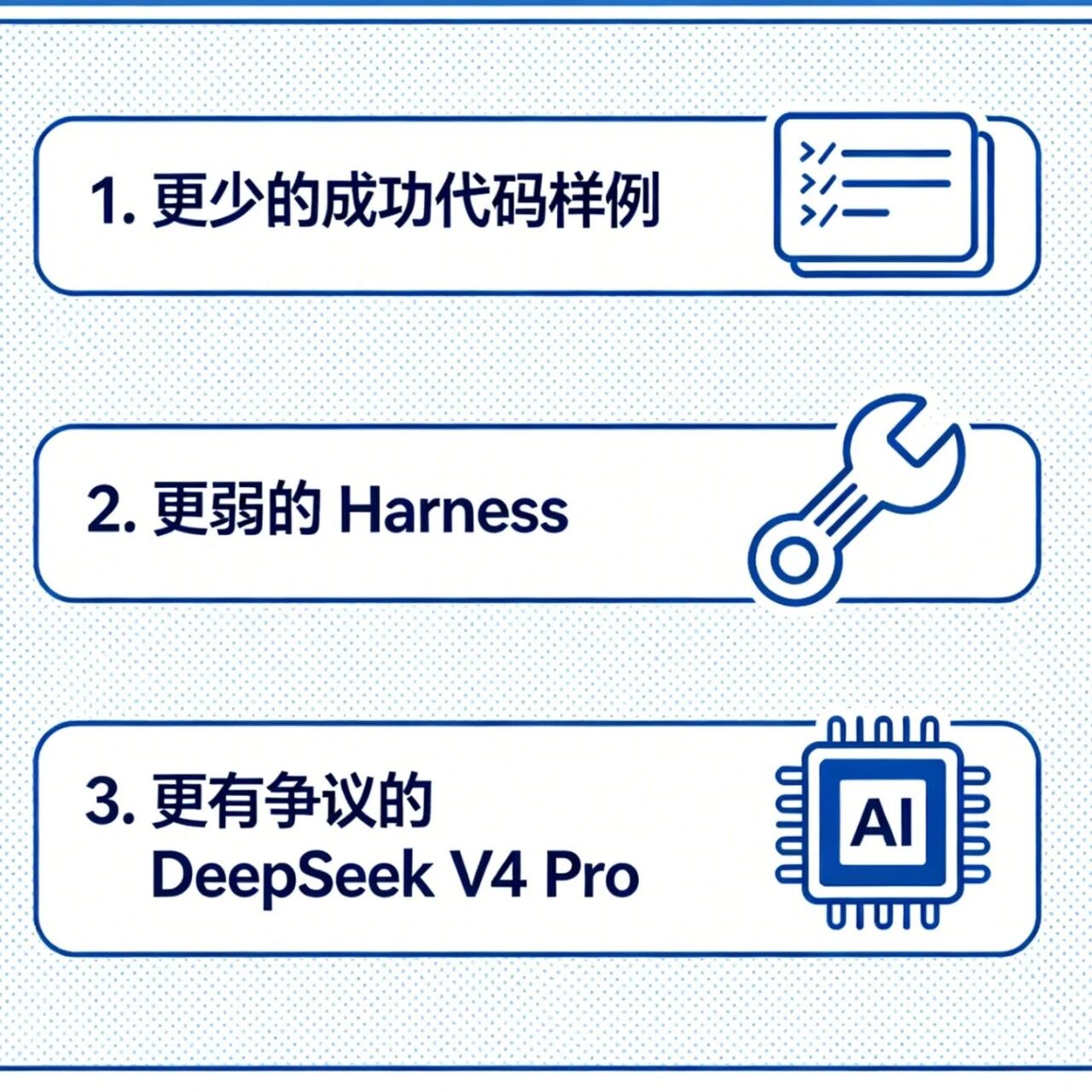
Beyond the fact that there are fewer examples of converting Vue to Nuxt, my own experience also tells me that OpenCode's Harness is weaker than Cursor's. And there's plenty of talk online saying DeepSeek V4 falls short of expectations.

The actual result really wasn't as smooth as Claude Sonnet — at one point it even threw an ominous 500 error.
But after a few back-and-forth conversations, the 500 was gone. After that it was very smooth: a single conversation fixed the routing problem that had tripped up other open-source models, and a single conversation fixed the styling problem.
In the end, after 5 to 8 conversations, the whole project was refactored. And thanks to DeepSeek's ultra-long context, the context was only about 25% full at the end, leaving plenty of room for further changes.
Comparing open-source models with Claude, the difference shows up as early as the task planning stage: ordinary open-source models only plan 5 to 8 steps, mostly patching things on the surface. Claude typically starts at 10 steps and gets into the more critical parts like routing and storage management.
DeepSeek's planning produced tasks similar to Claude's — likewise a sensible task breakdown, paired with a verification process to make sure the project can boot.
After the code was committed and shipped, the colleague I was working with merged it without trouble. At the start I asked it to keep changes as small as possible, and to my surprise it got the job done even under all those constraints.
All of this gave me a lot of confidence and made me willing to use DeepSeek in real development work going forward.
E-commerce site generation
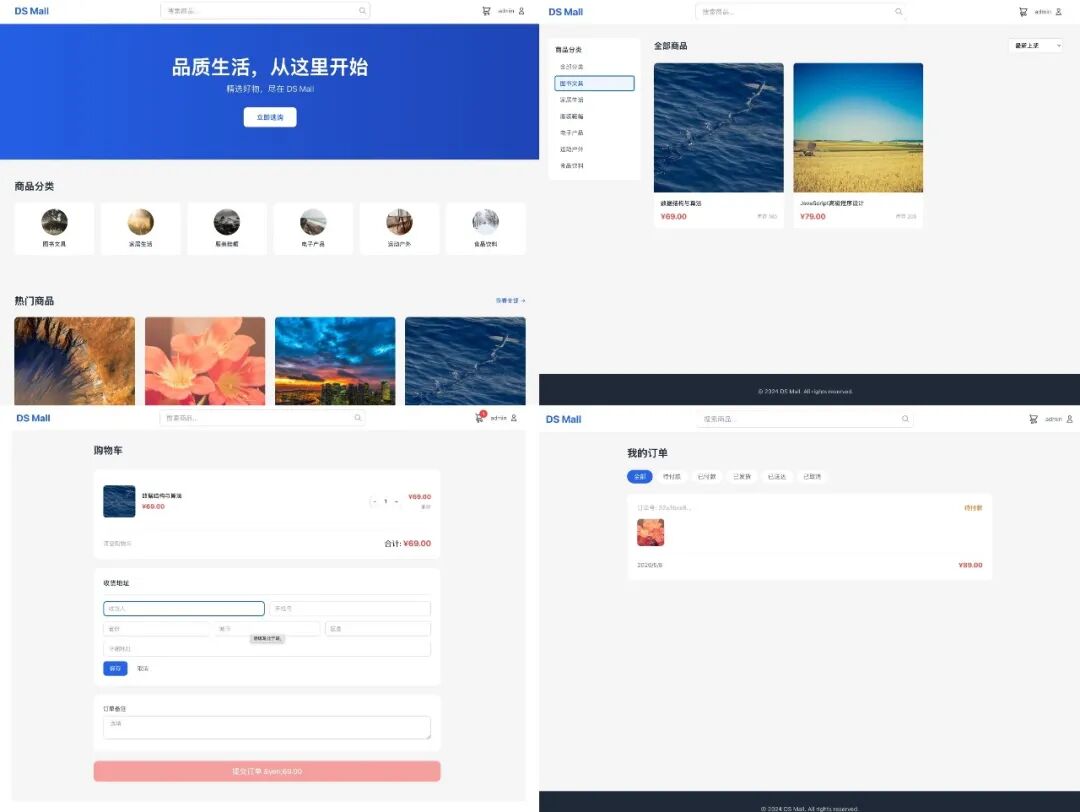
Next came our traditional old-project test: generating an e-commerce site from a single sentence with Trae CN.
Frontend subjective score:
Clean and tidy, with nothing out of place in the layout. The downside is that form validation error messages don't show up. But those gaps are all fairly easy to fix.
Finally, scoring the backend with Cursor:
| Dimension | Max | Score |
|---|---|---|
| Architecture design | 20 | 14 |
| Code quality | 20 | 15 |
| Security | 20 | 11 |
| Database design | 15 | 13 |
| Error handling | 10 | 6 |
| Test coverage | 10 | 1 |
| Docs and tooling | 5 | 2 |
| Total | 100 | 62 |
That's just barely a passing grade, and it doesn't open any obvious gap with Kimi K2.5 and GLM 5, though it scores a bit higher on code quality, architecture design, and database design.
Experience-wise, the first conversation finished in about half an hour, much the same as Kimi K2.5. But there were fewer bugs and fixes were faster, and the total time was under 1 hour.
Clean and decisive work — that's the kind of satisfaction that was hard to get from other models before!
MacOS development
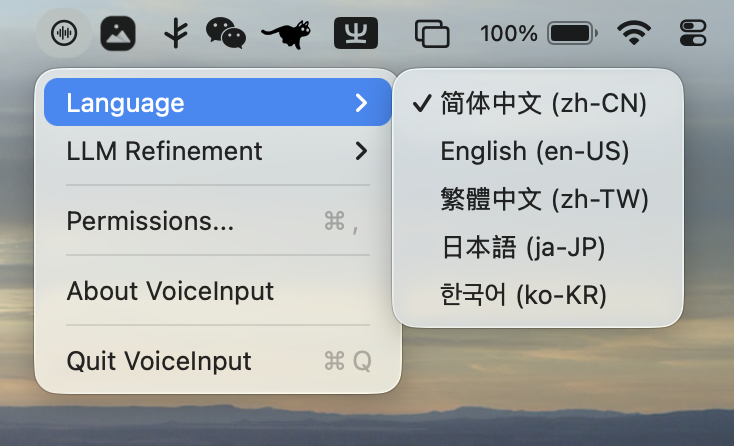
Earlier weekly notes also mentioned using DeepSeek V4 Pro to recreate a prompt that generates a MacOS voice input app.
The original open-source project ran on Claude Code, and this time Open Code + DeepSeek V4 Pro completed the task just as smoothly.
The whole development process was fluid, taking just over an hour in total, with only one bug, which was fixed using DeepSeek's own capability.
That success is also what triggered my idea of using DeepSeek to solve the SSR refactor problem above.

Summary
Although DeepSeek didn't beat Claude Sonnet 4.6 the way everyone expected, the overall experience still puts it at the top of the open-source models.
The benchmarks may be about the same, but it does the work cleanly and decisively, more like a seasoned veteran programmer.