Why Is the Official DeepSeek V4 Flash Release So Strong?
The industry consensus now is that pretraining sets a model's ceiling and post-training determines how close it gets to that ceiling. So what do large model companies actually do at the post-training stage? And what's different about DeepSeek V4 Flash?
It's been more than a week since the official release of DeepSeek V4 Flash, and another round of praise has swept the internet.
After the big-name reviewers ran their tests, the verdict was surprisingly unanimous: capability right up against Claude Sonnet 5, fast, and cheap.
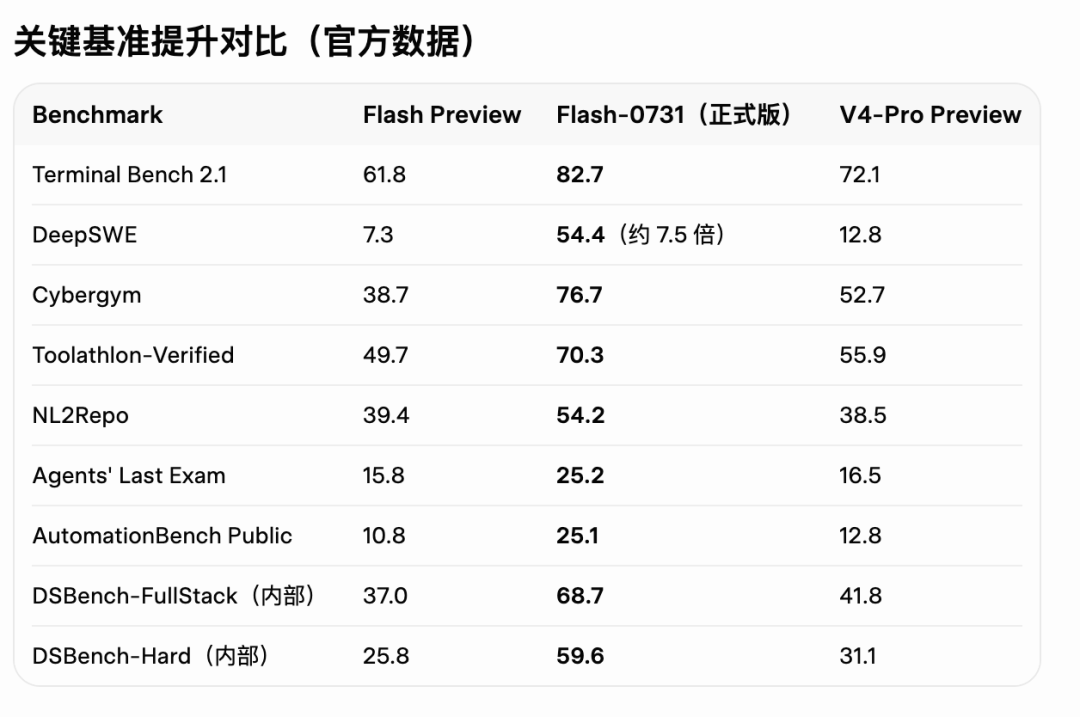
It even produced a new term: "the DeepSeek V4 Flash kill line". Anything better than it isn't as cheap; anything cheaper than it isn't as good. Put that way, more than half the models out there seem to be standing on the edge of elimination.
So the question is: what exactly did DeepSeek get right this time?
To understand that, you first need to be clear on one concept: post-training.
As an analogy, pretraining is like the "general education" stage, where the model reads through human knowledge more or less, becoming a knowledgeable but conversationally hopeless "bookworm". Post-training is the "pre-job training", where you teach it hand in hand how to follow instructions, how to do the work, and how to say what it actually knows properly.
The industry consensus is this: pretraining sets a model's ceiling, and post-training determines how much of that ceiling it can reach.
In the past, everyone put their weight on pretraining and treated post-training as cleanup work. That's no longer the case — post-training has been elevated to a strategic position on par with pretraining.
One very telling signal: DeepSeek, Kimi, and GLM all independently adopted a "preview version + official version" release rhythm. For one thing, it gets the model into users' hands early; for another, it conveniently collects real user feedback to use as post-training data, so the model gets smarter the more it trains.
## What exactly does post-training train?
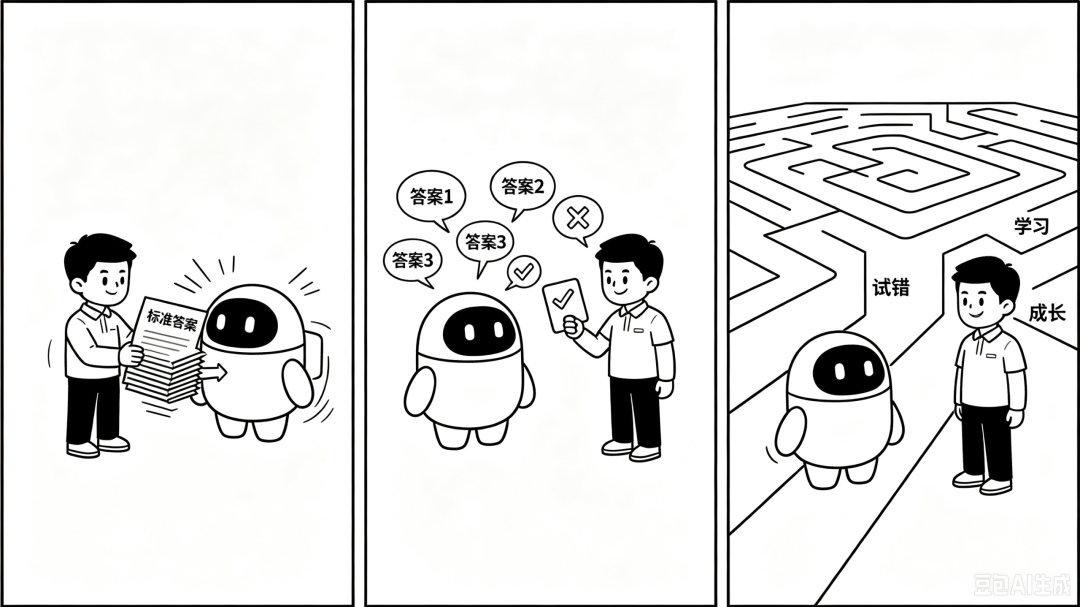
Post-training pipelines are broadly similar across companies, and center on three stages:
- Supervised fine-tuning (SFT): teach it the rules. Feed the model large amounts of human-annotated "standard answers" so it learns to imitate how humans hold a conversation.
- Preference alignment (RLHF/DPO/GRPO): teach it to be liked. Have the model generate several answers, score them by preference, reward the good ones and penalize the bad ones, and it gradually learns to talk like a person and act like one.
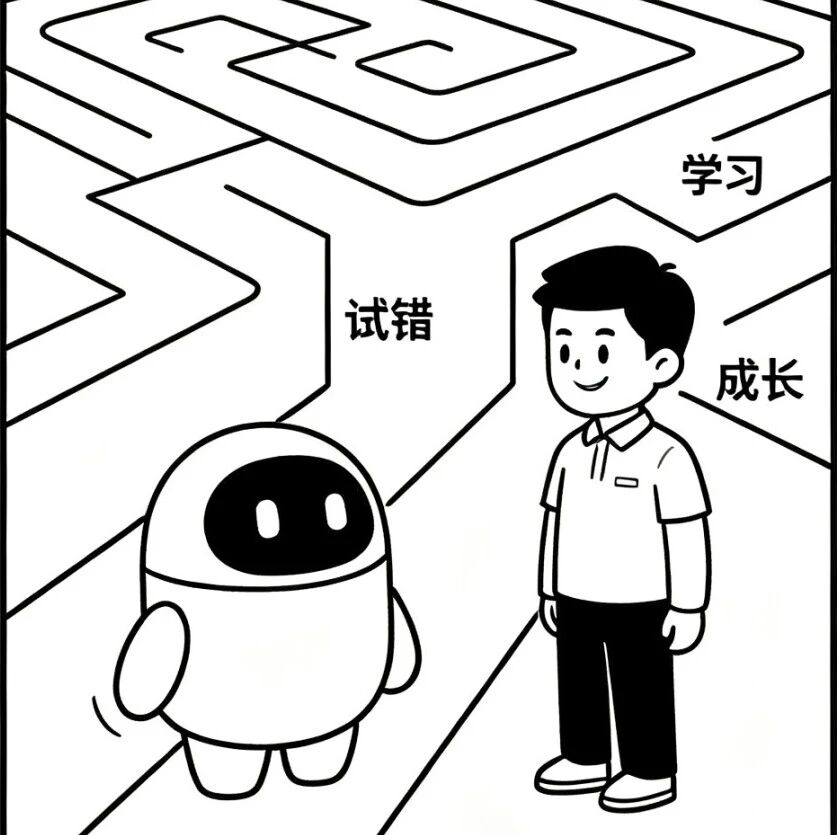
- Reinforcement learning (RL): teach it to think. Set target tasks and let the model grope its own way toward better solution paths through repeated trial and error.
So every post-training upgrade delivers a real improvement in user experience — the model understands you better and follows instructions more faithfully.
## What else did DeepSeek do in post-training?
DeepSeek hasn't published all the training-detail differences between the official and preview versions. Officially, it said exactly one thing: "post-training only."
And the focus of this round of post-training was Agent capability — tool-call planning, multi-turn analysis of tool results, and real software engineering workflows (solving a GitHub issue, for example) all improved noticeably.
V4 itself got some matching optimizations too: it retains reasoning traces across messages, introduces dedicated tool-call tokens (less error-prone than the traditional JSON format), and supports mainstream Agent frameworks — natively supporting the Responses API, plus dedicated adaptation for Codex.
If you go back and read the experts' analyses of DeepSeek's papers, you'll see they obsess over details down to the last inch. So DeepSeek probably has no secret sauce at all — it just digs deeper than everyone else. Being able to take one thing to its limit is worthy of respect in itself.
That said, post-training isn't a sure-win bet, and the further you go, the less sure it is.
MiniMax is an example. In the iterations from M2 to M2.5 and M2.7, not only was the improvement unclear, plenty of users felt it was "reverse optimization". Some analysts said that during that period openclaw was used heavily and generated a heap of low-quality data, which the model swallowed without filtering — and taught itself bad habits instead.
At the end of the day, post-training is like tutoring a student: feed it the right materials and you get twice the result for half the effort; feed it a lousy problem set and it just gets duller the more it practices.
So post-training is good stuff — just don't get greedy with it.