The Best Local LLM Under 100B Parameters—No Contest
Last week, Alibaba's Qwen 3.8 27B picked up a lot of praise in the community, and it made me eager to try it too.
Earlier, someone in the community fine-tuned a very good model using data distilled from Qwen 3.5 + Claude, with standout coding and instruction-following ability. That seems to have inspired the official team as well—this time Qwen is doubling down on coding and instruction following.
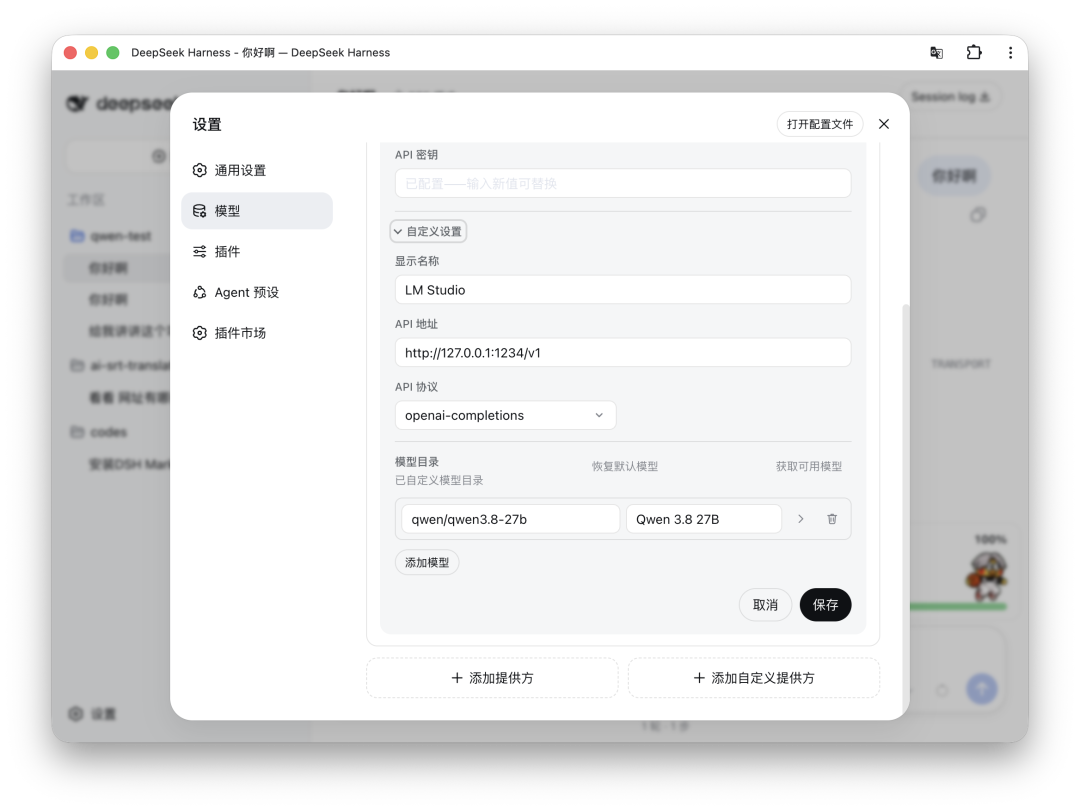
I deployed the model with LM Studio on a MacBook with 36GB of memory. The model is 14.98GB; in theory 16GB of memory or more can run it, but I'd still suggest trying it on a machine with 24GB or more.
In actual testing, my machine ran at roughly 10-17 tok/s. Overall it felt smooth and didn't get stuck easily.
I started with some coding tests—writing pages for a company website, with content mainly covering "About Us," "Projects," and "Contact Us."
At first I used the low thinking level. The generated page ran successfully, but honestly it wasn't impressive—at best the level of Cursor / Claude Sonnet 3.5 from over a year ago. Switching to the Medium level didn't visibly change much either.
Just as I was about to give up, I switched to Extra High thinking depth, and the result shifted dramatically, visibly so:
- The invented company profile was very complete and detailed;
- The overall interaction experience was excellent, with text fly-ins, accordion intros, and other effects added;
- The overall layout was also refined and attractive.
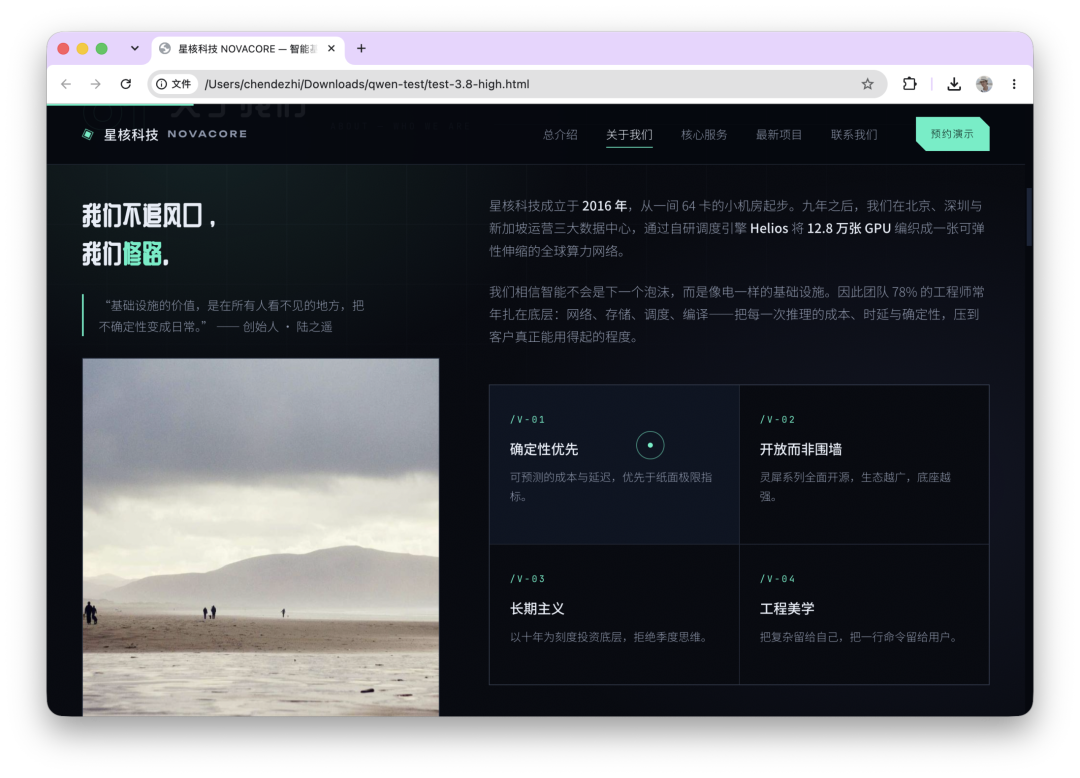
That reminded me of the earlier wave of using HTML to make PPT presentations. If you have that need, this small model might be able to help.
However, this Extra High thinking depth took a very long time—14 minutes just thinking, and 5 minutes generating output.
Since a page like a corporate website couldn't stump it, let it take on a project we're all familiar with: a shopping site.
Before starting, I connected the local LM Studio with DeepSeek Harness.
This project involves a dozen-plus pages in total, including JS interactions and local state persistence. Even for a beginner, that's a project of some difficulty.
But Qwen 3.8 did very well. It followed instructions, read and wrote code smoothly, and could call bash to execute commands. There were some bumps along the way, though, and the whole process took 5–6 hours.
The first two hours went mostly to planning the project, writing the architecture, and writing pages. The HTML and JS parts went quite smoothly and didn't take much time.
But when it reached the CSS stage, problems appeared: it has a bad design habit of writing all CSS in a single file, so it couldn't output it all in one go, and repeated timeout retries all failed.
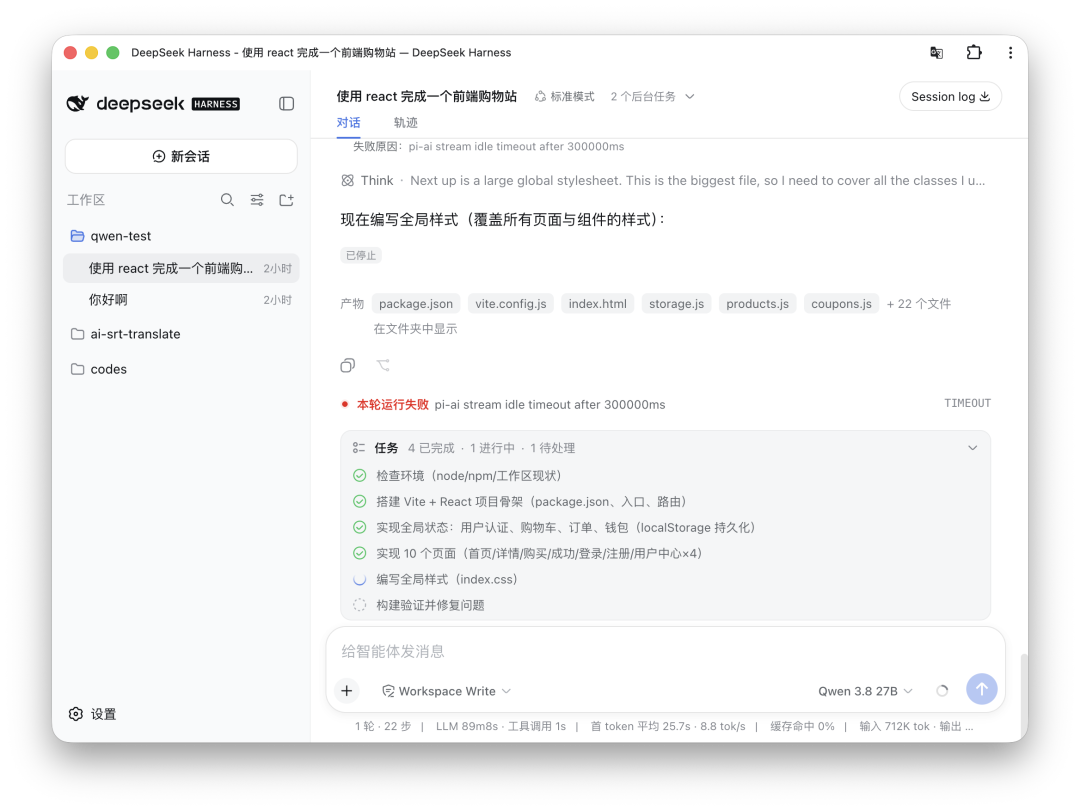
No choice—I had to interrupt it and have it break each small module apart, then subdivide further, step by step. That took another two hours or so.
Because the overall time was already too long, I didn't have the AI run further tests and verified things manually instead.
The final pages look decent overall. Apart from all product images using icons, everything else can be operated and runs normally.
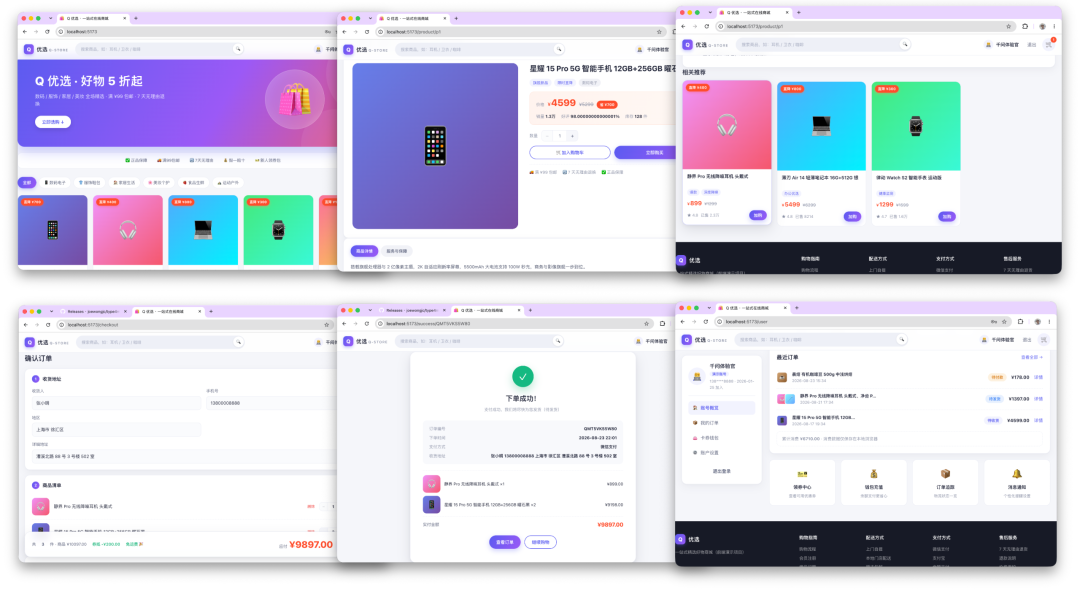
There was also a bug along the way: the cart page was completely blank. I pasted the console output to DeepSeek Harness, and it fixed it directly for me. The fix took a while, though—about 15 minutes.
This model is somewhat similar to GLM 4.7 and MiniMax 2.1, which I tested over half a year ago, and it even performs better—especially with higher bug-fixing efficiency. On my local machine it showed strong practical value.
A large language model with 27B parameters finishing a frontend project like this in 5–6 hours—that level of completion is genuinely surprising.
I think it's the local large model I've encountered so far with the best balance between parameter size and coding ability. The title's claim of "the best local LLM under 100B parameters" holds up too, because Qwen 3.8's 80B model isn't out yet (can't wait~).
I never expected that in less than a year, a 27B model would leapfrog the experience of 100B+ models.
If you're thinking about building a local coding Agent, I strongly recommend Qwen 3.8's 27B model.
The prerequisite, though, is strong enough hardware—ideally at least 32GB of VRAM or a large enough unified memory, pushing inference speed to around 100 tok/s, and the experience will be very smooth, almost latency-free.
But if your hardware is similar to mine and only reaches 10 to 20 tok/s, don't be discouraged—for occasional use or emergencies it's completely sufficient.