Anyone Can Create: The Core Structure and Endless Possibilities of AI Skills
AI Skills are quietly finding their way into everyday work. They are no longer complex scripts that only programmers can write — they let anyone package routine operations into intelligent skills that run with a single click. This is more than a productivity gain; it is a fundamental change in how we collaborate with computers.
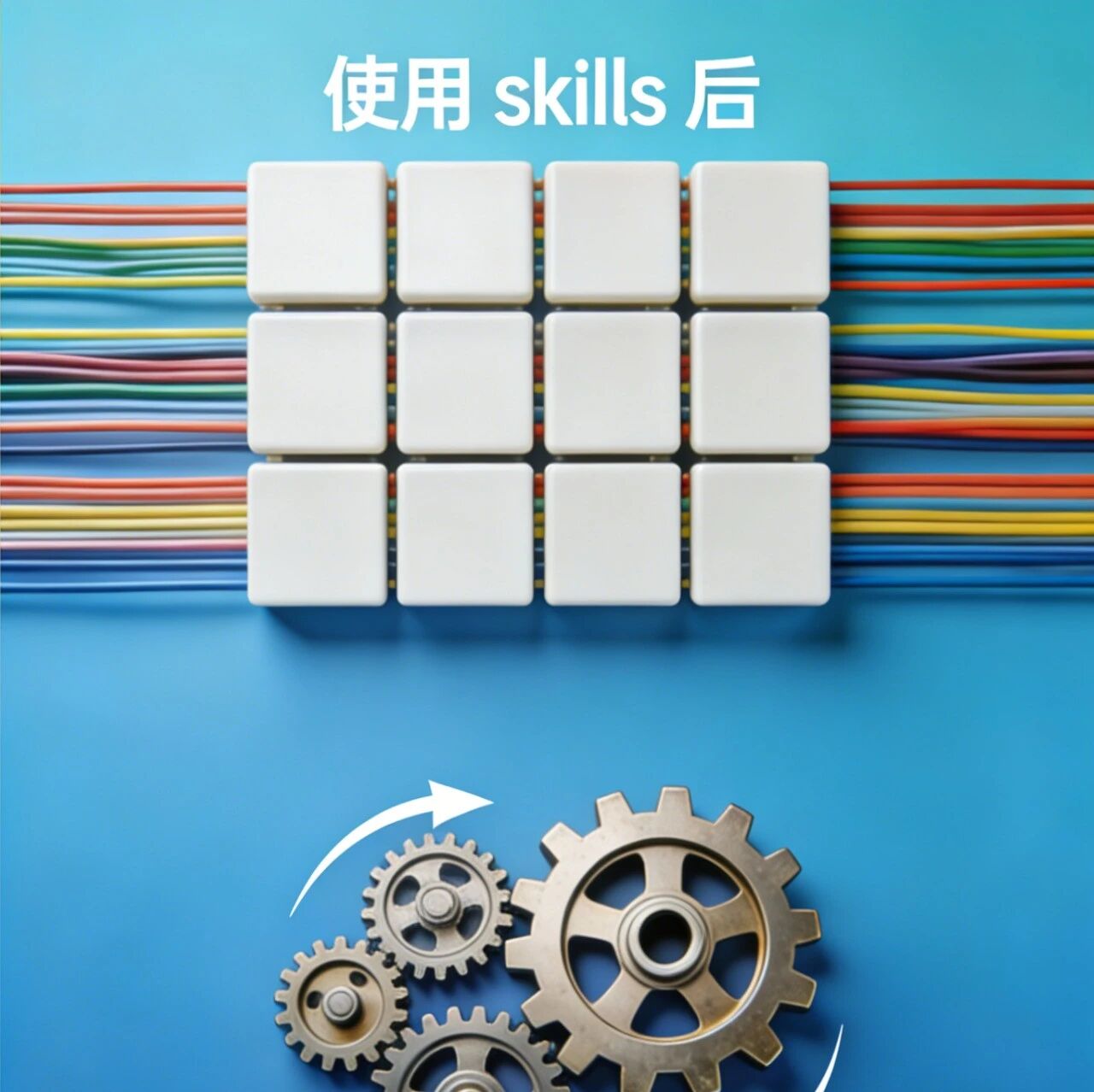
Claude Code introduced the Skills mechanism and extended it beyond coding to the Claude Cowork desktop AI that ordinary users work with, and users have come to appreciate a brand-new possibility: wrapping complex processes into reusable skills.
This shift has not only changed the way we work — it is also quietly pushing out traditional automation tools such as n8n and dify, which have limited extensibility and high maintenance costs.
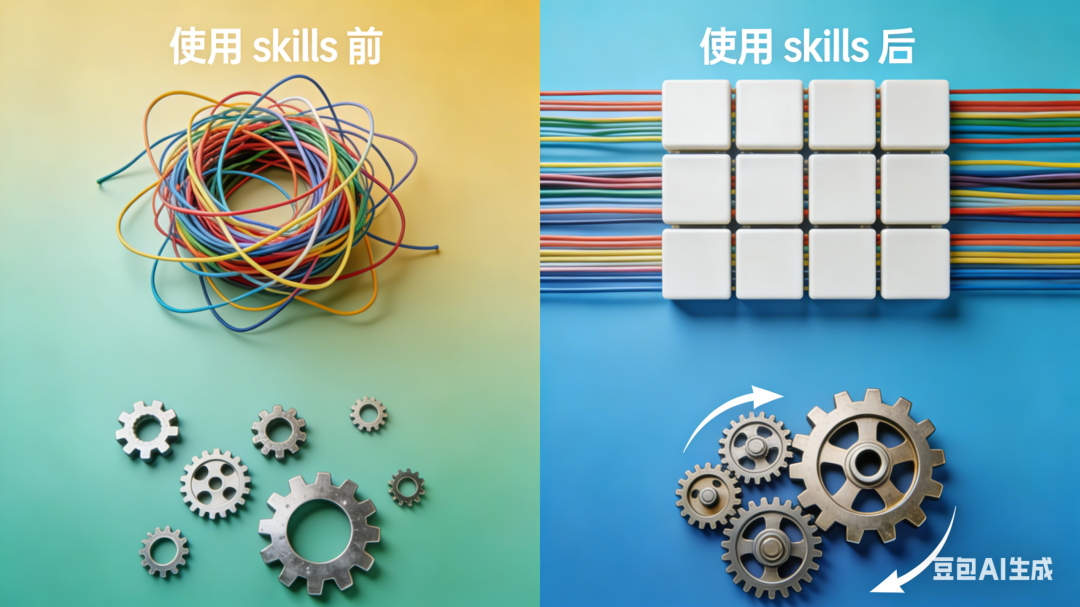
The arrival of Skills breaks through these limits. By packaging a process as a skill, developers gain:
- Cross-platform reuse: Skills run in many AI tools, including Claude Code/CoWork, OpenCode/Openwork, Cursor, Trae, and OpenClaw
- Limitless extensibility: direct access to the command line, system packages, and network resources
- Version-control friendly: skill files can be managed with Git just like code
The Core Structure of Skills: Simple yet Powerful
A standard Skill has four core parts:
skill-name/
├── SKILL.md      # Skill description document
├── references/   # Reference materials and example documents
├── scripts/      # Execution scripts
└── assets/       # Resource files
The key differences from an ordinary Command:
-
Resource management: can supply reference files, templates, and data samples
-
Script support: can run arbitrary Shell, Python, and Node.js scripts
- Environment integration: calls packages already installed on the system directly, or installs missing dependencies over the network
This means Skills can carry out any task a human can perform on a computer — from file handling to network requests, from data conversion to system administration.
Anyone Can Create Their Own Skill
These days there are plenty of open-source third-party skills, and the AI company vercel has collected them all in one place:
https://skills.sh/
Beyond third-party skill packs, creating your own Skill is not hard at all.
You can follow the directory structure above and build your Skill item by item, but the better approach is still to let AI create it for you:
Method one: use Skill Creator (efficient and standardized)
Most AI tools already ship with Skill Creator, a Skill for creating Skills. You just tell it in the conversation that you want to create a skill:
Please help me create an xxx skill that does xxx
This launches the Skill Creator interactive wizard. You answer questions about the skill's goal, inputs and outputs, dependencies, and so on, and the tool automatically generates a standardized Skill structure and fills in the actual implementation code.
Method two: AI-assisted generation (the smartest)
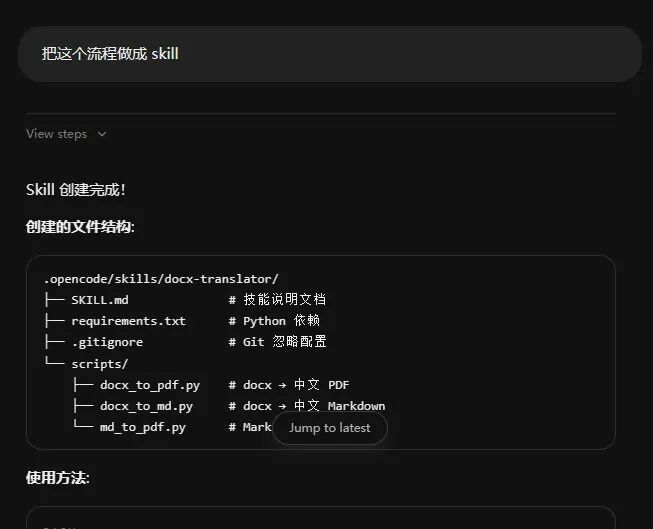
Another approach is to walk AI through your existing workflow once. When the task is done, simply ask AI:
Please wrap the workflow I just completed into a Skill
AI analyzes the history of your operations and automatically generates the complete Skill structure, scripts, and documentation.
In the Age of Skills, Do We Still Need Traditional Software?
The answer is yes, but the need drops sharply.
It is not the case, as many independent media accounts claim, that software simply disappears.
Digital systems inside enterprises will certainly remain essential; without digitalization, there is naturally no path to intelligence.
What Skills mainly replace is middle-layer process software — the plugins, small utilities, and converters built for specific workflows.
A typical case: publishing to a self-media WeChat official account
- Traditional way: edit in Word → beautify with a layout plugin → create images for the article → copy everything into the WeChat official account backend → upload the images → set tags manually
- Skill way: a single
wechat-publishSkill handles it all automatically:
Use `wechat-publish` to publish ....
Changes in the office setting:
- Financial reports generated and sent automatically
- Meeting minutes organized and distributed automatically
- Project progress synced and flagged automatically
- ......
These workflows used to require several pieces of software working together; now one Skill is enough.
Looking Ahead: The Endless Possibilities of the Skill Ecosystem
As Skills become widespread, we are witnessing:
- The rise of a skill marketplace: developers share and trade distinctive Skills
- Vertical-domain specialization: custom Skills for finance, healthcare, education, and other industries
- Deep integration of AI capabilities: Skills are naturally suited to packaging AI invocation flows
- Standardized team collaboration: Skills become the vehicle for a team's internal best practices

Core principle: start by solving one small pain point, then improve step by step. Every Skill is an investment in your own work efficiency.
Related articles:
A Common Introduction to AI Application Concepts: Agents, Skills, and MCP
#skills #AI-skills #openclaw #Claude #automation #productivity-tools