Domestic AI Coding IDEs Take On a One-Shot E-commerce Site
AI coding has entered its second half. Today I'm putting the coding IDEs from major domestic vendors to the test: I'll have them build a genuinely usable project and see whether that's actually feasible.
After Cursor's explosive growth, the major domestic vendors piled into the AI coding race too. Can their IDEs hold up in real development work? How much further do they have to go before they're practical?
Today I'll use IDEs from a few big vendors to take on building a real, usable e-commerce site in a single shot, and see how they do.
IDE choices: AI IDEs that work in China without a VPN. They are: Tencent CodeBuddy (China edition), ByteDance Trae (China edition), Baidu Comate, and Alibaba Qoder.
Task: Build an e-commerce site from 0 to 1.
Prompt:
Build a frontend shopping site with React.
The shopping site needs to cover 10 pages:
- Home (product listing page)
- Product detail page
- Product purchase page
- Purchase success page
- User login page
- User registration page
- User center - dashboard
- User center - orders page
- User center - wallet (card and coupon pack)
- User center - settings
The hard part:
-
Completeness and overall consistency of the site
-
A genuinely complete frontend project
🐧 Tencent CodeBuddy (China edition)
Friendliest interface of the bunch — not as cold and clinical as the other IDEs. No idea whether the robot kitten mascot will start acting cute in the future~
I used Craft mode (why doesn't anyone copy Cursor's Auto mode?), and it could finish the task in one go! Tencent's servers are fast, with no lag at all.
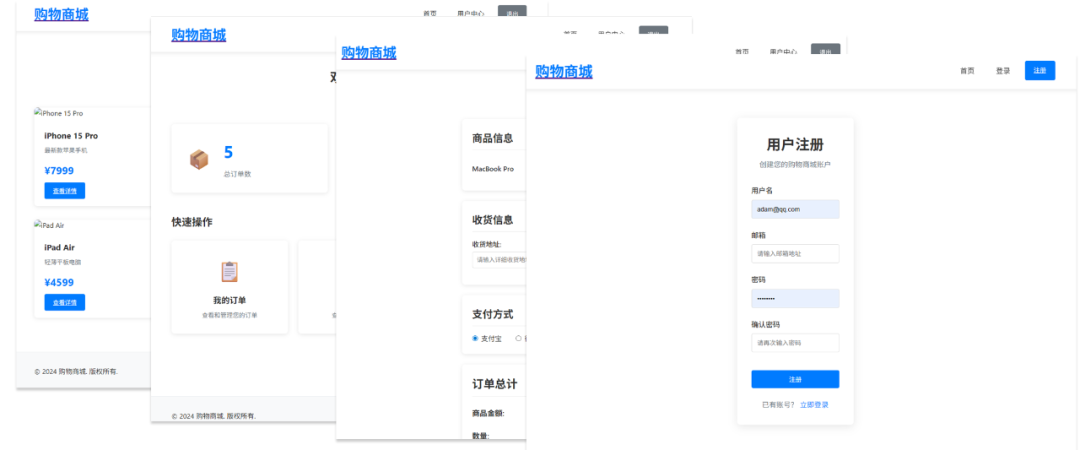
The finished interface leans toward mobile, but it does have simple responsive adaptation — it's just that the login and registration screens are a bit distorted.
The shopping flow is complete, with basic form validation, but all the images are placeholders, and the product detail page is too simple...
Overall it's built around Tencent blue. Simple, but usable!
Code quality is fine, and styles and JS are separated. The only issues are that the project architecture is too simple and the mock data is coupled into the code.
🎵 ByteDance Trae (China edition)
The interface operations carry over from Cursor, and there's a privacy mode too~
Development happens in Builder mode (after domestic "autopilot" got flamed, has everyone collectively turned their backs on Auto mode?)
The output from the first task attempt would run but threw errors; it took several rounds of fixes before I could see any result...
The plus side: complete form validation, and the product detail page has more information than Tencent's.
But the project has quite a few problems: it's crude overall, the mobile interface isn't responsive, the buttons are white text on a white background so they're invisible, the images are all placeholders, and the color scheme is baffling.
The later rework will be no small job!
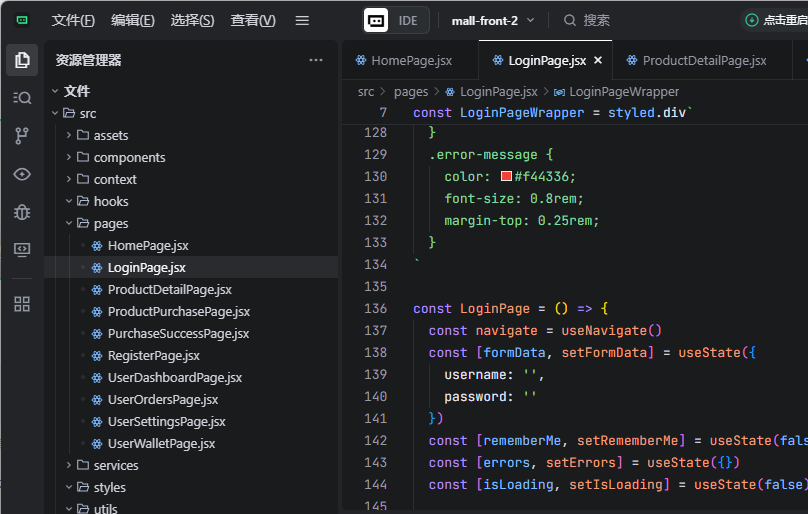
Code quality is decent — styles are separated, just not into standalone files, which isn't a big deal. Structurally you can see slots left for hooks, context, and so on, but the contents are actually empty.
The other thing is that development speed is so slow you want to pay for a speed-up. But since the China edition presumably uses ByteDance's own model, there's currently only a free version.
🤖 Baidu Comate
With multiple Agents, you're momentarily at a loss over which to pick.
Zulu mode is fast, but the project structure is a mess — it actually created a folder with the same name inside a folder! In the end the project wouldn't run.
Architect mode claims to handle complex tasks. But the service responds a bit more slowly. With this mode the final project could run, but with no shortage of errors; after many attempts at fixing them came to nothing, I gave up in tears 💔
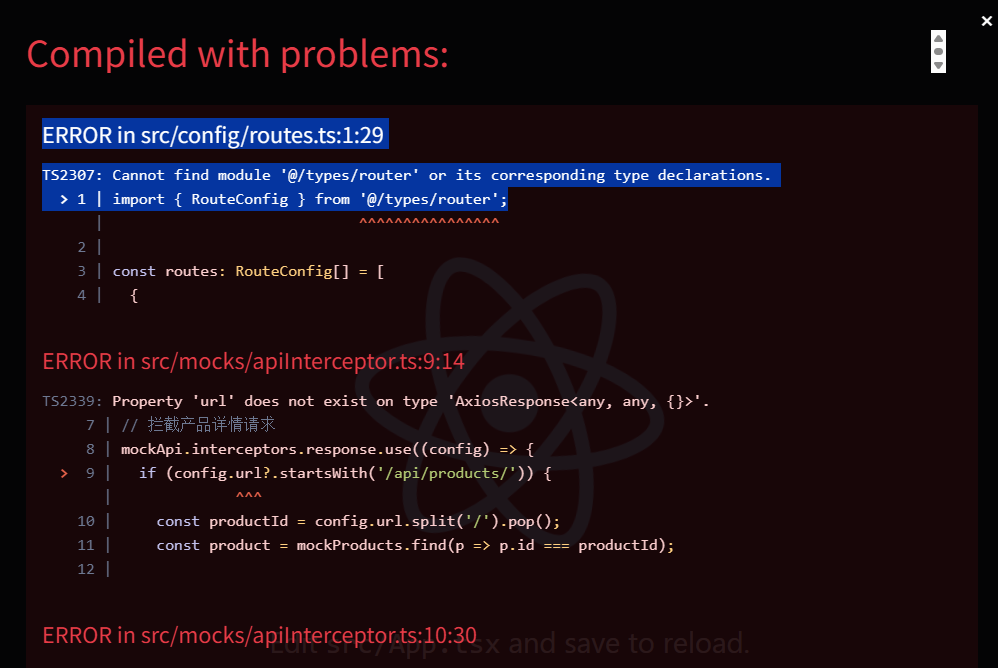
It's the only IDE that couldn't finish the task in a few steps.
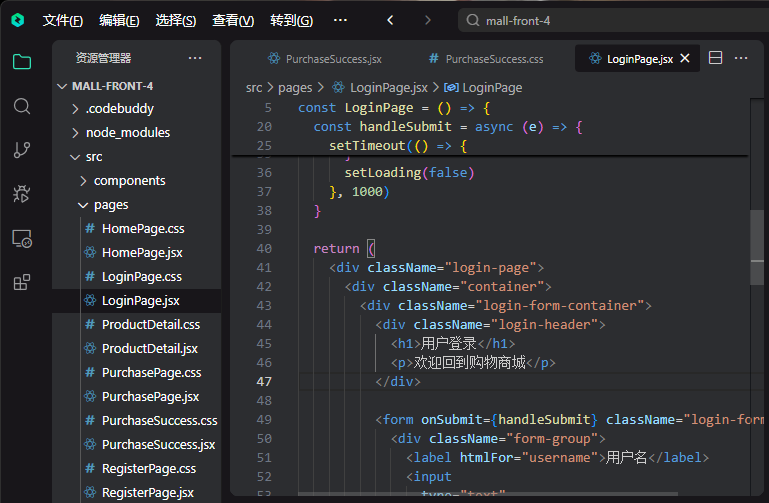
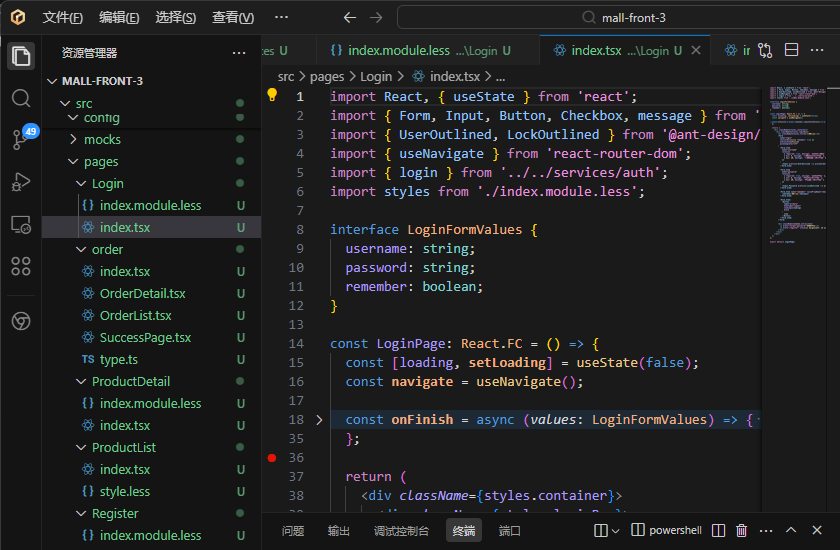
That said, the code is very standard and clean. In the screenshot below you can see that every page has its own independent styles, so each page is very lean.
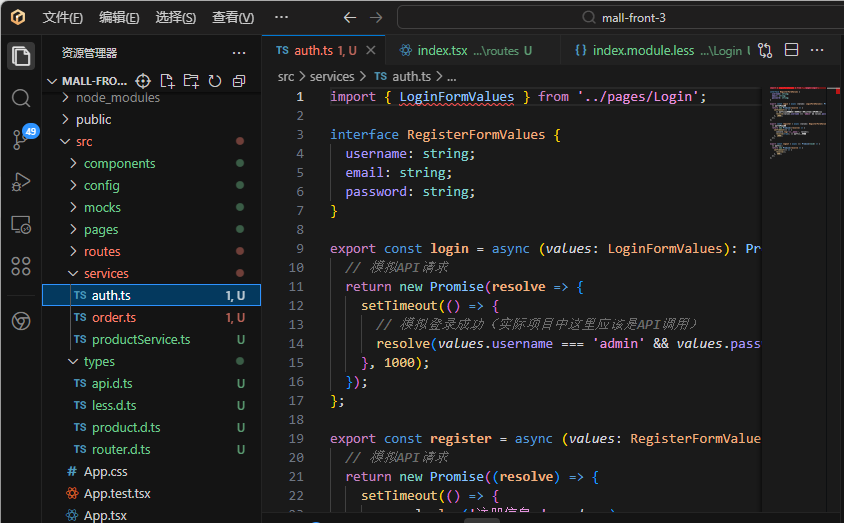
Also, its project structure is the most sensible of the several IDEs: routes, services, and types all have their slots, and the mock data is separated out too. In fact, its code is the friendliest for later project maintenance.
If you use it in actual development, it's probably better to scaffold the project yourself first and then use Comate to generate things step by step.
👑 Alibaba Qoder
This name... normal people really can't spell it! Is it to make the Qwen naming consistent? Wouldn't Qcoder have been fine? Why insist on making it harder for users to spell 😤
But the experience really is the best of them!
First of all, Alibaba Cloud's service responds super fast, with almost no lag!
At the very start, it nearly generated a complete frontend + backend (Node.js) project for me; I hit pause in a hurry and added a prompt so it only did the frontend...
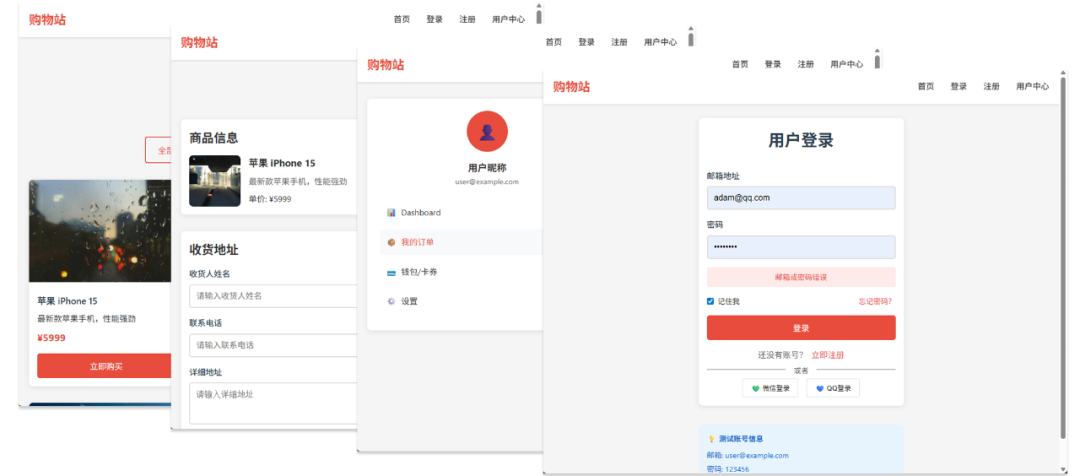
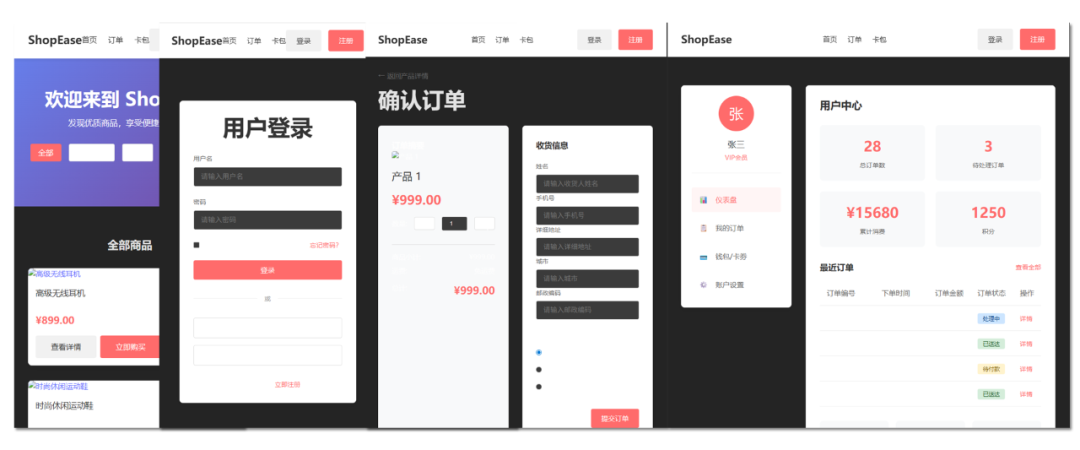
The result is stunning! Responsive adaptation is close to perfect, the workflow is smooth, form validation is thorough, it used network images for the pictures, and it thoughtfully threw in a 404 page too~
Overall it has Taobao-style colors, all 10 pages are present and accounted for, and the experience is the most complete!
The only thing is that code quality is so-so: styles and mock data are coupled into the JS, and the project structure is too simple, so later maintenance requires major adjustments. (After several follow-up iterations, the adjusted code quality and structure were fine.)
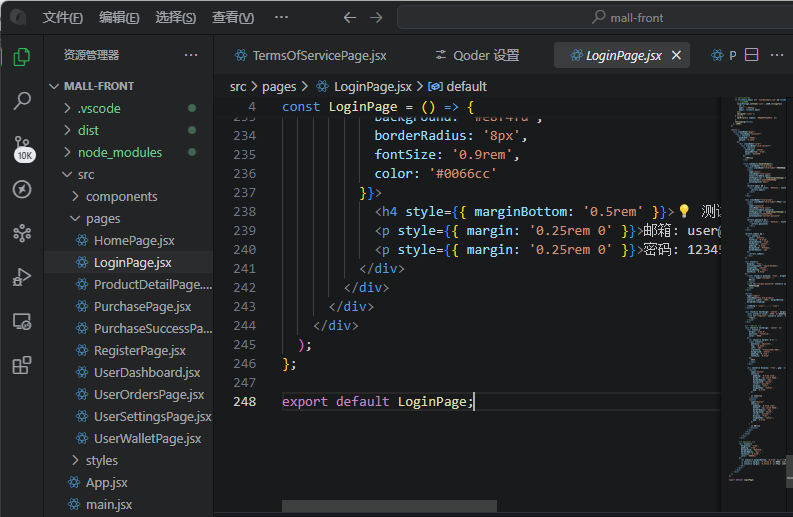
Also, in settings there is a privacy mode, but it isn't open yet.
Another thing: this task consumed 150 Credits, which is 15% of the free plan's 1000 Credits. On the personal professional plan at 2000 Credits, that's still 7% consumed. If you often need to do complex tasks, you'll very likely find your monthly Credits aren't enough.
Summary
If I had to recommend one to the general public, Alibaba's Qoder is undoubtedly the best experience. It's the same list price as Cursor, currently half off. The results are no worse than Cursor's. Alibaba's investment in AI is plain for all to see; for enterprise use, the only reservation is that privacy mode isn't available yet.
For experienced programmers, Trae — with privacy mode and decent coding ability — is also a good choice. But the server resources really aren't enough; I hope a paid version launches soon and that its own model's handling of styling improves.
Tencent's CodeBuddy sits between the other two: its strengths are fast server response, decent output, and a friendly interface; its weakness is that the output is too simple, and it's unclear whether privacy mode will ever arrive. The reason I don't rank Tencent higher is that, compared with the other three vendors, Tencent's overall investment in AI is still insufficient.
The code Baidu's Comate generates is itself of decent quality, but unfortunately it can't deliver in one shot, so it's better suited to programmers with some coding ability.