Alibaba's AI Feast and the Loneliness of China Internet Stocks
As soon as Alibaba's 2025 Q2 earnings came out, its stock jumped and the market rejoiced — thanks no doubt to 26% growth in its AI-related cloud intelligence business. Yet most China Internet companies have nothing to do with it.
As soon as Alibaba's 2025 Q2 earnings came out, the stock surged 15% and the market rejoiced. Behind it, heavy investment in AI infrastructure played no small part — nowadays, among the AI models that American SMBs deploy privately, apart from DeepSeek, there's Alibaba's Qwen. Chinese AI large models quietly blooming in Silicon Valley's backyard — you have to admit it's a satisfying "reverse tech export" storyline.
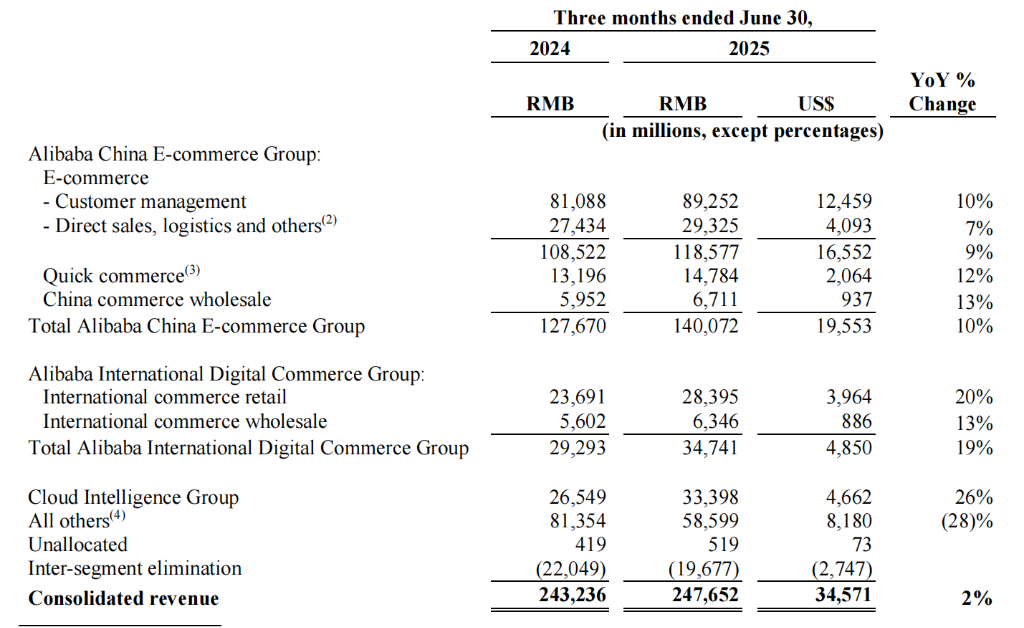
Cloud Intelligence Group revenue accelerated to 26% growth, with AI-related product revenue growing triple digits for 8 consecutive quarters
Unfortunately, this joy has almost nothing to do with other China Internet companies. Look closely and among the constituents of the China Internet ETF, very few truly have AI DNA.
Alibaba goes without saying; the only other one that can put up a fight is Baidu. Baidu was the standard-bearer of "All in AI", far ahead in the early years, but due to strategic wavering and internal organizational friction, it gradually went from front-runner to also-ran. Interestingly, the AI startup world is full of Baidu "graduates": Anthropic co-founder and CEO Dario Amodei came from Baidu, and the recently viral overseas product GenSpark was built by Baidu veteran Jing Kun — only Baidu didn't invest in a single one of these projects. Truly "graduated from Whampoa, the students became generals, and the commandant is still marching in place on the parade ground".
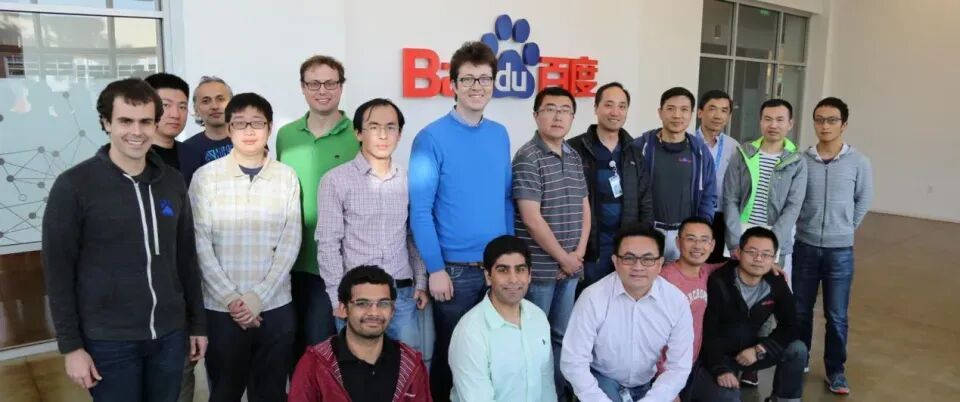
Baidu North America group photo
Tencent's Meituan and JD are still fighting hand to hand in the trenches of "local life" and "e-commerce logistics". Meituan is still smug that its algorithm can squeeze a few more minutes out of its riders, as if AI's only use is making delivery a little faster — yet this delivery war was another double loss.
What about Tencent itself? It has long been jokingly called "a game company with no faith in technology plus an investment firm". Even former vice president Wu Jun publicly complained that "Tencent lacks the patience for long-term investment in technology and products". Although it has now co-invested in AI projects like Kimi, it still looks like spectator-style participation — "others eat meat, I drink soup".
As for NetEase? It sits firmly on its gaming empire, with an AI layout as slow as a snail. The older generation of portals needn't be mentioned — Sohu's Zhang Chaoyang switched to teaching physics, and Wang Xiaochuan started an AI company but never made big waves again, like a middle-aged man's technological sleepwalking.
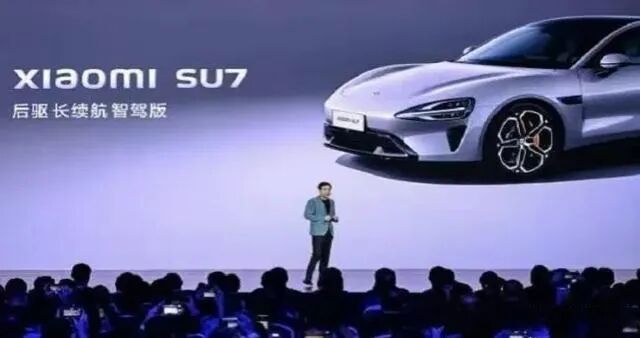
Xiaomi is busy making cars and making gods, but a launch-event accident knocked it off its pedestal; Lei Jun's storytelling ability for the "AI all-ecosystem" hasn't yet caught up with his PPT aesthetics.
Pinduoduo is still playing its "cut one more" magic: users are forever 0.01% away from withdrawing, and the algorithm always knows better than you how to get you to share the link.
ByteDance loves "tittytainment", and AI is only used to keep you scrolling videos. As for open-sourcing models? Sorry, we choose to admire ourselves behind closed doors.
It's not that there are no bright spots at all. Ctrip, riding the global travel recovery, has decent financials, but it has little to do with AI — pure "winning by lying down".
The only one that turned red thanks to AI is Meitu — its stock price multiplied several times as it returned to its "beauty main business". Unfortunately, in the eyes of the China Internet giants, it probably counts only as a "shrimp-class player" that mainstream ETFs can't be bothered to allocate to.
Speaking of which, China Internet is also "unloved by both parents": A-share funds can't buy it, overseas institutions look down on it, and only Chinese retail investors quietly hold it. The result: when A-shares rally it doesn't follow, and when US stocks hit new highs it plays dead.
This year the China Internet index's chart looks okay, but compared with the CSI 300, there's nothing impressive about it.
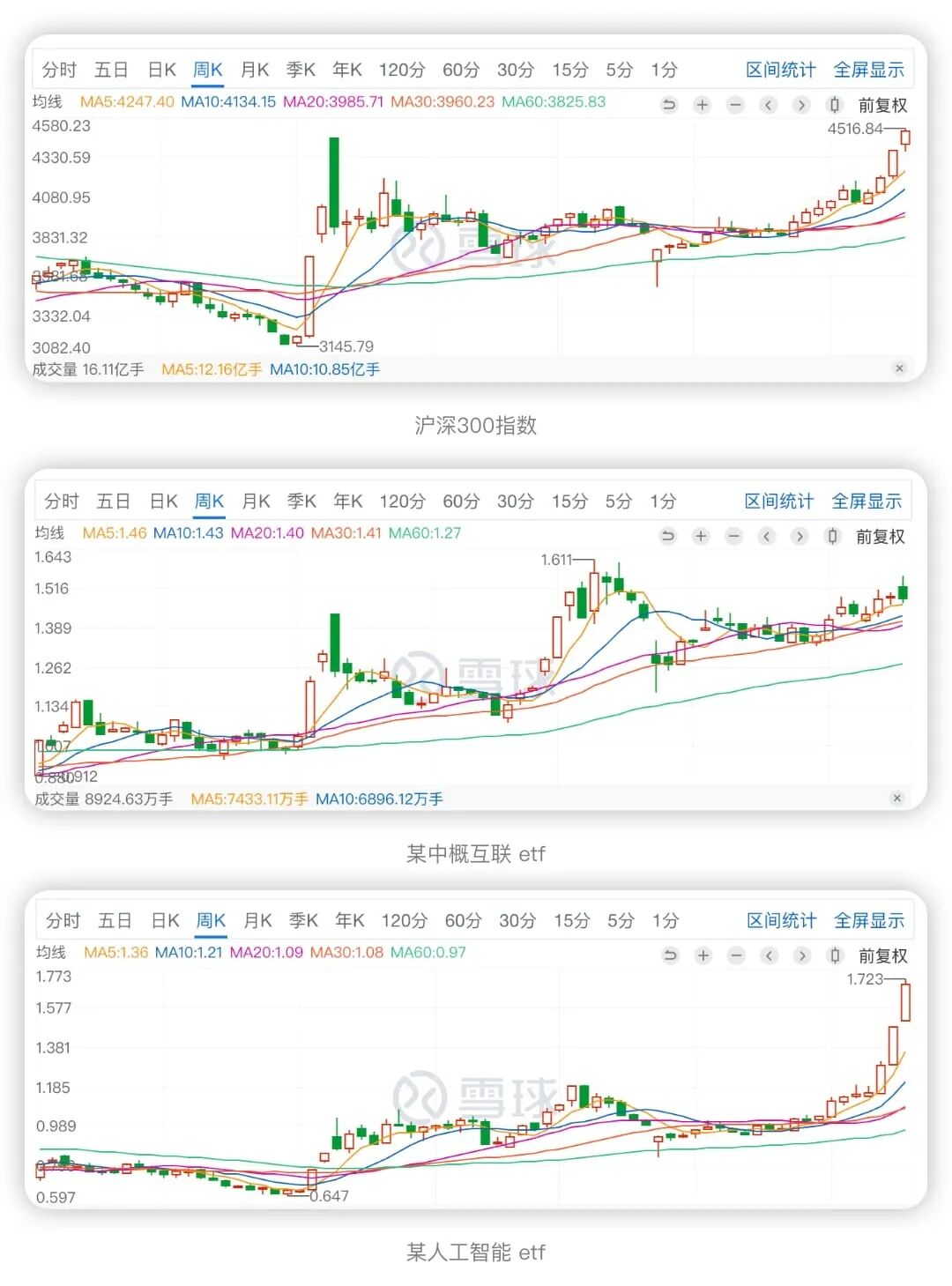
Looking again today, it's not that China Internet companies are no good — they just didn't get on the AI train. While global capital is hunting for "the next Nvidia", the constituents of China Internet are still delivering food, cutting prices, scrolling short videos, and building cars...
This is hardly "internet" — it's clearly a collective confession: "AI has nothing to do with me".