Why AI Development Needs Workflow Tools
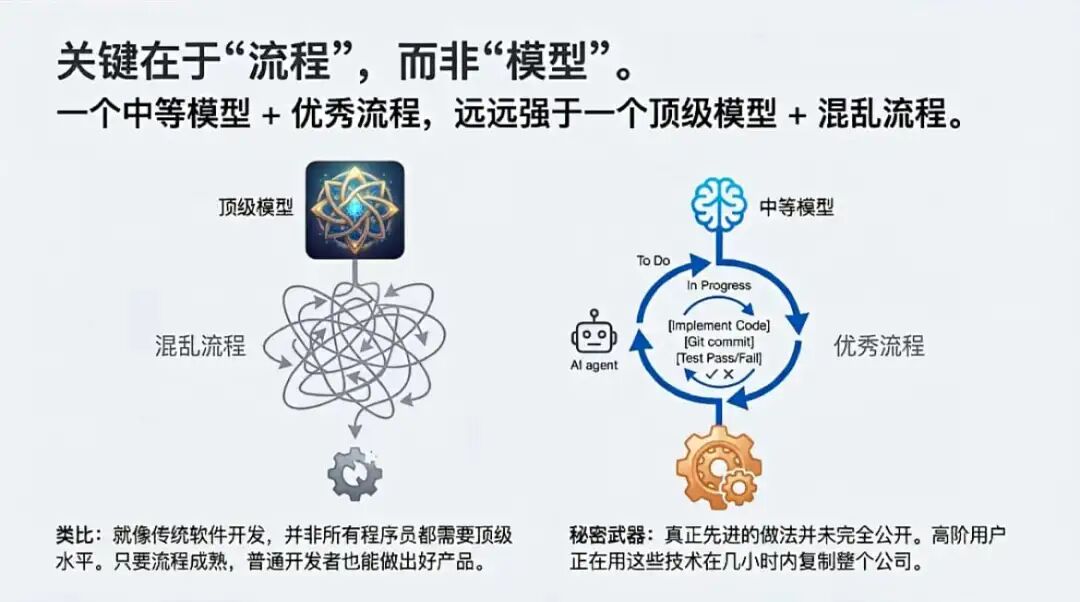
After trying a whole range of AI coding workflow tools, one thing hit me hard: a clear process often matters more than the model itself.
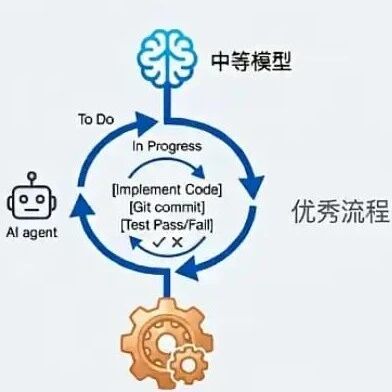
After trying a whole range of AI coding workflow tools, one thing hit me hard: a clear process often matters more than the model itself. Some people go so far as to claim: "a mid-tier model plus an excellent process is far stronger than a top-tier model plus a chaotic process." In practice, that has held up.
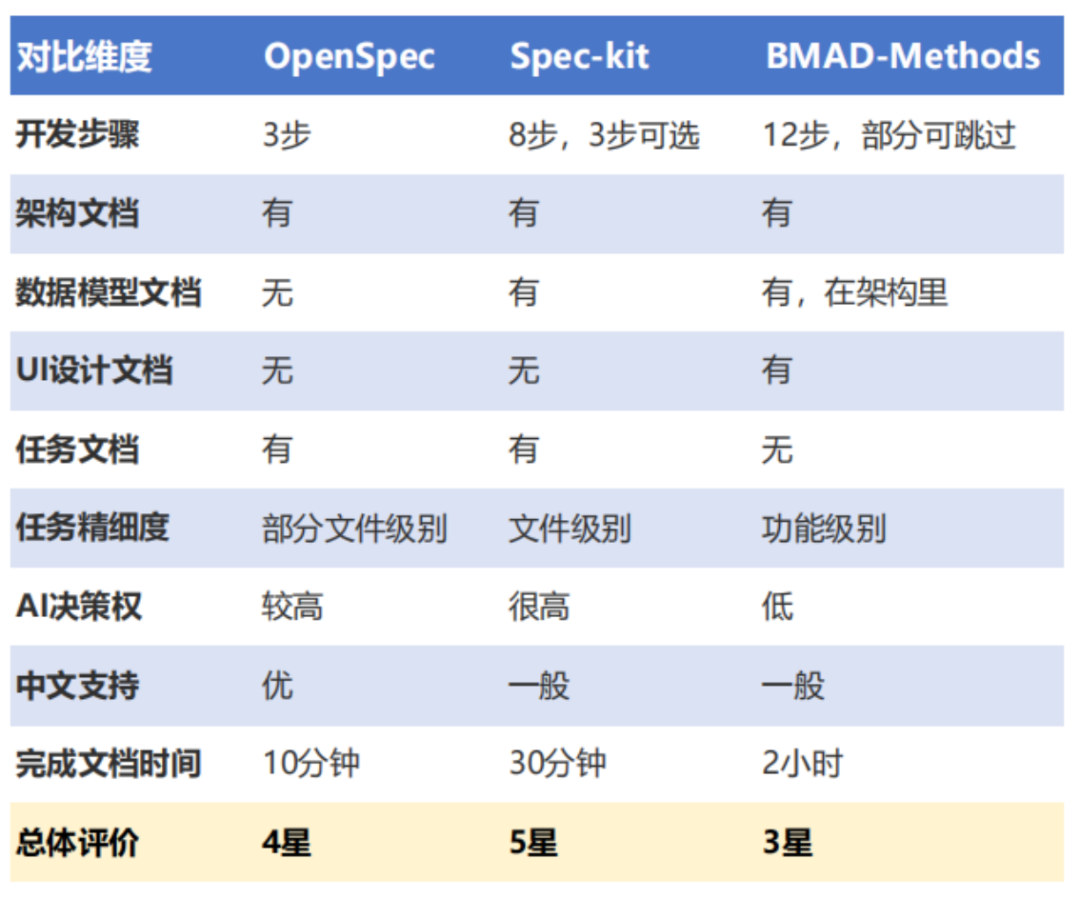
Comparing the three mainstream tools
1. Spec-kit: a precise, controllable, engineering-first approach
- Pros: thorough documentation, clear data structures, and tasks broken down to the file level.
- Experience: once the requirements doc is confirmed, you can more or less let the AI run with it, and reliability is high.
- Best for: complex projects that need strict planning and traceability.
2. OpenSpec: the flexible, efficient middle ground
- Pros: more powerful than the Plan mode built into an IDE, and lighter than Spec-kit.
- Experience: it strikes a good balance between complexity and flexibility.
- Best for: projects of moderate complexity that need some planning without tipping into over-design.
3. BMAD-Methods: a cautionary tale in over-subdivision
- Cons: too many roles (12 of them), a bloated process (a single document takes 2 hours), and no autonomy for the AI to make its own decisions.
- Reflection: more granular isn't better. Leaning too hard on human sign-off slows everything down, and it isn't a fit for most developers.
4. SuperPowers
After I finished testing the three above, I noticed a lot of people pushing SuperPowers. The official pitch is that it's a tool for developing on a TDD (test-driven development) foundation.
The default flow has only 3 steps—brainstorm -> make a plan -> execute the plan—and TDD has to be turned on yourself. My experience with it wasn't good. Because it doesn't generate a spec doc, I felt like I was flying blind. In the end the product came out exactly as I expected: missing lots of pages, and I had to spend a lot of time fixing bugs.
For now, I don't recommend it.
My selection strategy
- Simple requests → the IDE's built-in Plan mode (fast and direct)
- Moderate complexity → OpenSpec (balances flexibility and structure)
- Complex projects → Spec-kit (engineering rigor as a safety net)
How workflow tools are evolving: from assistance to autonomy
What's more exciting is that AI coding workflows are evolving from "humans directing the AI" toward "AI collaborating on its own." Of course, none of these techniques or tools are mature yet—worth keeping an eye on as they develop.
Automated workflow orchestration
- Representative tool: Auto Claude
- Features: supports up to 12 parallel sessions, with cross-session memory, conflict avoidance, and a built-in kanban.
- Why it matters: the AI starts verifying problems and coordinating tasks on its own, cutting down on human interruptions.
Self-looping execution systems
- Representative project: Ralph Claude Code
- Core mechanism: the code Claude generates can be automatically tested, fixed, and iterated, forming a closed development loop.
- Potential: it's testing whether "AI iterating on its own development" is really possible.
Why do we have to care about workflows?
1. It amplifies model capability
With OpenCode + MiniMax (a mid-tier model) and a sensible Plan mode, I can produce a highly usable app. That shows that a good process can make up for a model's shortcomings.
2. It lowers cognitive load
A clear process frees developers from the nitty-gritty decision of "what should I do at each step," so they can focus on higher-level design and acceptance.
3. It makes collaboration at scale possible
When multiple AI agents (or AI and humans) work together, the process defines the rules of interaction, the boundaries of responsibility, and the standards for verification, which keeps chaos and conflict at bay.
4. It pushes AI toward autonomous evolution
Systems like Ralph Claude Code show that a process isn't just a management tool—it's the scaffolding for AI capability to evolve. With well-designed processes, AI can learn to iterate on itself and optimize itself.
Conclusion
AI coding has moved past the toy stage of "one prompt, one response." To really get productivity out of it, we have to value workflow design as much as we value the algorithm or the model.
The best developers of the future probably won't be the ones who write the best prompts, but the architects who understand best how to design AI collaboration workflows. Because the process sets the ceiling on what AI can do, and it also decides whether we can move from "AI-assisted programming" to "AI creating on its own."