Weekly Notes 17 | Why Is the 2B Small Model Swearing at People?
Lately there's been a popular saying: many people are actually local 2B small models. The metaphor comes from the AI world — 2B means a small model with about 2 billion parameters, limited in ability, often answering at cross purposes.
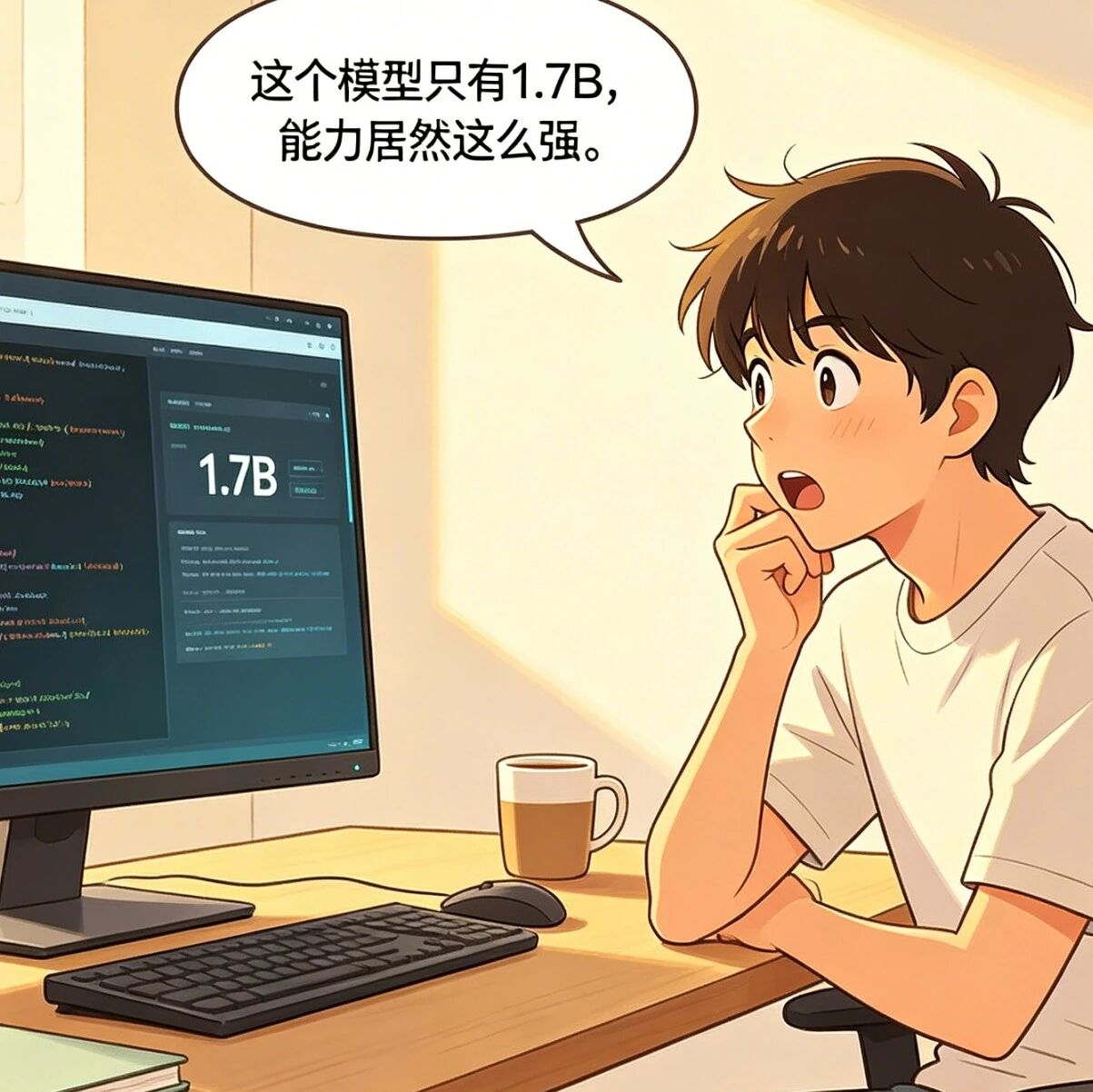
Lately there's been a popular saying: many people are actually local 2B small models.
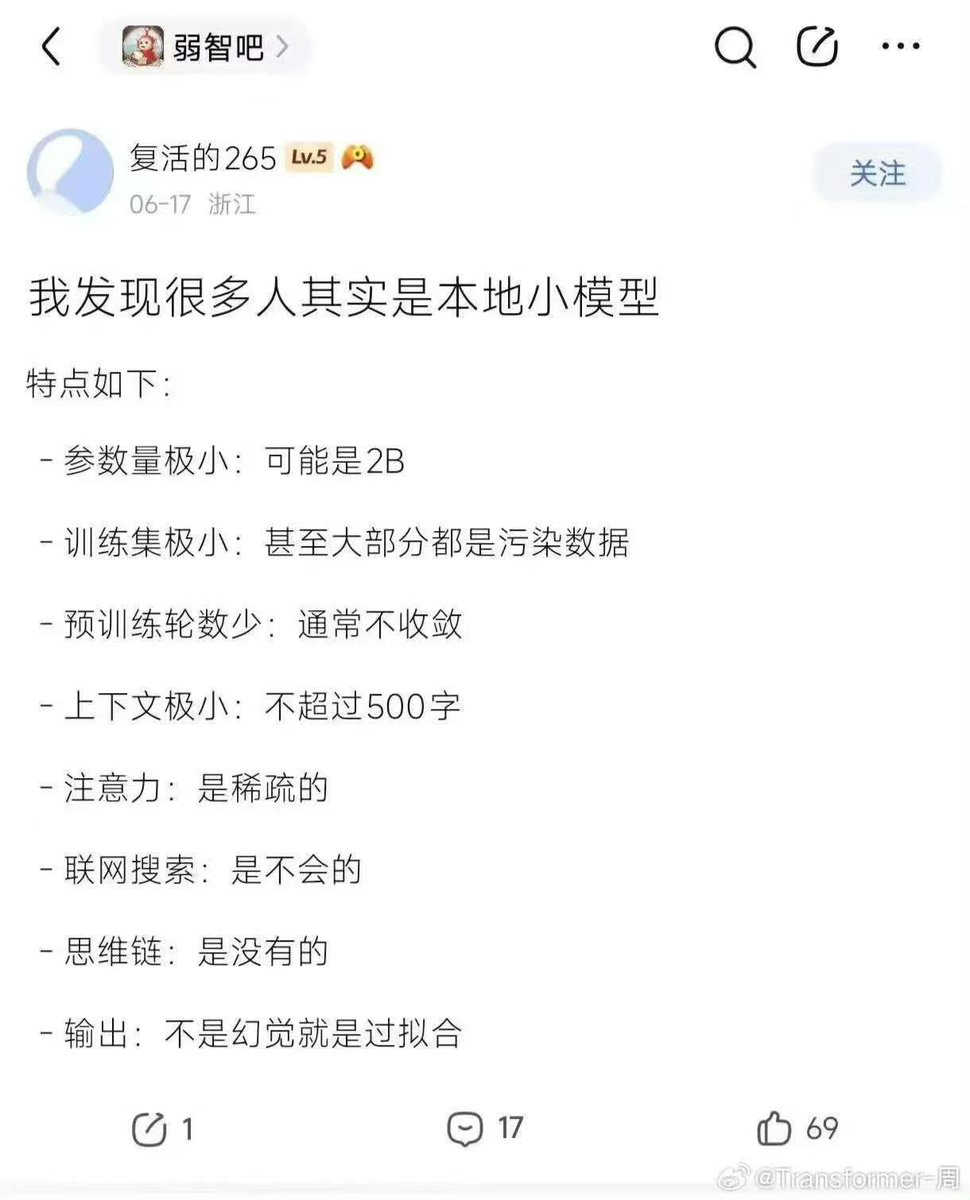
The metaphor comes from the AI field: 2B refers to a small model with roughly 2 billion parameters, with limited ability that often answers the wrong question. People use it to tease the cognitive limits ordinary people hit when facing complex problems — easily distracted, unable to hold on to details, weak at reasoning.
Today's top models are approaching or surpassing 1000B parameters. Bigger isn't necessarily better, but a gap of that many orders of magnitude really is hard to close. OpenAI, for instance, broke past 1000B parameters starting with GPT-4; a 2B model is only 1/500 of that, and no amount of algorithm optimization can bridge the gulf in stored knowledge and depth of reasoning.
And Apple, which keeps grinding away at local small-parameter AI, has repeatedly pushed back features like Siri's smart summaries and live translation — further proof of the ceiling small models hit on complex tasks.
My own experience: models under 10B do fine on text processing. For drafting WeChat articles, summarizing conversations, and translating blog posts, their fluency can rival large models. But when it comes to following instructions or calling tools — looking things up in files, running multi-step tasks — you still need models above 100B to be more reliable.
But we don't need to sell ourselves short. Rather than chasing all-around mediocrity, it's better to zero in on a niche and be absolutely excellent at it.
For example, in OCR text-and-image recognition, 3B parameters is already top-tier. Baidu's brand-new OCR model (not the PaddleOCR series) recognizes at astonishing speed; in practice only 0.5B is activated to achieve high performance, running smoothly even on ordinary hardware.
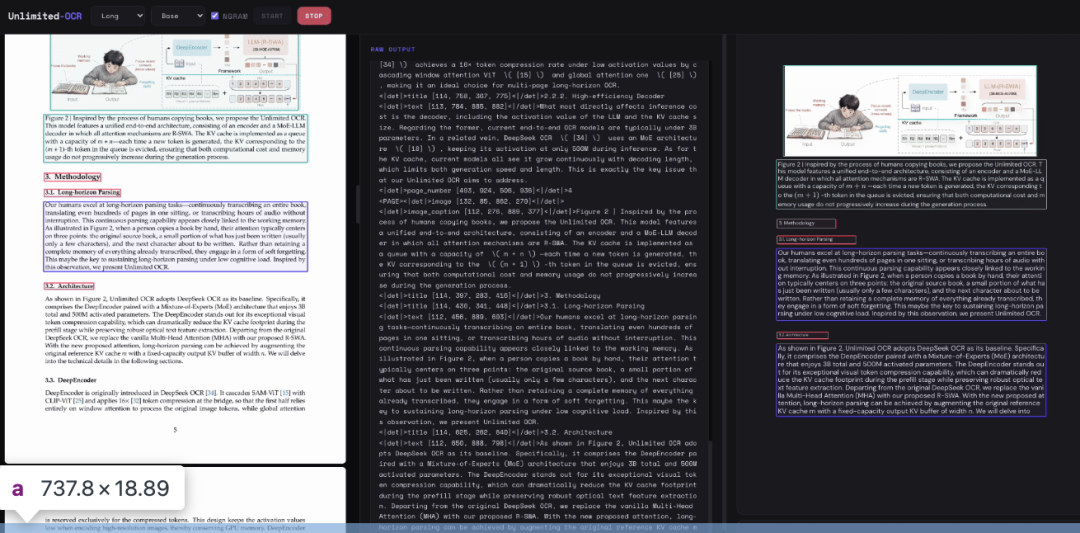
On the right is the content recognized in a flash
The model solves two big pain points in long-document processing: one is "the more it generates, the slower it gets," and the other is "it easily loses its memory." It can parse dozens of pages of documents in a single pass at high quality, with no pagination or external memory mechanism, leveling up from grasping scattered words to reading an entire book the way a human would.
That means large batches of ancient books and historical documents can be turned into high-quality training data; and deployed inside an enterprise, it can efficiently handle the digitization of big piles of documents for daily office work and archive management.
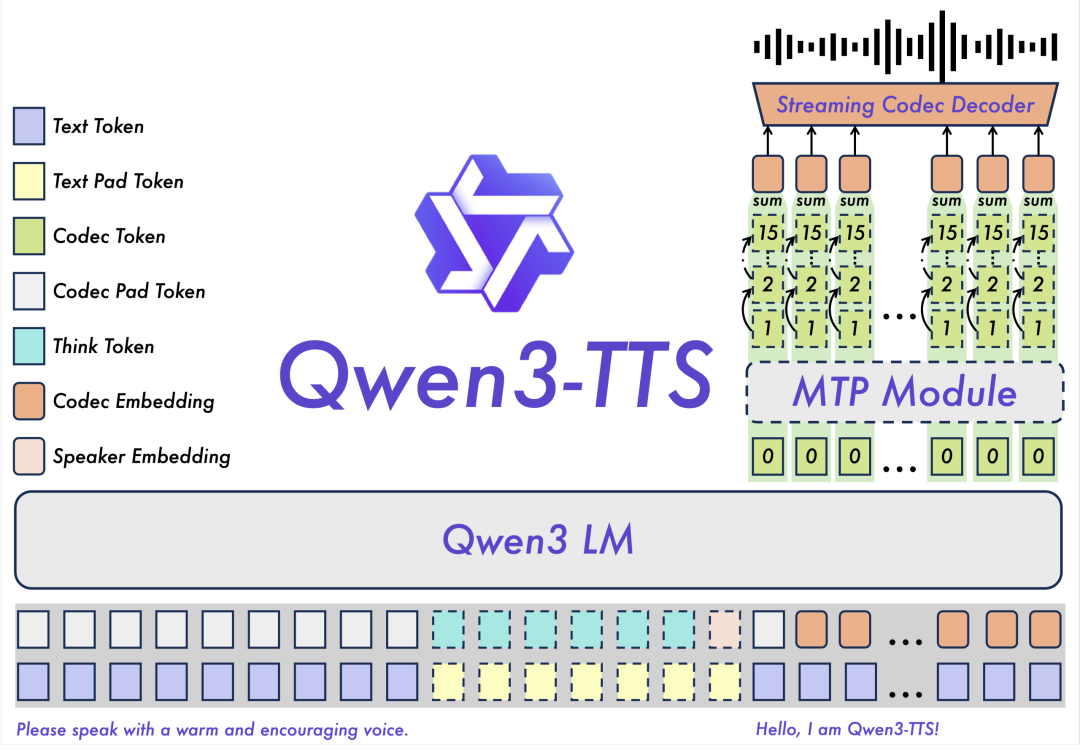
Likewise in speech, Qwen has turned in a near-perfect answer using small-parameter models.
Qwen's speech recognition model, Qwen ASR, needs only 1.7B parameters to automatically segment and process extremely long audio, accurately grasp the meaning, and support 30 languages (Chinese, English, and smaller languages). Its 0.6B lightweight version is a bit lower in quality in complex scenarios, but it displays text in real time, making it suitable for instant scenarios such as meeting notes and live-stream subtitles.
Qwen's speech generation model, the 1.7B-parameter version of Qwen TTS, reaches professional voice-over quality in synthesis — natural and full of emotion, well suited to blog translation and audiobooks. The 0.6B version runs on most existing devices with fast response, good for smart assistants and in-car interaction.
Beyond all this, more small models specialized in particular domains have begun to appear this year.
For example, Nanbeige4.1-3B, which is dead set on programming: 3B parameters are enough to generate code efficiently. And AgentCPM-Explore, from the OpenBMB open-source community taking the Agent field head-on, runs on edge devices with 4B parameters and can carry out agent tasks better.
In short, small models have vast room too. Even with just 2B parameters, targeted training can make them stand out at professional Q&A, code completion, and similar tasks.
Model size is not the only yardstick. Find your position, play to your strengths, and a small model can achieve excellence too. Like a bee: tiny, yet a huge contributor to the ecosystem.
As for us individuals, there's no need to envy the all-around genius either.
Focus on your strengths, dig deep, and shine in your own field. Replacing breadth with depth builds a competitive moat. The expert dividend is more sustainable.