Source Code Comes True: A Few Photos Can Rebuild the Whole Scene
Remember the 2011 sci-fi film Source Code? In the movie, the protagonist, Captain Colter Stevens, is repeatedly sent onto a train that's about to explode, with only 8 minutes each time to search for clues.
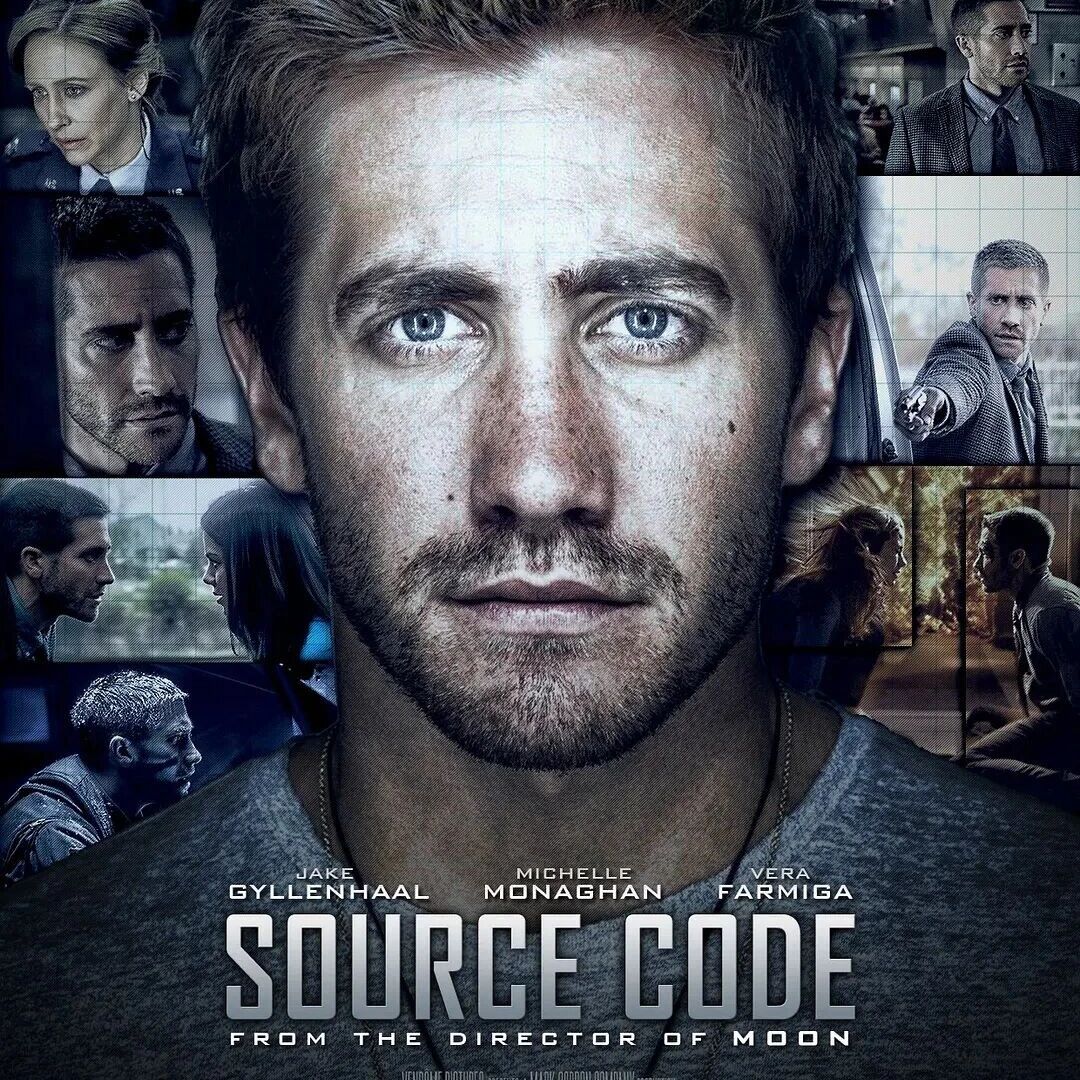
Remember the 2011 sci-fi film Source Code?
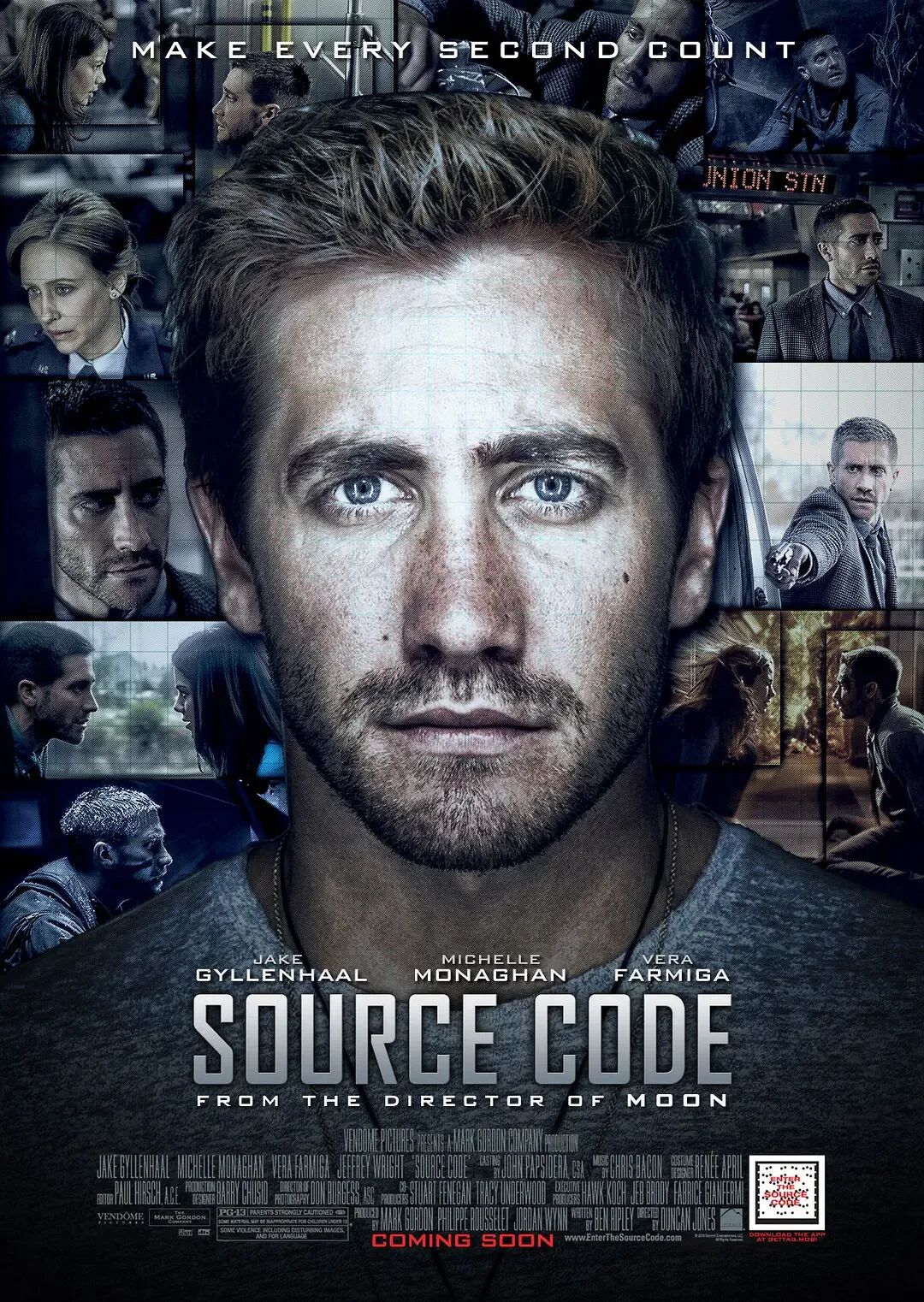
In the film, the protagonist, Captain Colter Stevens, is repeatedly sent onto a train that's about to explode, with only 8 minutes each time to hunt for clues. And everything he experiences is a virtual world reconstructed from the "source code" memories of the passengers in the train wreckage—from nothing but fragmented information, a computer builds a complete, interactive, explorable 3D space-time.
Today, that sci-fi premise is becoming real.
World Labs has just released Atlas, a brand-new omni world model, and it's turning "rebuild a scene from a few photos" into technology within reach.
What is a world model?
World models can generate, reconstruct, and simulate any possible world. They understand how the world looks, how it works, and how it evolves—so we can render imagined worlds, simulate the real world with high fidelity, and even help robots plan their actions. Atlas is exactly the next-generation world model World Labs has put out in this direction.
Like Source Code, reconstructing a complete world from fragments
The most astonishing premise of Source Code is rebuilding a complete space-time from extremely limited information. Atlas does something similar.
All it needs is one reference image, and Atlas can generate a complete 3D scene, presenting whatever viewpoint you want from any angle. Based on the content of the input image and its own broad world knowledge, it imagines what the scene should look like from a brand-new angle.
For example, give it a front-on photo of a robot and it can generate the robot's back; give it a photo of a pool and it can "guess" that there ought to be a lawn beside the pool.
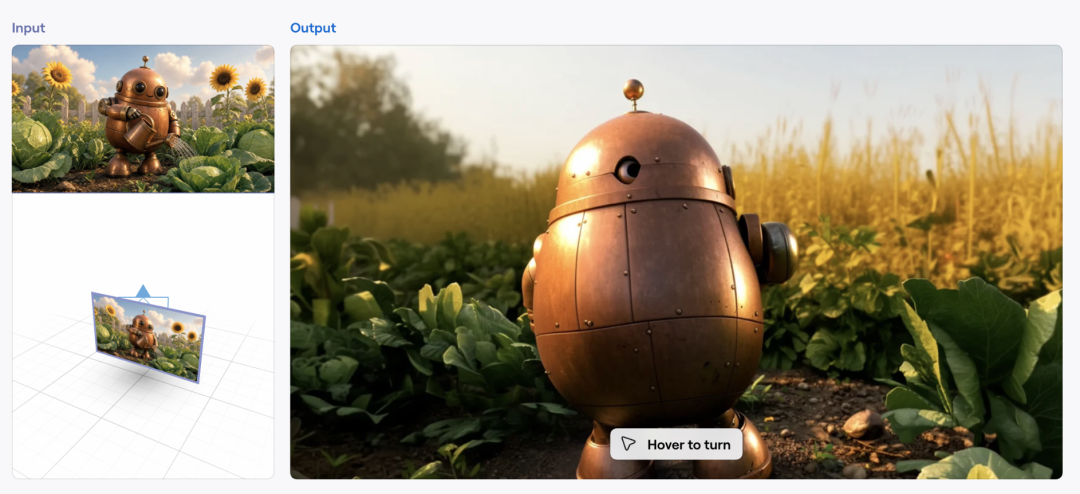
Even more striking: Atlas can generate an overhead view of a scene from a single ground-level photo. Just as the investigators in Source Code reconstruct an entire train from the wreckage, Atlas needs only one or two angles to restore the full three-dimensional structure of a space.
Pixel-precise "camera control"
If the world in Source Code is presented passively, what Atlas gives you is director-level control.
Atlas takes precise camera geometry as a native input type, going beyond rough text-based control. You can design every shot and every camera path yourself, like a film director.
More exciting still, you can place two completely unrelated reference images at different positions in 3D space, and Atlas will automatically generate a world with smooth transitions between them—it imagines doorways, corridors, alcoves, and all kinds of connecting spaces. This is no longer "pulling the slot machine" random generation; it's genuine scene choreography.
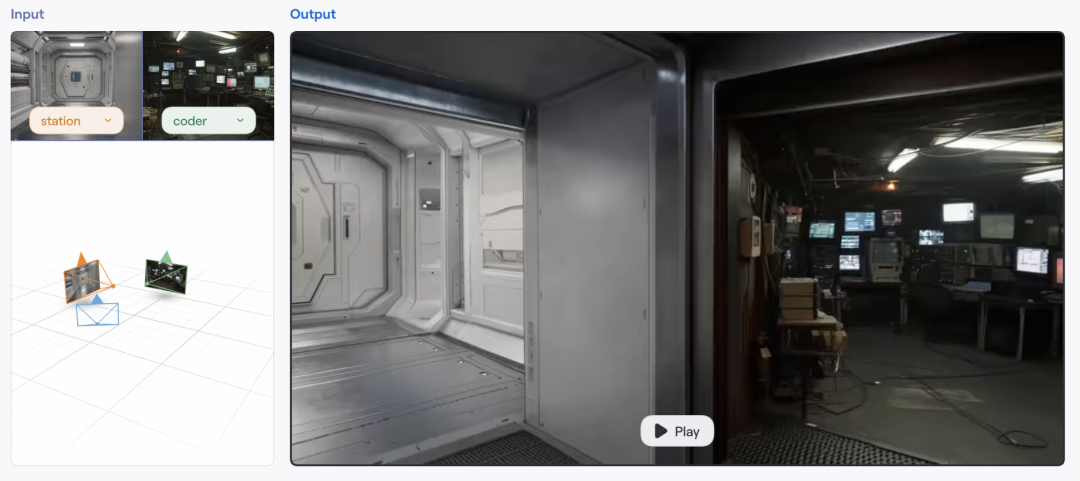
Atlas can generate HD video up to one minute long at 1440p resolution. Once you've designed the camera path, Atlas generates a complete, coherent world.
From 2D to 3D: not just "seeing," but "understanding"
Atlas's ability closest to the core premise of Source Code is its understanding of space.
Traditional 3D reconstruction requires professional equipment or hundreds of densely sampled photos. Atlas reconstructs 3D space from sparse input images, which is considered a fundamental problem that 3D computer vision has wrestled with for decades. Atlas can accept anywhere from a few to a hundred input images. The more photos, the less it has to "imagine" and the more precise the reconstruction—usually two or three photos are enough for high-fidelity reconstruction.
More importantly, Atlas can output not only 2D images and video but also 3D point clouds or 3D Gaussian Splats directly. Starting from a single input image, Atlas can generate a complete 3D world while producing new viewpoints and estimating their geometry. For areas the camera never captured, Atlas fills them in with its own world knowledge.
Spatiotemporal simulation: giving robots a "Source Code"-style training ground
Atlas can reconstruct space, and it can also simulate the passage of time.
In robotics, that means the "Real-to-Sim" workflow is in for a revolutionary breakthrough.
Shoot a casual video with your phone (just 24 frames), and Atlas can reconstruct the complete environment. Then you can simulate different robots' navigation paths in this virtual environment, and Atlas generates in real time what the camera on the robot "sees."
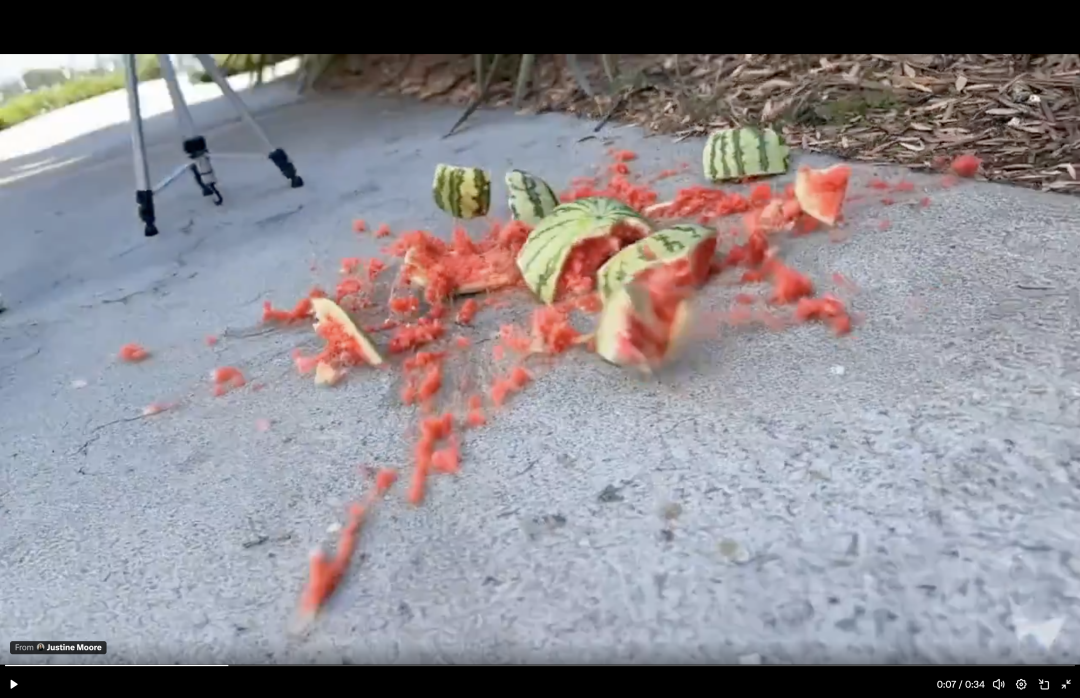
Recreating the process of a watermelon shattering; you can pause at any moment and switch to any angle to inspect it
Going further, Atlas can simulate how objects move and interact. Once a task works in simulation, you can easily change objects, positions, robot actions, lighting, or even the background to generate diverse training data at scale.
Under the hood: a multimodal autoregressive diffusion Transformer
What makes all of this possible is a brand-new architecture behind Atlas—a multimodal autoregressive diffusion Transformer. It natively supports text, image, video, and 3D data, with all inputs integrated into a shared spatial context. Every image is anchored to a specific position in 3D space, forming a unique "spatial context."
This design lets it generate sequentially like a large language model while also outputting images and video at high quality like a diffusion model.
In Source Code, the protagonist shuttles back and forth through the virtual world, searching for the truth. Today, Atlas gives each of us the ability to start from a few photos and reconstruct, explore, and even create a complete world of our own. From film VFX to game development, from robot training to architectural design, the era of spatial intelligence is arriving.
As the World Labs team puts it: "Atlas is a world model for generating, reconstructing, and simulating any world."
The plots of sci-fi films are walking into reality.