A 40-Year-Old Programmer's Forced Trip to the Repair Shop

These past few days, the news of a 32-year-old programmer dying suddenly has been all over the internet again. Stories like this seem to pop up every so often.
In tech circles, the one that made people sigh the most was probably the sudden death of Chen Hao (known online as "Left Ear Mouse"), a top engineer, in 2023. But sighing is sighing — after a while, everyone slowly forgets.

Speaking of which, I had my own "forced trip to the repair shop" back in 2022 — seven days in the hospital with myocarditis. Looking back, it was a serious warning from my body that I couldn't ignore.
What Happened
Two weeks before it happened, a colleague and I drove the G318 highway to Tibet. We turned back halfway and ended up in Shangri-La because of the pandemic, but the whole way we were roughing it in high-altitude, oxygen-thin conditions. Driving three or four hours a day, my body had already built up a lot of fatigue.
A week before, the work pressure was intense, and I went several days in a row without enough sleep. My body started sending protest signals — I ached all over. Oddly, the pain moved around like a guerrilla campaign: my shoulder hurt today, my lower back hurt tomorrow, and after a bit of rest it seemed to ease up. I didn't take it seriously and figured it was just ordinary exhaustion.
Three days before, the pain escalated, focusing mainly on my back. At night it hurt so much that I tossed and turned and couldn't sleep.
On the day itself, in the early hours, the pain began spreading toward my chest. I panicked a little and hurriedly asked for leave to go to the hospital. But then something even stranger happened: once I got there, after one burst of severe pain, I actually felt "better"! The ECG and blood tests didn't turn up anything major, and the doctor couldn't explain it either. I thought it must have been a false alarm, so I went back to work.
By evening, the familiar pain came back with a vengeance. At first I could still bear it — I even drove myself home. But the moment I sat down, that was it: the slightest movement had me grimacing in agony, and I simply couldn't stand it. In the end I took a taxi to the emergency room. When it was time for the CT scan, the pain was so bad that I needed someone to support me just to climb onto the examination table.
After the painkiller injection, the pain eased a bit, but I still spent that night in torment. After that I was formally admitted to the hospital, and I stayed for seven days. For the first three nights, the pain still dropped by to "visit" now and then; only after that did it stop entirely.
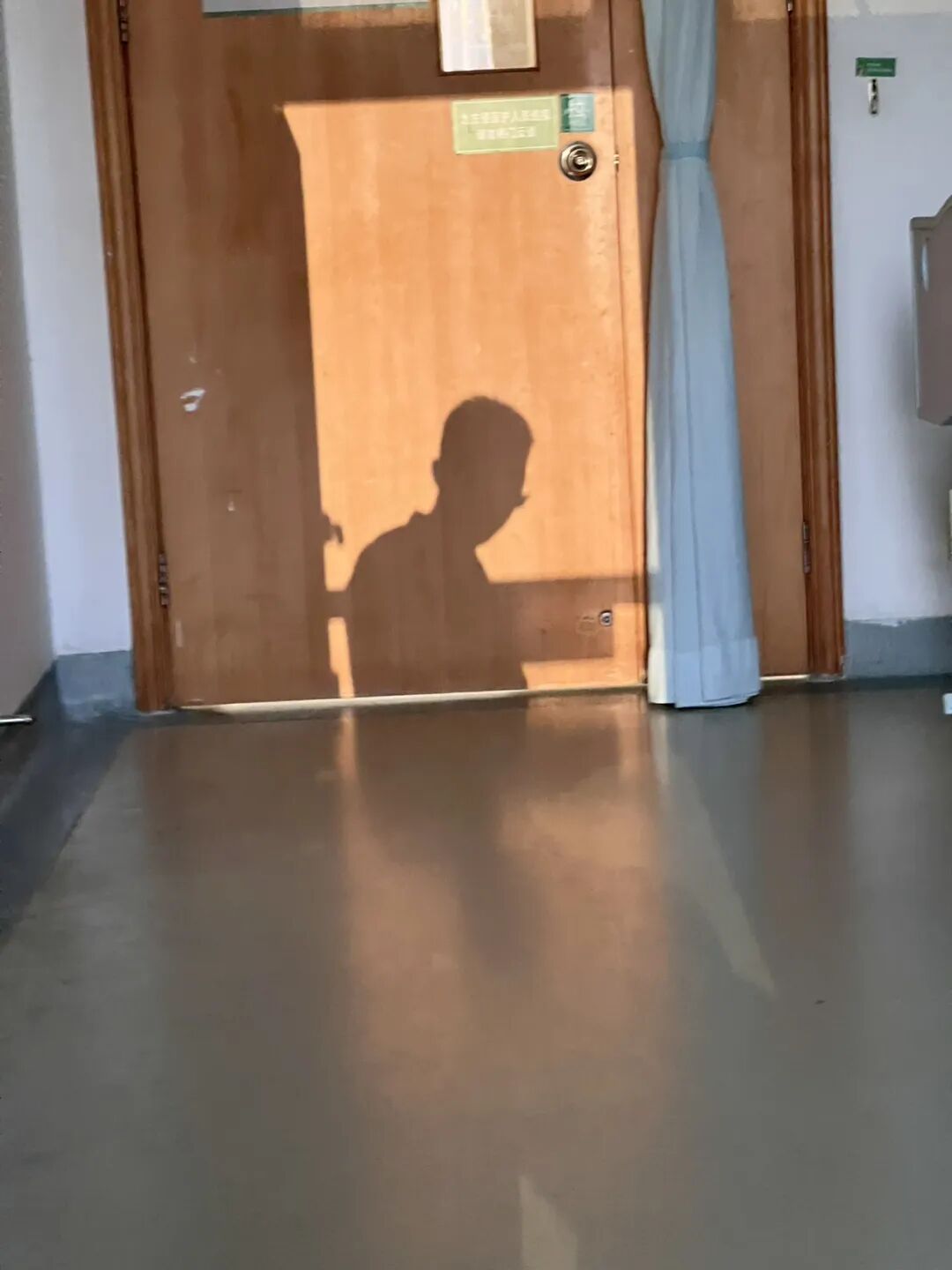
A snapshot from the hospital
Summary: Your Body Is Yours, and Only You Can Feel Its Pain
This experience helped me get a few things straight:
Your body is unique, and there are no spare parts.
Lying in that hospital bed, I came to deeply understand that no matter how skilled a doctor is, they can only provide medical help — the real suffering and the recovery process are something only you can go through yourself.
I remember that when I cried out in pain in the emergency room, a nurse came over, glanced at me, confirmed there was no danger to my life, and walked off — as far as they were concerned, being able to shout actually meant the situation wasn't the most critical.
So the person who should care most about your body will always be you.
You have to learn to "listen" to your body.
The body is smarter than we imagine. Being sleepy, tired, or in pain — all of it is it sending out distress signals. Never just tough it out.
I looked into it: a heart attack is often preceded by back pain, and in my own experience, myocarditis shows similar warning signs. If any unexplained pain lasts more than three days, don't hesitate — go to the hospital immediately.
Sleep is the ultimate medicine.
During those days in the hospital, the lights went out at nine o'clock in the evening, and it was so quiet there was nothing to do but sleep. I was forced into a regular routine, and my body recovered surprisingly quickly.

A midday walk at the hospital
That made me realize that the efficiency of those usual late-night work sprints probably can't compare with the clear head you have after a good night's sleep.
Some damage may be permanent.
After I was discharged, every time I stayed up late or overworked myself, I'd feel a faint discomfort in my chest and back, as if reminding me of that experience.
Even though all my follow-up checkups came back normal, this "psychological shadow" — or perhaps my body's "memory" — tells me it hasn't fully forgotten that trauma.
Don't be afraid to see a doctor — you're covered.
My total hospital bill this time was about five thousand yuan, and between medical insurance, the company's supplemental commercial insurance, and the hospitalization policy I'd bought myself, it was almost fully reimbursed. Financially it was hardly a burden at all.
So if something's wrong with your body, don't put it off — get it treated. In China, programmers with a proper job usually have decent medical coverage.
On Work: Learning to "Delegate" and "Let Go"
This illness also made me re-examine my relationship with work:
To a company, no one is irreplaceable.
A well-run company is like a precision machine: the processes are complete, and any part — people included — can be swapped out.
Don't get swept up in the self-moved fantasy that "the company can't function without me," taking everything on out of an excess of responsibility. In the end, the only one who collapses is you.
For managers, the core value is "taking the heat" and "letting go."
As the leader of a small team, your success isn't shown by how capable you personally are, but by making sure the team can still run normally without you.
Upward, you take on responsibility and pressure; downward, you have to dare to trust and delegate. Doing everything yourself isn't being responsible — it makes you the bottleneck, and it's unfair to both yourself and the team.

For ordinary employees, if you can't finish the work, you have to say so.
If your workload goes beyond a reasonable range, you must give your manager timely, clear feedback.
Toughing it out won't earn you anyone's gratitude; it only leads to lower-quality work or your own breakdown. The company will always find a way to adjust things, but your health can't afford it.
Postscript: Reading Bullshit Jobs from a Hospital Bed
During my stay, I brought along David Graeber's Bullshit Jobs. Reading that book in that environment was a peculiarly complicated experience.
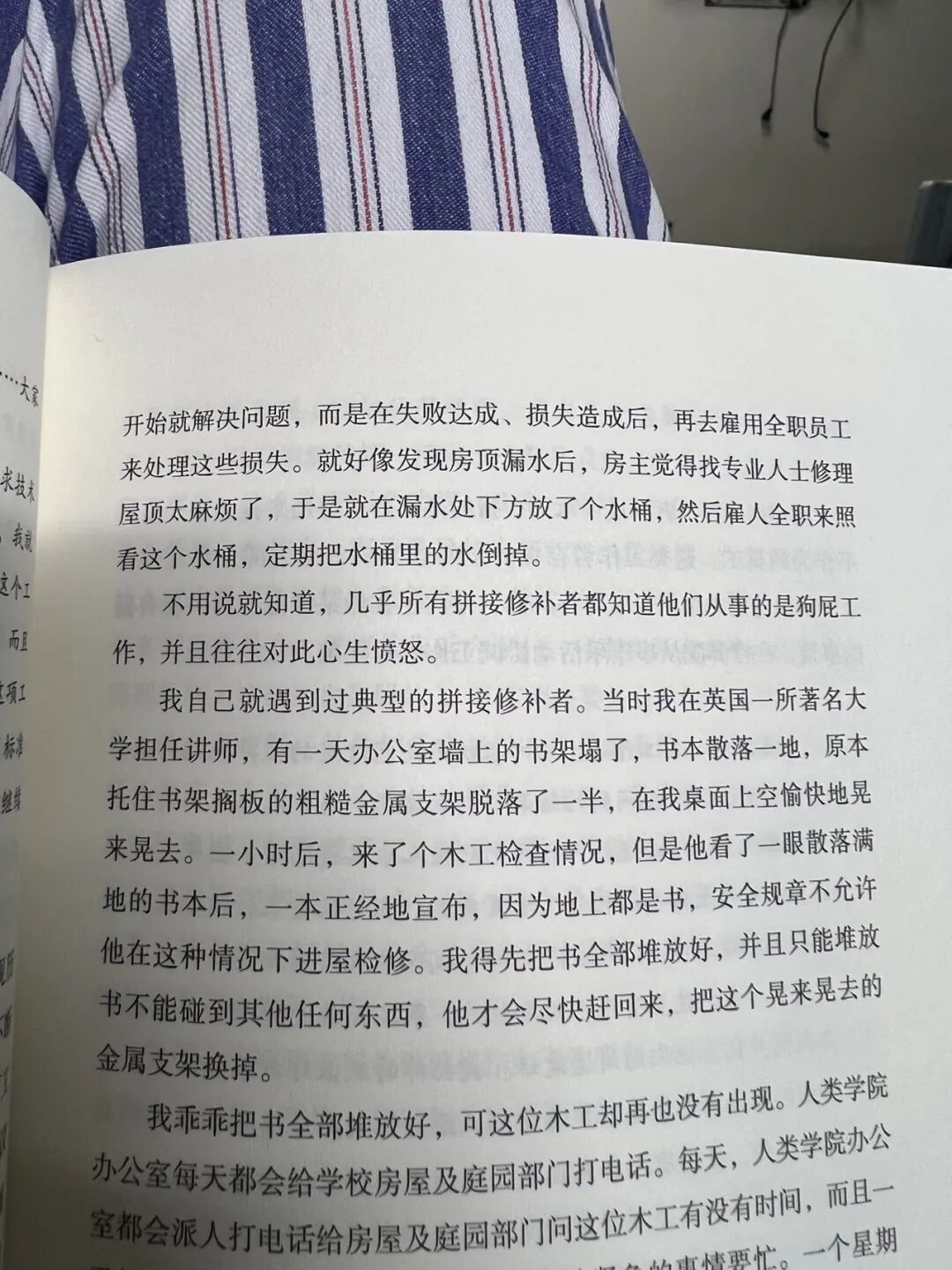
The book's biting satire of all the "bullshit jobs" in modern society. Lying in the hospital bed, I couldn't help wondering: of all that busyness, anxiety, and late-night work on ordinary days, how much actually creates value, and how much is just sliding along on the inertia of some kind of "performative busyness"?
After I was discharged, I didn't immediately make any earth-shattering changes, but I began to accept a fact: the meaning of work should not be proven at the expense of your health.
That dog-eared copy of Bullshit Jobs is still on my bookshelf. It's no longer just a bestselling work of sociology — it's more like a bookmark from a hospital bed.
It reminds me that while chasing efficiency and output, I should more often examine what the "meaning" of all this is, and whether the price paid for it is worth it.
After all, in this "project" of life, the most important KPI is living healthily — and knowing clearly what you're living for.