The Way Out for Mid-Career Programmers, via Upstream
A discussion of the way out for mid-career programmers, starting from Upstream. Gao Zhilei, played by Xu Zheng, only ever makes an "upstream" adjustment; he never "turns his life around" and rises. Do we have any better options? Welcome to discuss it with me.
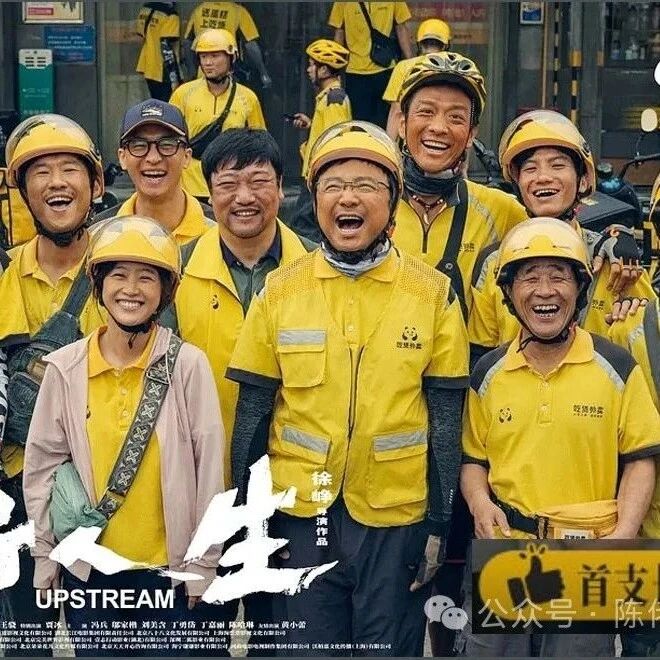
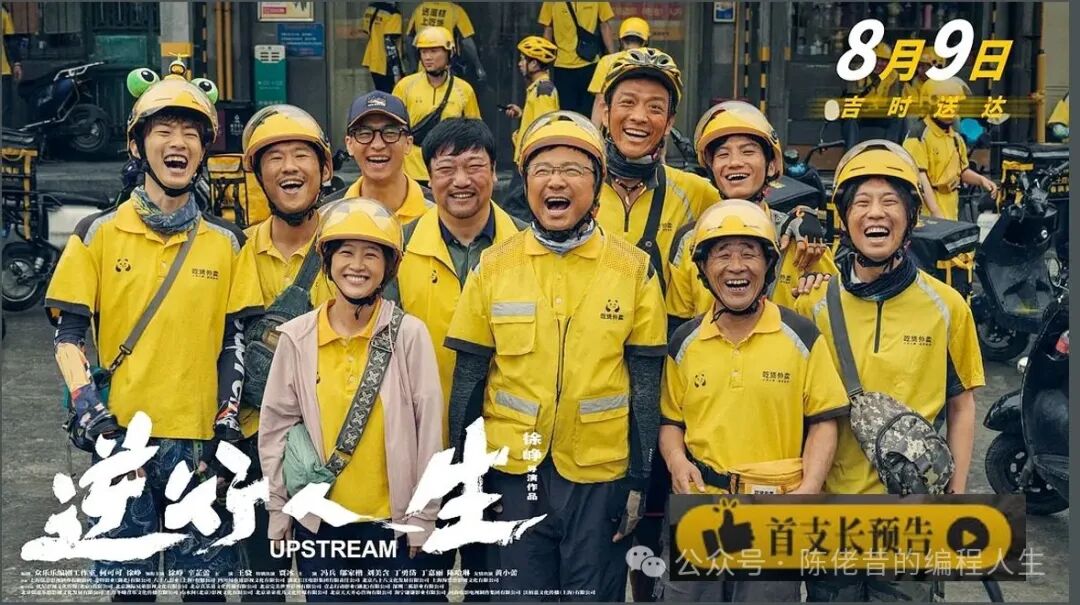
I went to see Upstream just before it left theaters.
The film tells the story of Gao Zhilei — an architect who, after being laid off and spending two months job-hunting without a single bite, is driven by circumstances to deliver food.
Personally I think it's well worth watching, a very good film on a realist subject. It doesn't have the feeling the internet described, of capital persecuting workers while still demanding that workers struggle on.
Some young people say they find it hard to empathize. Someone on a 700,000 annual salary ends up running himself ragged for a 15k monthly salary, and they don't understand why. But from my own experience, when there's no way forward, we really do make choices like that.
Let's first look at what options mid-career programmers have.
What ways out does a mid-career programmer have?

Keep working for someone else
Working a job is undoubtedly most people's choice. After all, a day's work earns a day's pay, and that steady happiness is still what most people pursue. But you can't stand still in a job either — you still have to keep learning and expanding your abilities, especially in our IT industry, where technology iterates quickly. If you don't learn, chances are you'll be weeded out within 3 to 5 years.
For programmers who want to get promoted or change jobs, the main learning directions are these two:
- Deepen and broaden your technical skills: senior developer, architect, development in hot fields like AI;
- Expand your abilities outward: instructor at a training institution, university teacher; technical management;
Go it alone
If you keep working for others, you'll inevitably run into the risk of layoffs — your personal fate always rests in the hands of your boss or even your immediate supervisor. If you're not content with that, you have to open up other paths creatively. That's an enormous challenge for any individual.
Programmers can use their technical ability to gradually expand outward:
- Independent development: taking on projects or building your own product
- Starting a business: founding a company or team to do development work
Change careers entirely
Some people have been hurt badly enough to give up on the industry completely and move to other fields.
- Online side gigs: writing, video editing, and so on;
- The "three guarantees" and the "triathlon" of middle age: security guard, nanny, cleaner, courier, driver, food delivery. This is the one people joke about most;
- Working for other industries: manufacturing, foreign trade, and so on;
- Opening a shop or starting a business: saving up some money to open a shop or run a company you like is also some people's choice.
How should we choose?
As you can see, programmers actually have quite a few options. Let's put these jobs into a table, listing the abilities each requires, the responsibility each carries, and the risk each involves, so choosing is easier:
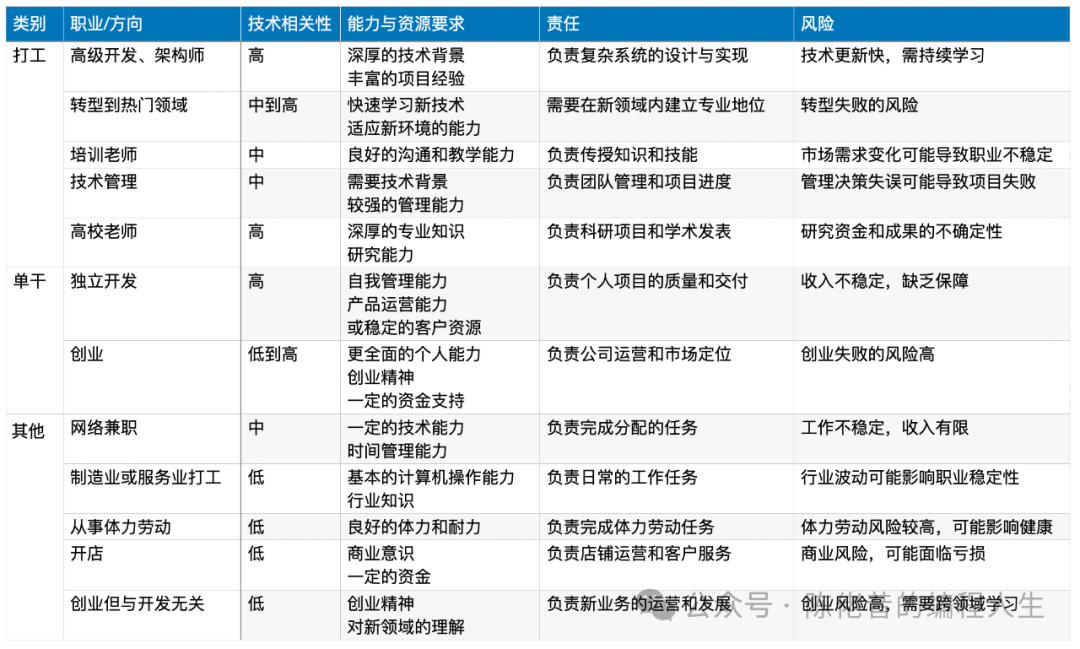
You can see that every direction carries risk — there is no risk-free profession or path. So can we just decide purely on personal preference? Not quite: for most people, these options still differ in quality.
The "triathlon" and the middle-aged "three guarantees" are not recommended

First of all, I personally really don't recommend that programmers switch to other industries, especially to manual labor.
Because it consumes enormous physical energy and time. Middle-aged people can't win by competing on physical strength, the hours are long, and you can't achieve work-life balance. In the film Upstream, although Gao Zhilei wins the first "order king" title, you can see it's mostly down to luck: the industry veterans either quit the contest or left early because of trouble at home, and the remaining rivals couldn't finish their orders for various unexpected reasons.
The other thing is the development of AI and shifts in market supply and demand. Not long ago Baidu's robotaxi Apollo Go launched in Wuhan, and I believe most Didi drivers felt the possibility of being made obsolete. On top of that, this kind of work is basically saturated in the market, so pay will only get lower and lower.
Other online side gigs, or going to work in manufacturing and services, all have low barriers to entry — even with technical skills and ability, a programmer may not have any advantage there, so those aren't recommended either.
Opening a shop or starting a business around your own interests depends heavily on your personal ability and likewise needs more careful consideration — though if you're rich, you can afford to be willful about it.
Better to plan early and act early
The remaining career directions are all recommended, because they're more or less related to the technology we've learned ourselves. Expanding our abilities outward step by step and gradually stepping out of the comfort zone is the more suitable development path. But note that you need to set your goal as early as possible, plan ahead, and act as soon as you can.
For example, if you want to teach, you can start early by being an internal trainer or technical instructor at your company, explaining things to newcomers. Hone your communication and presentation skills, and think more about how to help newcomers integrate into the company and get into a working rhythm.
Or, if you want to start your own business, you can start paying attention to how the product in your hands is developed and operated, how the company allocates manpower and resources, how it monetizes, how it finds customers, and so on. You should think, learn, and practice not only from a technical angle but also from the company's angle. When the time is ripe, you can even ask to transfer into product or technical management, so you develop the entrepreneurial skills you need earlier and make your future path smoother.
Why does Gao Zhilei still choose food delivery?

Back to the film. Since we've said programmers shouldn't take up manual labor, why does Gao Zhilei — a perfectly good architect with a good head on his shoulders — end up choosing to be a delivery rider?
First, from the very start of the film you can see that Gao Zhilei chose the architect or technical-management-leaning-technical direction, since he still had front-line development tasks on hand. Clearly, at 45, he had essentially reached the ceiling on the salaried path.
Yet he hadn't done any career planning, and had never even considered the risk of losing his job. When he was suddenly laid off, he discovered that he could hardly find a position or salary to match on the market, and in the end he fired off résumés at random. And the three-piece set that sends the middle class back into poverty — a large mortgage, a stay-at-home wife, an international school — he had almost all of them. On top of that he had invested heavily in P2P lending, whose collapse cost his family a great deal of wealth, and then his father suddenly fell seriously ill and urgently needed money for hospitalization.
All of these situations appeared at the same time, all the pressure landed on his shoulders, and after two months of résumés going nowhere, he heard that delivering food could cover the gap in his monthly mortgage payment — like finding a lifeline, he resolutely joined the delivery industry.
How do we avoid ending up in a passive situation?

How do we avoid ending up in Gao Zhilei's situation too?
Besides building up your abilities early, planning early, and acting earlier as described above, programmers should also broaden the diversity of their skills, especially skills outside their specialty. In the middle and later stages of a career they should look for companies or projects that are better for their personal development. They also need to expand their networks and keep communicating with people in the industry. And finally, keep healthy living habits and balance work well, so their working life lasts as long as possible.
On the financial side, it's necessary to prepare for unemployment and even to save up funds for later independent development or entrepreneurship, so you need to take some measures and plan your family finances well, for example:
- Set aside an emergency fund: to cope with unexpected events such as unemployment or illness, build a sufficient emergency fund — generally 3-6 months of the family's daily expenses is recommended.
- Invest cautiously: only invest in products you understand; understand your own risk tolerance before investing; and avoid putting all your money into a single high-risk product such as P2P — allocate your assets and spread the risk.
- Buy insurance: buy appropriate health insurance for family members to reduce the risk of falling into poverty because of illness.
- Budget and plan your finances: make financial budgets every year and every month; and for large expenses such as mortgages and education investments, do detailed financial planning so you can cope even if your income is interrupted.
- Increase your sources of income: increase your family's sources of income as much as possible, for example by having your spouse work or starting a side business, reducing dependence on a single income.
Summary and reflections
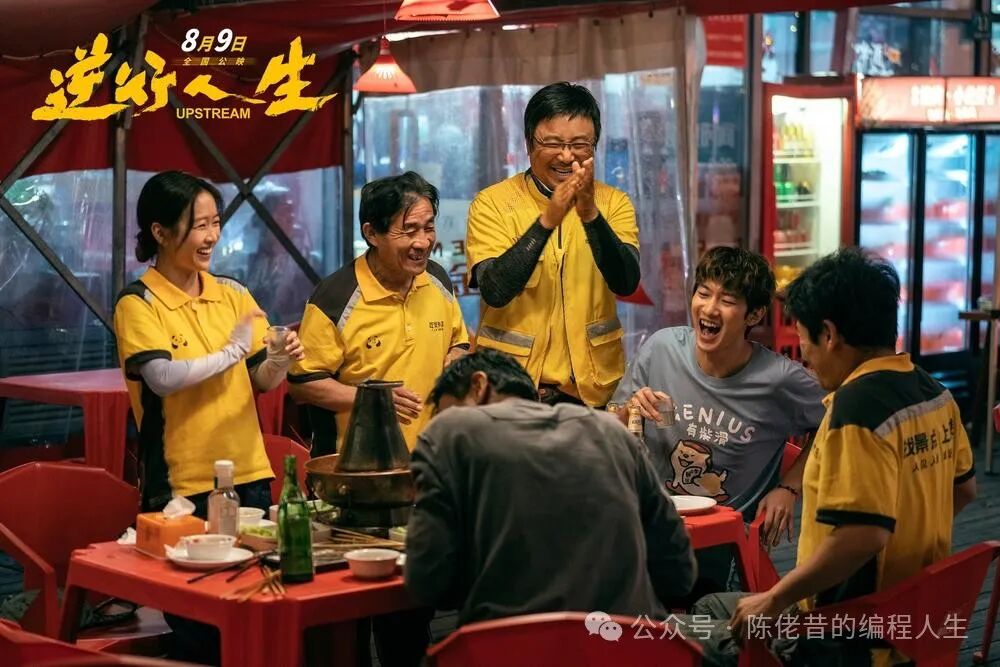
In the film Gao Zhilei is undoubtedly lucky: his family is harmonious, his family gives him their utmost support and is willing to get through the hard times together. Add to that the mini-program he developed himself, "Lulutong," and the mutual help among colleagues, and in the end he successfully takes the "order king" title and helps his family through the financial crisis.
But in the end, Gao Zhilei doesn't "turn his life around" — in a life that is "going upstream," he adjusts himself. In the end he sells the big apartment and moves into a small one, his wife keeps working, his child gives up attending the international school, and the elderly man completes his rehabilitation through his own willpower.
This is also where I think the film is genuinely realist: the ideal thing doesn't happen. Just like people who hit setbacks in real life, he finally chooses to lower his standard of living and keep moving forward.
And very last, a question for everyone: if you faced the situation in the film's post-credits scene — a senior executive from a delivery company is interested in the "Lulutong" mini-program you developed — what would you choose?
- Sell the mini-program, take the money and walk away
- Join the delivery company and keep developing it
- Don't sell — open-source it
Feel free to leave your answer and your thoughts, and let's discuss.