The Lychee of Chang'an: An Office Worker's Blood and Tears
The TV series The Lychee of Chang'an is a hit right now. I wonder how many of you have been peeling lychees while binge-watching this historical drama steeped in High Tang atmosphere? Word is the film version will land in the summer slot, just before the lychee season ends. With the series' popularity plus the film's backing, it looks like this summer is destined to be owned by this story!
The series is adapted from Ma Boyong's novel of the same name, published in 2022.
For those who haven't read the original yet, I strongly recommend giving it a read.
Ma Boyong's writing has a unique charm. His deadpan humor between the lines often makes you smile knowingly and keeps you thinking long after. The most impressive part is that he never writes about lofty, elevated subjects; he's good at starting from the small details of daily life and deconstructing history through a modern lens.
This time, with The Lychee of Chang'an, he says himself that it was written from the offcuts of The Longest Day in Chang'an, yet it is no less brilliant.
The novel uses the past to satirize the present, mapping the Tang dynasty bureaucracy onto the modern workplace—it's the kind of read that makes you slap the table in admiration.
The story's prototype comes from the line "a rider gallops through the red dust, the concubine smiles; no one knows it is the lychees arriving." The protagonist, Li Shande, is a typical working stiff who has just taken out a loan to buy a house in Chang'an when his boss tricks him into taking on the miserable assignment of transporting fresh lychees. Watching him calculate routes and prepare contingency plans with modern project-management methods, going through untold trials before finally completing the task, is nothing less than an ancient version of a "workplace survival guide."
The book is especially vivid in describing the bitter lot of the working person.
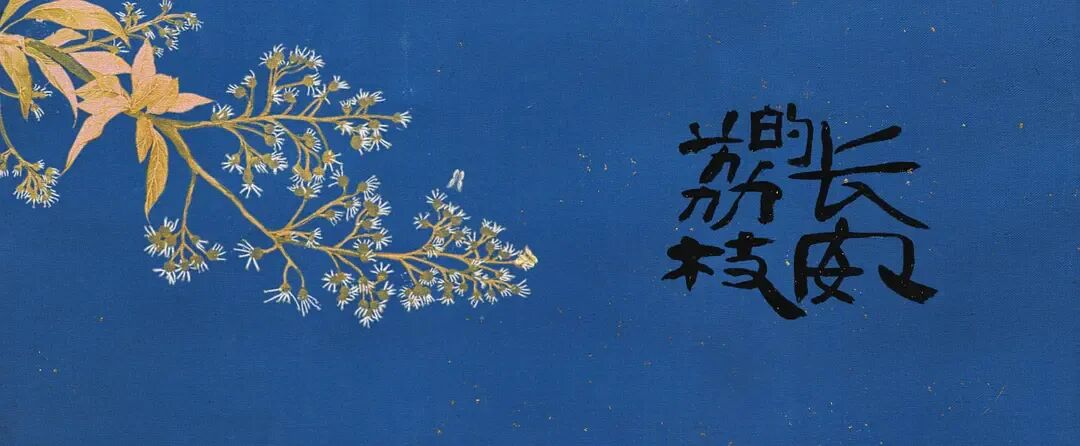
There are jabs at "blessings":
Of course, the Dharma must not be tainted with the stench of money, so the principal of this Xiangji loan is called "merit," and the interest is called "blessings."
Li Shande took the two loan contracts and read them through carefully from beginning to end. Truly, profound merit and unending blessings.
Li Shande agreed without a second word and signed the money contract with a flourish; he was already numb. The 996 guan of "blessings" from before seemed routine to him, and the two hundred guan of Xiangji money from Zhaofu Temple was nothing but a minor itch.
There are jabs at requirement changes:
How could this be? Everything was about to be ready—how could the higher-ups change the requirements again?
Even though Li Shande had the temper of a Buddha, he nearly cursed out loud. Did Yang Guozhong not know that once the required quantity changed, every relay-station grouping had to be readjusted and every handover crew re-assigned? The workload was not as simple as one plus one. Zhao Xinmin looked just as helpless.
There are jabs at targets being piled on layer after layer:
Every summer, the higher-ups say they need one block of ice; the middle layer, to be safe, requisitions ten. The people at the bottom, to be safe, always have to prepare twenty before they feel at ease.
There are jabs at process:
Things like process are rules that only the weak have to follow.
Li Shande suddenly found it absurd: he had followed the rules to the letter, yet he hit a wall everywhere; and yet a single tablet that appeared in no official document at all opened every door.
And some jabs are quite hair-raising:
One general's success is built on ten thousand bleached bones; in truth, one task's success is built on ten thousand bald heads.
So it is: through all the ages, the only hard thing is getting things done—one task accomplished, ten thousand heads bald.

How many corporate drones read these passages and cried, "So true!"
There's also a fun detail: if not for a Douban user pointing it out, many people would have missed the brilliant "bedroom matters" passage in the book.
Then he led his wife into the bed curtain and began to inventory the public grain in the granary of descendants, which was about to overflow.
This veteran clerk was exceedingly meticulous when auditing the accounts; whenever he came to a critical point, he always had to grind through the reckoning again and again. Every entry of income and expenditure had to be squared away to the last detail before he would stop. Only after several rounds of shuffling and offsetting was the public grain handed in all at once, and the inventory left completely clean.
By the way, the book's portrayal of Cantonese people is also quite amusing—it deepens the stereotype a few more notches, haha~
I'd long heard that the Baiyue people are fierce in their customs: what has wings, they do not eat its headwrap; what has legs, they do not eat its table; everything else can go into the mouth. Exaggerated, perhaps, but there is some basis for it.
The moment he laid eyes on He Lüguang, military commissioner of the five Lingnan prefectures, Li Shande's vision went black. The great commander was sitting sprawled at the bottom of the hall, gnawing on a long sugarcane. He had only a white hemp undershirt draped over his upper body, and below, split-crotch bamboo-cloth trousers, his two hairy legs appearing and disappearing.
Had he known the man would be dressed like that, he wouldn't have wasted money buying an extra official robe.
"The locals have a saying: the most important thing in life is..."
"To be happy, right? Stop droning on, I've heard it so many times my ears have calluses."
Overall, this short novel isn't long, but the delicate humor of the original is very hard for a screen adaptation to fully capture.
If you like this style, Ma Boyong's other book about work inside the system, Taibai Jinxing Is a Bit Annoyed, is also worth reading—he uses the daily life of heavenly immortals to write about government offices in a thoroughly entertaining way.