What the Global Intelligence Crisis Means for Ordinary Workers
The "2028 Global Intelligence Crisis" article sent internet stocks tumbling — but what does it mean for the rest of us working people?
Yesterday was the first trading day after the Spring Festival holiday, and A-shares opened in the green — except that internet-related stocks alone fell sharply.
Part of the impact came from Citrini Research's thought-experiment article titled "2028 Global Intelligence Crisis."
English original: https://www.citriniresearch.com/p/2028gic
📖 The article's core argument:
The article posits a "future scenario": AI productivity grows explosively, but it causes the economy to collapse.
The core logic:
- AI replaces human cognitive labor → human labor income drops to zero
- Productivity explodes, but no one can consume → "ghost GDP"
- White-collar unemployment → mortgage defaults → the banking system collapses
- Government tax revenue falls + unemployment benefits rise → fiscal bankruptcy
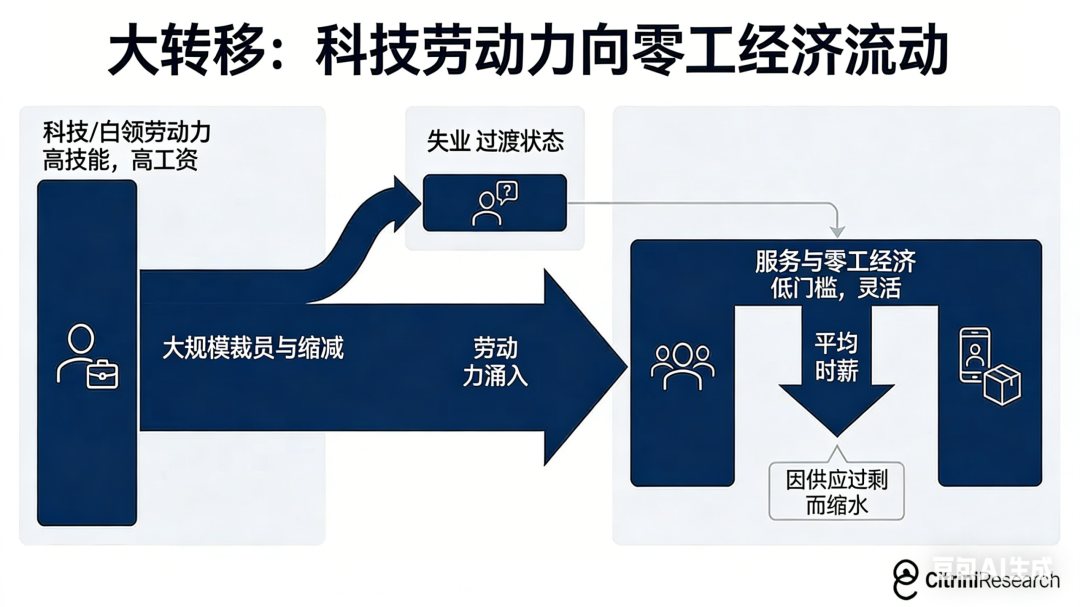
⚠️ The warning for office workers:
-
Skills depreciate faster
-
Your skills can become worthless overnight
- An analyst who once earned 300,000 yuan a year now needs only a $30/month AI subscription mortgage risk
2. Mortgage risk
- White-collar workers who bought homes at the top of the market in 2024–2026 are most at risk
- The collapse of the "prime borrower" group, a $13 trillion mortgage crisis
3. Middle-layer jobs disappear
- Financial matchmaking, SaaS, and intermediary platforms are replaced by AI
- Jobs that depend on information asymmetry are the first to go
4. Consumption downgrade
- Machines don't consume; only humans consume
- Overcapacity + falling purchasing power
💡 What to do about it:
- Don't sink your whole salary into a mortgage— keep your cash flow
- Build skills AI can't replace— interpersonal communication, creativity, decision-making
- Pay attention to "real" value — offline experiences, handicrafts, and physical contact will gain value
- Consider diversifying your income — don't rely on a single paycheck
The article says this isn't a prediction but a "thought experiment" and a wake-up call. What do you think?