A ByteDance Executive's Time-Management Tips: Painless Growth
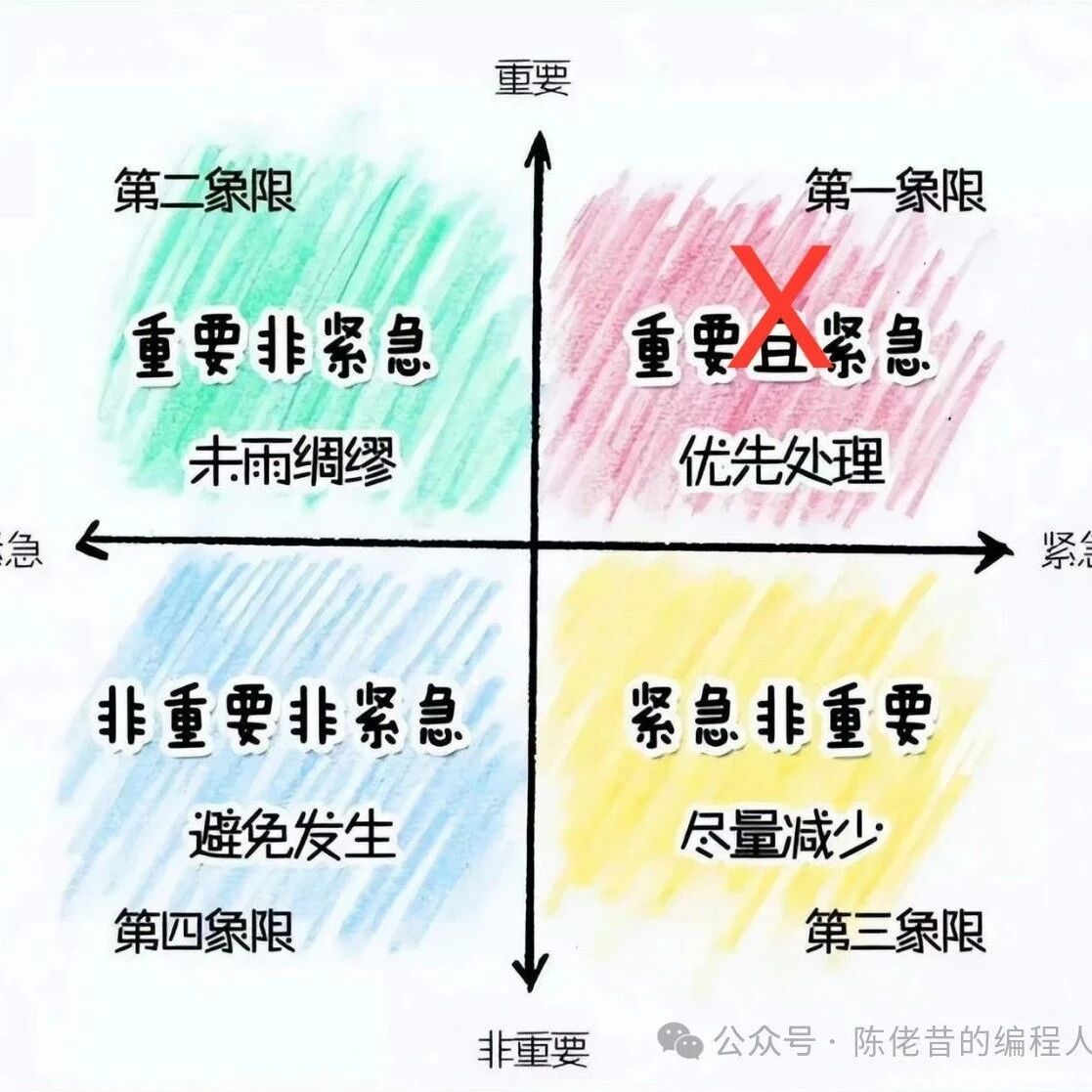
Is there really such a thing as something both important and urgent in time management? Or is it that important things get dragged until they become urgent?
This is a transcript of the podcast Zhixing Xiajiuguan — An Interview with Zhang Yunfan. It struck me deeply when I heard it, so I'm sharing it with you. If it interests you, I'd recommend listening to the original on your platform of choice.
Zhang Yunfan: a reader, an angel investor, and the head of games at ByteDance. He co-founded NetEase Blog and YY Voice, and has served as CEO of Zongheng Literature and president of Perfect World.
Baidu Baike

People all hope for painless growth — everyone wants to lose weight lying down, everyone wants to get rich by scratching a lottery ticket.
But painless growth is very difficult; growing through little tricks does exist.
Trick 1: When scheduling your time, pair hard tasks with easy ones
Zhang Yunfan: You should pair hard and easy in your schedule — or, when a difficult task is done, it's best to give yourself a reward.
What are people most afraid of? Doing something difficult, then doing something even more difficult.
It sounds stimulating — full of heroism, bravely scaling the peak. But in reality, biologically speaking, that's against human nature, and it's very painful for the brain.
Actually the more comfortable state is: I've finally finished something, let me rest a bit. This rest isn't sleeping or lying down; it might be scrolling short videos for a while to relax, or listening to music, or eating something.
Host: Scrolling short videos counts as part of leisure activities for you.
Zhang Yunfan: It does. When a person is reading, the brain's resource and energy consumption is far higher than watching video.
So, alternate your time.

For example, you can design it so you read for half an hour, then scroll videos for half an hour, or listen to music for half an hour. I think this is very important — you must design it as alternation, don't put tasks of the same or higher difficulty together; that approach will collapse.
As I said earlier, many ambitious students start with an hour of English, then an hour of the core work document, then an hour of exercise, then an hour of lectures. Sounds impressive, but it isn't realistic.
Because your whole energy and attention are consumed too fast. Once that consumption reaches a threshold, you suddenly find you can't concentrate at all and you're exhausted. So you start finding that everything later on the schedule doesn't get done.
You fail once, and you feel regret and remorse. The next day you feel that since yesterday wasn't finished either, it doesn't seem so shameful anymore.
Once you start relaxing, you'll feel that every later relaxation carries a weaker sense of guilt and shame than the one before, until it disappears entirely.
Host: That's also a kind of broken windows effect.
The broken windows theory is a criminology theory proposed by James Q. Wilson and George L. Kelling. The theory holds that if disorderly phenomena in an environment are left unchecked, they invite people to imitate them, even to escalate. For example, if a building has broken windows that go unrepaired, it may attract more vandalism, ultimately leading to more serious consequences.
Ernie Bot
Zhang Yunfan: Yes.
But those apps for memorizing vocabulary always tell you that you're on day 121 in a row, and at that point, if you think about skipping today, you'll feel awful. Because the sunk cost is high.
So, only by not piling especially hard things together do you have any chance of sticking with it.
This is actually a little trick I think is quite important.
Trick 02. Batch processing

Host: Did you know how to manage your time well since childhood, or did you get troubled by it along the way and slowly accumulate these tricks?
Zhang Yunfan: I got troubled by it.
When I first started in management, I felt so busy.
For example, a typical scene: an email suddenly arrives, and while I'm replying, the phone rings. I take the call. When it's done, I go back to replying to the email. Then maybe the phone rings again. Isn't that a very common scene?
Later I realized, I can't do it like this.
How do I handle it well? I call it batch processing, because batching brings efficiency.
For example, when I'm replying to emails, I don't have to switch back and forth in the email interface, so my flow state stays intact. And emails from the same period are often related. I can think about them as a whole. Of course WeChat messages come in too. Usually WeChat is for those less important things. So my method is to check WeChat once every 15 minutes. If you reply to every single one immediately, you'll find you're constantly handling things.
I call this batch processing.
Trick 03. There's no such thing as urgent and important
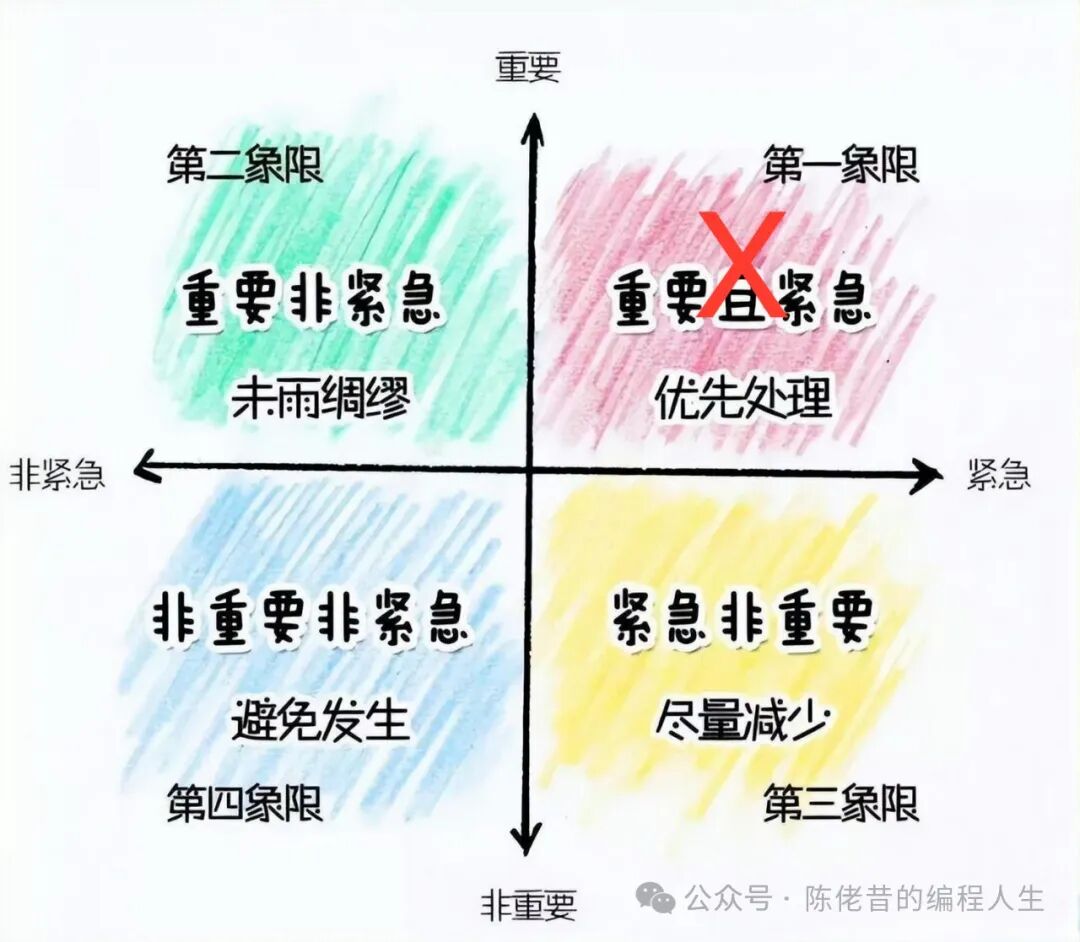
Zhang Yunfan: I established a principle: distinguish what is urgent from what is important. I've found that a big problem many people have with time management is that they can't tell urgent from important. I often hear the phrase "urgent and important." I say there's no such thing — a thing is either urgent or important. If it's both urgent and important, that means it was an important thing that you dragged until it became urgent.
For example, a kid at home needs to pick a summer camp for the summer vacation. A summer camp isn't something you decide today and go tomorrow — you have to plan ahead. Is this important? Yes. Because if you don't decide, your kid has no classes in the summer. But this thing is not urgent.
If it were me, how would I handle it?
I'd look at the summer camp list. If there's a lot of content and I can't finish today, can I split it over five days? It's only March; 20 minutes of list-reading a day, and five days is plenty. The remaining five days I'd talk with the kid and make a decision, finally deciding whether this schedule is feasible. If feasible, register on the last day. If it's full and I can't register, keep two more days for patching up the gaps.
In the end, this thing may have taken 15 to 18 days. 20 minutes a day, solved by breaking it down.

But what's my friend's approach? Finish it in one day — and this guy never has that one day. By the end of May, most summer camps are full, and whichever he can get into, he takes.
Host: The kid must be pretty unhappy, since he's not with his classmates.
Zhang Yunfan: Right — everything you promised me isn't there, and in the end it just got fudged.
But I say, this thing was actually important; it was just dragged until it became urgent.
The important things we talk about absolutely cannot be urgent. Because for important things, you should have known long ago that they're important.
The important things in life — the college entrance exam is important, so you certainly didn't start preparing the day before; you started in your first year of high school. Finding a job is also important, so you can't start preparing on the last day of senior year; nobody does that. Work is the same: you should definitely plan the year's plan at the start of the year. What will you do? What performance will you ultimately get? Not at the end of November — the year-end performance review is coming? This thing is so important, can I start working hard now? Nobody does that.
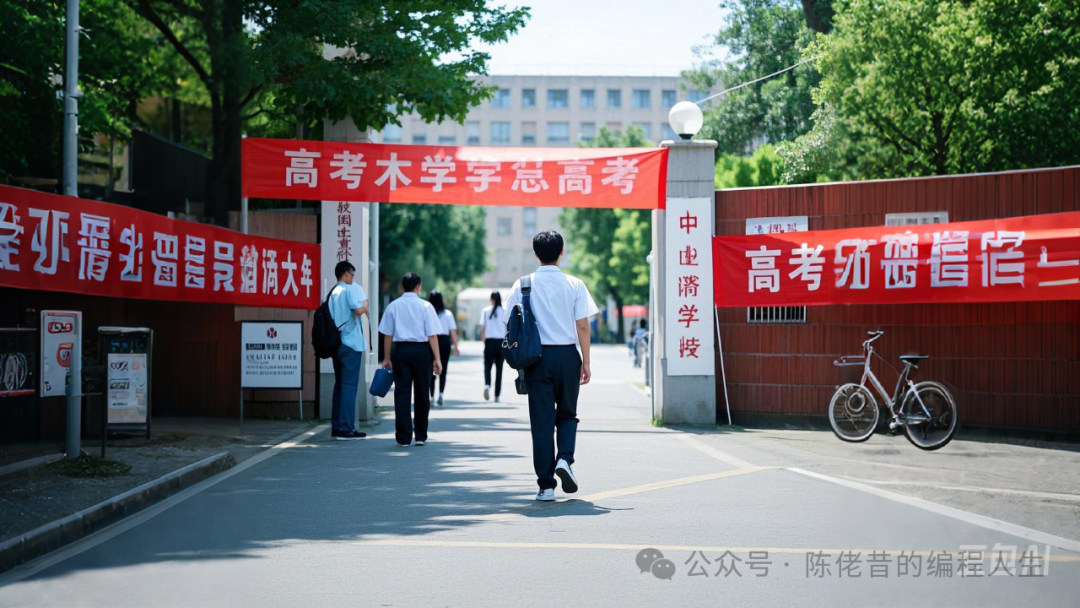
So important things are actually easy to distinguish; you just can't drag them until they become urgent.
Host: I've heard of this quadrant division before, but people say there are four quadrants, and some things really are both important and urgent.
Zhang Yunfan: No, you can give me a counterexample. Of course it's not everything — I'm saying most things are only these two kinds: urgent or important.
For example, a WeChat message arrives. It's certainly urgent, but not important. Because across your whole life, among all the information you receive, few items are life-or-death; most are fine to reply to ten minutes later. So I gradually built the habit: I don't hold my phone and look at it constantly — I just leave it there, check it periodically, and deal with it.
Because that's how people are: it beeps once, you pick it up and don't put it down right away, and while you're at it you scroll someone's Moments, check Weibo. Then you find that you only received a text message — how did another ten minutes disappear?
This is all imperceptible; habits swallow up your time.
You feel wronged, feeling like it was a packed day — how can you say I didn't manage my time? But from a time-management logic standpoint, all of this counts as failing at time management.
(To be continued...)
The article is long; you can go listen to the original podcast yourself.
You can also follow me — I'll be posting a few more installments on time management later.