A ByteDance Executive's Time-Management Tips, Part 2: Do Fixed Things at Fixed Times
This is a transcript of the podcast Zhixing Xiajiuguan — An Interview with Zhang Yunfan. If it interests you, I'd recommend listening to the original on your platform of choice.
Zhang Yunfan: a reader, an angel investor, and the head of games at ByteDance. He co-founded NetEase Blog and YY Voice, and has served as CEO of Zongheng Literature and president of Perfect World.
Baidu Baike
"I didn't do anything bad. I was serious, I worked hard — so why didn't I get a good result?"
That is most people's life.
How do we avoid living a life like that? Ordinary workers and students don't control their own time — so how do they manage their time?
Trick 04. Make a plan every morning

Zhang Yunfan: Most people either have no plan at all, or they love to write a huge pile of plans that they can never achieve.
I have another little tip: make a plan when you get up in the morning.
When I get up, my habit is to spend the first ten minutes or so — probably while washing up — thinking about what I'm going to do today and glancing at my calendar. Say I have ten meetings today and I need to see so-and-so in between; I get a rough idea. There's bound to be some free time in there. What do I want to do with that free time? For instance, a book (I really want to read) can go into today.
Ten minutes or so in the morning, and I've run through the day's few things once. That's actually quite important.
Whether your brain runs through it once or not makes a difference to how you manage your time.
If you don't run through it, you'll just go with the flow, wherever things go is where they go; if you've run through it, a todo list hangs suspended up there in your brain. Did I memorize my English? Done, tick. Did I work out? Done, tick.
You'll find that if you put this thing up there in the morning, no matter how short a person's memory is, it can't be so short that you forget in five minutes what you thought about this morning.
Trick 05. Fix your habits

Zhang Yunfan: This brings up another thing I think is especially important. What's it called? Fixed habits — a particularly good way to get your time under control.
What is a fixed habit? Do fixed things at fixed times; solidifying behavior is a particularly good way for humans to stick with something.
For example, many people go for a morning run when they get up. After a month of running, it becomes something written into the system — the behavior is solidified.
That fixed time becomes an anchor, as if some fixed points get anchored into the schedule of your life, and those things become easier to stick with. And because you have some anchored times, apart from doing the things inside those anchored slots well, the rest of your time is also less likely to run over the expected duration.
Most people's lives: "I didn't do anything bad. I was serious, I worked hard — so why didn't I get a good result?"
Analyze it this way and that, and you can't find the cause. In the end you either blame luck or blame not having enough resources.
Of course those reasons exist. But it's quite likely that your whole time management has slowly collapsed. It doesn't collapse all at once — today this didn't get done well, tomorrow that didn't get done well.

Host: What anchored times do you have each day?
Zhang Yunfan: First, my morning time is anchored to eating breakfast.
This involves some simple physiology. If you skip breakfast, being hypoglycemic all day is pretty awful.
Second, because I work during the day, I have no way to exercise then, so in the morning I go swimming or to the gym.
"Sorry, nobody gets to move this time."
If a meeting happens to start early and there's no time to exercise, then I will definitely swim from 9 to 10 at night. Friends often ask why I don't answer calls at that hour — because I'm in the water.
Also, I must have very clear reading time every day. Because after dinner, generally nobody schedules meetings; and after dinner you still want to relax a bit. So after dinner is my fixed reading time.
This schedule has also helped me avoid a lot of messy social engagements.
Many of them have noticed that if they want to set up an evening phone or video call, I'll always pick between 8:30 and 9. Because a little later I need to exercise, and before that I'm reading.
So when you set some time anchors, you're actually carving time into regions, and in the remaining regions you can put other things.
That's a little trick too.
Real management ultimately depends on enormous self-awareness, but you need some little tricks.
Host: A lot of people hearing this will think, Teacher Yunfan, you can control your own time now. But we're ordinary workers, or students, or I just joined the workplace — my time isn't my own, and I have no way to build that many anchors.
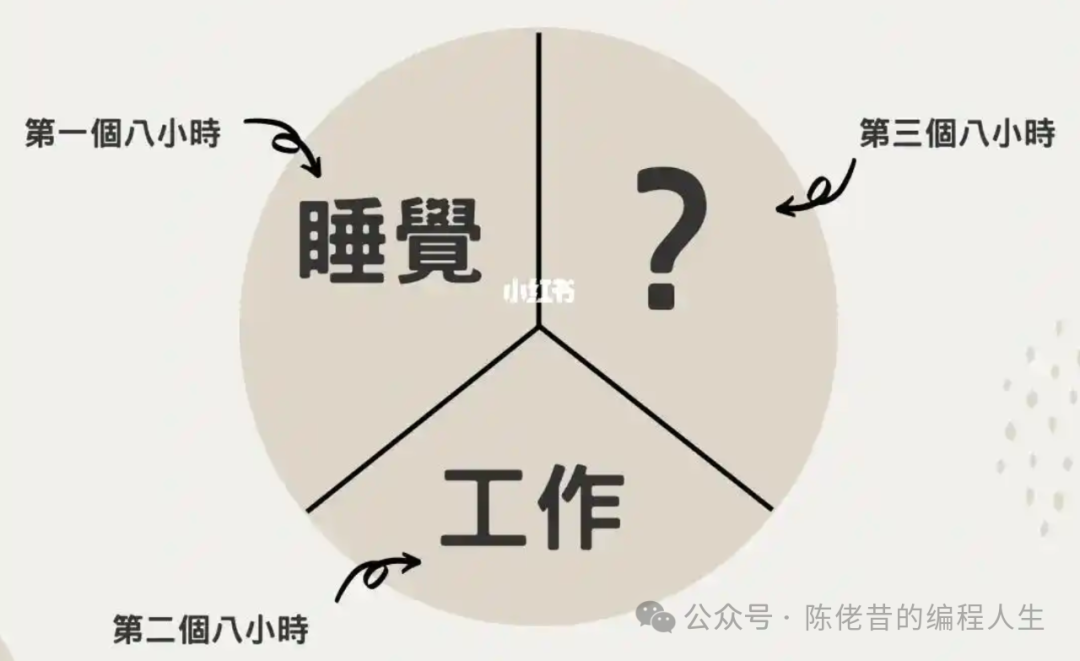
Zhang Yunfan: For people who just started working, or most people, the time blocks themselves aren't controllable. For example, I have to show up at the office at 8:30 in the morning and can't leave until 12 — in between, I really can't control it.
But you have 8 hours at work, and there are 24 hours in a day — you have other time too. That's the first point.
Second, the efficiency of our time at work is also quite important. If you manage your time well at work, you might finish more efficiently, and your quality will be higher.
Third, in a company, the most important thing is actually not to show off your so-called abilities, but to first understand what the company is doing. When I first started working, I found that early on, the most effective way to grow is to learn inside the company. Once I'd done my own work well, I'd go find out what other departments were doing.
At the same time, worldly success has one very important element: the connections between people. For many people, the first colleagues they bring along when they start a business become their later core team. But who can do that? Don't you first have to know them? If you don't understand them, why would they start a business with you?
Say you hold a meeting and hope another department will support you, and it turns out all eight colleagues in the meeting know you well. In that situation, do you have a higher chance of getting support, or if you know nobody?
So within those 8 hours whose time and space you can't change, if you can manage your time effectively, you can at least free up a bit of time. First, to learn more knowledge and more information. Second, to get to know more people and build more human connections. And these things are all very important for your later career.
Trick 06. A reward system

Host: You travel a lot — don't you ever hit a point where you've been traveling all day, you're planning to get up at five tomorrow to catch a flight, and at nine at night you still have to go swim, and you think, I'm too tired, let's skip it today?
Zhang Yunfan: That's where your reward system for yourself comes in. I'd suggest everyone give themselves a reward system — the reward can be material, or it can be what?
No time management, as a reward for time management.
For example, if twenty-some days a month are time-managed, then I have two days where I don't manage my time: I sleep in, I go out with friends to chat and drink beer, I don't care today, there's no schedule today, wherever I end up is where I end up.
Psychologically, that's also a form of compensation.
People aren't machines. If, in pursuit of so-called success, you turn yourself into a 7x24, 365-days-a-year machine... hmm, I can't do it anyway.
Host: Some people can, but most people can't.
Zhang Yunfan: But to me, I don't think it's worth it.
As long as a person is more effective than before, the overall growth, or the improvement they can gain, will be substantial. But to reach that 7x24, 365-days-a-year thing — I think that's too extreme and unnecessary; if success comes at the cost of enormous suffering of your own, it isn't worth it either.
So give yourself some reward time, a reward strategy.
If doing it on your own is too hard, you can do it with friends and compete with each other. For example, if everyone commits to working out 20 days a month, then at the end of the month can't we go out for skewers and drink ten beers? That's pretty good too.
After being overly taut, the joy of relaxing is even stronger.
(To be continued...)
The article is long; you can go listen to the original podcast yourself.
You can also follow me — I'll be posting a few more installments on time management later.