A ByteDance Executive's Time-Management Tips, Part 3: Keep a Good Mood

This is a transcript of the podcast Zhixing Xiajiuguan — An Interview with Zhang Yunfan. If it interests you, I'd recommend listening to the original on your platform of choice.
Zhang Yunfan: a reader, an angel investor, and the head of games at ByteDance. He co-founded NetEase Blog and YY Voice, and has served as CEO of Zongheng Literature and president of Perfect World.
Baidu Baike
If life is a flywheel, the hardest part is actually that first push to get it turning. Once the first turn of a virtuous cycle is underway, as long as you don't make any big messes, things keep getting better.
Tip 7: The peak-end experience
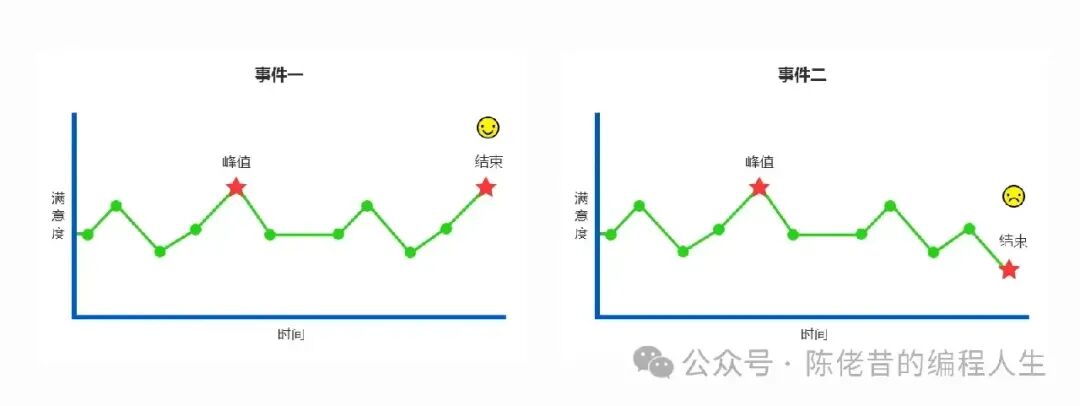
Zhang Yunfan: Then there's one especially important tip: the peak-end experience.
After a busy, bustling day, you really have to end on a happy note. That actually matters a lot.
Try this: give yourself a task before bed, and make it super simple.
If it's super simple, it's easy to complete, and you fall asleep feeling satisfied.
For example, memorize five vocabulary words — anyone can memorize five words. Or check in on Duolingo and hear that "ding ding ding," and that sense of satisfaction still pays off.
Because people experience things through the peak-end rule. Movies always build to a big climax of an ending, and that brilliance largely cancels out all the dissatisfaction and discomfort from earlier.
It's the same with how people get along. You'll find that all the chaotic, exhausting back-and-forth from before just fades. Most people remember the final parting scene, the last time everyone got together, the picture of sitting around a bonfire singing at night. That experience right before the end leaves a deep imprint in the brain.
So the peak-end experience before you go to sleep each night — designing the last task of the day as a simple, small one — puts a neat period at the end of your day's time management. You'll feel a stronger sense of joy and well-being, and that carries you into tomorrow morning.
Host: Wake up with a smile on your face~
Tip 8: The better your mood, the more you get done
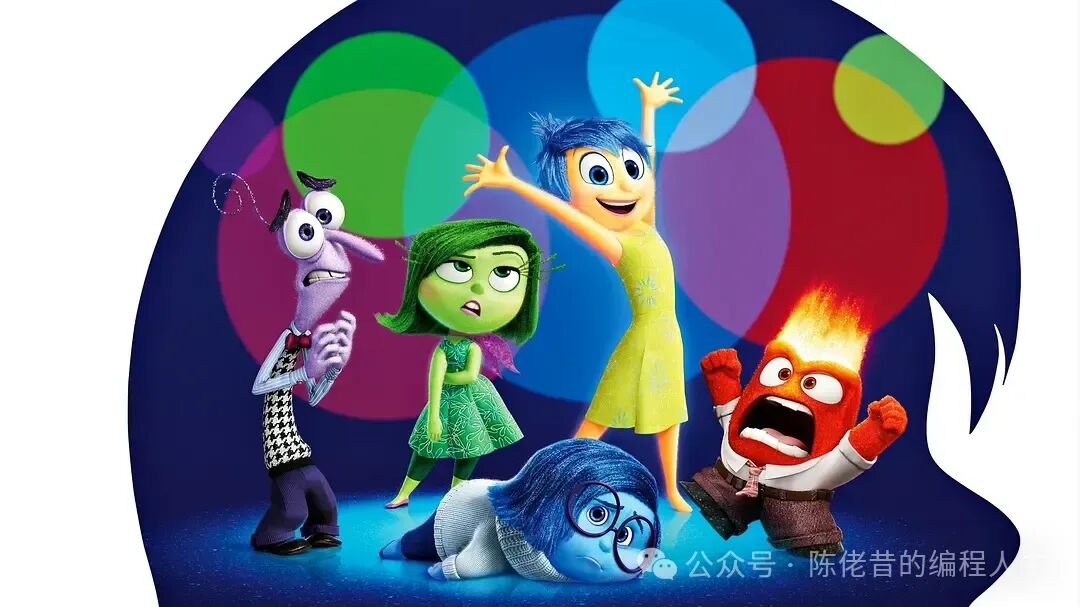
Host: I've noticed one of your most fundamental, most powerful abilities: you have a great many tips for keeping yourself in a good mood.
Zhang Yunfan: Right. When you're unhappy, you don't want to do anything — you just want to escape. And then, when a person has to face the problem head-on, my experience is that the better your mood and state of mind, the easier it is to get it done.
And absolutely do not, when you're already feeling down, pile another heavy task on top of yourself.
But if you slip something in between, that feeling dissolves — watch a stand-up special, or listen to some music. Then when you come back, you'll find that emotion has probably disappeared.
Host: Yes, I've noticed you're constantly calibrating your own emotional state.
Zhang Yunfan: It's quite important. A lot of the mistakes we make in life, a lot of our bad decisions, come from dwelling on gains and losses.
For example, a while back the stock market rallied and people said, "I have to buy" — what is that? That's fear of loss, fear of missing the 930 rally.
But you know that's not how you buy stocks. Even if you're going to speculate, you can't do it that way, with a mindset of obsessing over gains and losses. Because if you're fixated on what you might lose today, tomorrow you'll be fixated on what you might gain. Anyway, most of the gain-and-loss obsessives I've seen don't end up doing the buy-low, sell-high they imagine — they precisely buy high and sell low.
You'll find the psychology behind it is that fixation on gain and loss, and it's the same when companies make decisions.
Take product work. People often tell me, "There's this really hot product lately — shouldn't we chase it too?"
I say great, we should absolutely analyze hot products carefully. But whether to chase it can't hinge on how hot it is.
Because if you just cool down a little, you'll see: first, ask yourself whether you even have the capability. Is this a category you're good at? Second, even if you're fine and you're good at it, have you scheduled the time? Your team isn't Transformers — they can't work two jobs at once. Do they have that timeline? And third, is this a briefly hot market or a long-term one? By the time you ship, will the heat already be gone?
Calm down and think through those three points, and it becomes simple.
Look, 90% of the large-model companies from 2023 have gone under. But I think in every case, it was leaders making decisions while fixated on gain and loss, in a not-so-stable emotional state.
Host: So you never have times when you're anxious, or under a lot of pressure, or feeling low?
Zhang Yunfan: I do. And in those moments I have a principle: don't make decisions.
When my brain is either wired or really low, and the information is either overwhelming or a mess, I don't make decisions. A decision made then may just be a stress response.
I sum it up as sleep on it, then decide. Because after you sleep, your hormone levels gradually return to normal.
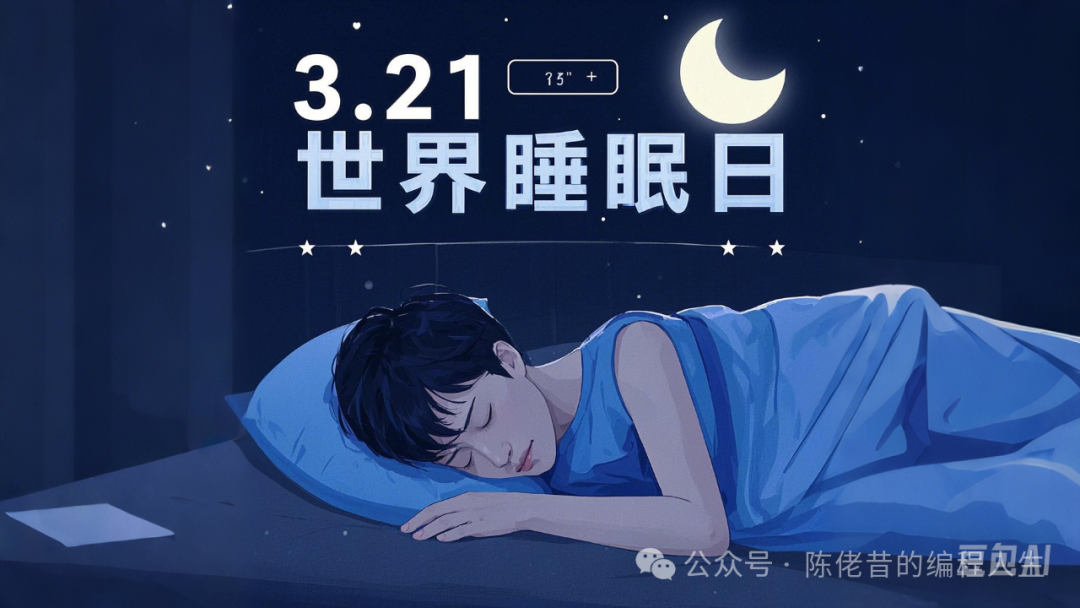
I've never seen anything in this world where, after a night's sleep, everything was turned upside down, the world had changed, your timing was gone, and you were doomed forever. I certainly haven't run into that.
As I said earlier, important things are never urgent.
Take Musk unveiling that robotaxi a couple of days ago. Didn't we already know about it? He'd said he'd roughly have it out around this time.
But you see a bunch of companies panicking. Oh no, what do we do? Strange — his plan to build this was a fixed roadmap long ago, and his supercomputing center didn't just get its 100,000 CPUs today.
But at moments like this, some companies (I'm not pointing at anyone in particular) immediately fire up at midnight, show everyone Musk's video, and ask what we should do.
Host: "Everyone think like me — nobody sleeps tonight."
Zhang Yunfan: Anyway, I don't buy that approach, because I think decisions made that way tend to be knee-jerk reactions.
The same goes for AI and so on. You should have seen it coming early, because none of it started today.
Computer vision work began back in 2011–2012; large language models have been in the works for years; and today's robots are still crude, but you can imagine that in five years they'll be refined. I met the founder of a robotics company a while back, and he said their goal is for a robot to cook a dish just by watching a cooking video on YouTube.
All of these things are possible in the future. If you're in this industry, shouldn't you be preparing?
Preparation brings success; without it, failure.
Closing thoughts
Host: A lot of people are probably curious: why do you have so much energy to do so many things? The underlying reason is really good emotional management and time management.
Zhang Yunfan: Once you manage both of those well, your efficiency at getting things done is high.
Host: Right, and then you're more likely to live your whole life the way you like.
Zhang Yunfan: Yes. Because first, if you do these things well and get results, can't you make money? And the most valuable thing money can buy is your freedom.
We often say we've used up all our time for work. So really, the greatest thing money can probably buy is freedom. Freedom of time, freedom of space, freedom of choice, and the freedom to choose not to do things. That freedom brings a better state, right? Because when you have time to do what you want, you're happier, and when you're happier, you succeed more easily. That's the logic — it's a virtuous cycle.

So I think if life is a flywheel, the hardest part is actually that first push to get it turning. Once the first turn of the virtuous cycle is underway, as long as you don't make any big messes (it keeps getting better).
Because what are most people's big messes? Arrogance and greed, for instance — running leverage too high, and everything collapses, right? We've all seen plenty of people jump off buildings like that. And then greed, right? Making money you shouldn't be making, and ending up arrested.
If you avoid those, under normal circumstances your flywheel just keeps getting better. More results, more returns, more freedom, more choices. Choices matter more than effort, and better choices bring better returns.
And so the virtuous cycle continues, and you get more and more comfortable.
Maybe one or two turns of the flywheel and you're in a good cycle. The hardest part is that first push.
So a lot of the time, I understand when people say, "I get everything you said about the later part — but how do I do the first part?" All I can say is that the first part is inherently hard. It was hard for me too.
Think about it: going from a salaried job at a company to starting your own business — of course you might run out of money and reach the end of the road. We've faced that too. In moments like that I've thought, if I were still at the company, I'd be at such-and-such a level by now. Everyone has those moments.
Nobody's a sage; no one is that impressive. Some people don't make it through — sorry, maybe next time, right? But if you do make it through, and remember that opportunity is always an extremely important part of everything, then maybe you get past it.
So the first turn of the flywheel is the hardest. That's true for everyone, and there's no method that guarantees the first flywheel will turn.
I've never met anyone with that formula either. But you can work hard to head in the right direction.