Avoiding Workplace PUA: Lessons from See You Again


The fourth season of the reality show See You Again has been dominating the trending lists lately, so I jumped on the bandwagon and watched all of the first nine episodes.
Two of the couples in it — Yang Zi with Huang Shengyi, and Mai Lin with Li Xingliang — show clear signs of PUA.
Both couples have been married for a long time. Even though Mai Lin's behavior makes people despise her, her constant support over the years let Li Xingliang devote himself to his music work without distractions, and that laid a very deep foundation for their relationship. Yang Zi, for his part, has long handled Huang Shengyi's work as her agent, which left her deeply attached to him.
Under those circumstances, it's obviously much easier for the other person to run PUA. Put them down just a little and they'll feel they did something wrong — something seriously wrong. Praise them and they'll be happy all day.
So love is the root of PUA, and the deeper the love, the easier it is to be PUA'd.
Don't get sentimental with your company
Which brings us back to the workplace: we can't afford to be sentimental with our companies.
Companies today like to advertise that "the company is my home," promote an owner's mindset and a wolf-pack culture, and even offer great employee benefits and company trips — to some degree, all of it is an attempt to get sentimental with you.

One thing we need to be clear about: "sentiment costs money." In the show, Ge Xi follows love wherever it takes her — Liu Jishou lost millions and she didn't even care.
Likewise, once you develop feelings for your company and start seeing it through rose-colored glasses, you'll sometimes stop caring about the money.
"The company is my home," the owner's mindset, the wolf-pack culture — all of it is hoping you'll contribute on your own initiative and ask for nothing back. Employee benefits, especially social insurance and the housing fund, are things the company should be providing in the first place. As for company trips, understand that what creates connection and joy along the way is your colleagues — specific people and specific things. You can feel warmly toward your colleagues and your team, but that warmth shouldn't be directed at the company.
A company is always a money-making machine. Doing as much as you're paid to do is, in fact, a professional way to behave.
If the company has a solid job-level promotion system with one or two promotion windows a year, then doing a bit more — enough to get promoted and earn a higher salary — is acceptable. But if no matter how much more you do there's no way to get promoted or earn more, then it's just wasted effort.
Keep leaving as an option
In the show, you can see that Li Xingliang — the one most deeply PUA'd — really doesn't have divorce as an option; in episode 9 he even tears up his marriage pledge to make exactly that point. (Hence the audience wishing them locked together forever 😂)
The market isn't great right now, and a lot of companies really are shrinking and have stopped hiring. So quite a few people have quietly removed leaving from their list of options and gone back to their old company to endure it in silence. But that isn't the optimal solution.
It's precisely the companies that are still posting openings when the market is bad that may have a stable business, growing business — even the potential to break out in the next stage. If we can get into a company like that right now, the future doesn't have to be bad.
So no matter how tough things get, we shouldn't throw away the option of leaving.
Young people who aren't past 35 yet — especially those who've worked at one company ever since graduation — should pay even more attention to opportunities outside. I'd suggest spending a few days each year interviewing at some companies. Even if you don't pass, you'll see what talent the market is short on, what your role is worth in the market, and you may even discover some directions for your own career.
Separate the company from the work
In the show, Ge Xi loves Liu Jishou very much, but he never shows that he loves her, and she lives rather awkwardly. Later, once she put the focus on herself, she actually lived better. She shifted from hoping to get love from the other person to seeking love starting from self-love.
We should do the same at work: get your validation from the work itself, not from the company.
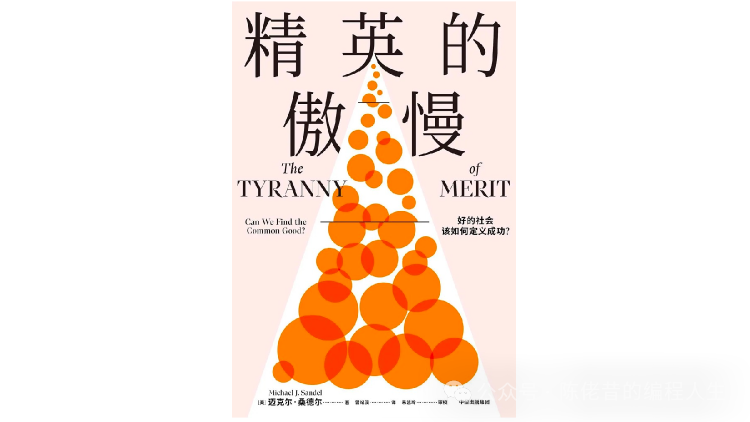
Image: The Tyranny of Merit — a reflection on "meritocracy"
The company can give you an S performance rating or an outstanding employee award, and you can also get a sense of accomplishment from improving your own skills. Those skills include, but aren't limited to, technical ability and communication.
Normally, the company's KPIs and your personal skill-growth goals don't conflict. But when they do, remember to choose the latter.
The KPI the company sets for you is to get project XX launched this month; you can set your own goal: master internationalization on project XX, preparing yourself for bigger projects later.
You have to have your own goals; that's the only way to motivate yourself from within.
Watch out for your boss's sandwich
You may have come across the "sandwich method" of persuasion in self-media or in books: praise/affirmation + negation/criticism + encouragement/comfort.
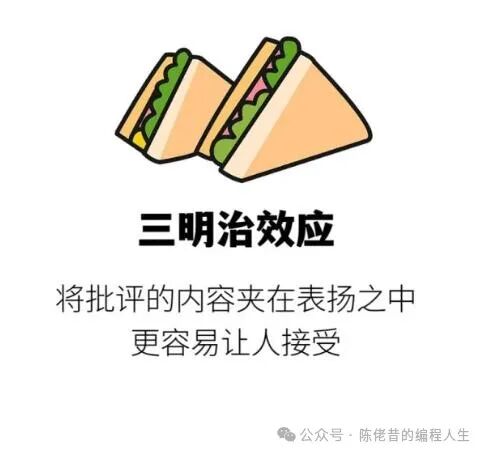
It's an easy way to get someone to accept your point of view, then reflect on their shortcomings and improve.
In the show, that's exactly what Mai Lin does: she shows off Li Xingliang while complaining about him, and after crying a few times she has him completely under her thumb.
Many managers know this playbook inside out — for some of them it's muscle memory.
If your direct manager is stating facts, that's acceptable. But some managers you barely see a few times a year, and then they pass sweeping judgments on your work — that's not necessarily the same thing. Also, when you listen to your boss talk, pay attention to your own emotional ups and downs. If you're constantly being led along, happy one moment and miserable the next, that's when you should be on your guard.
Remember: they feed you a bite of shit, then a bite of candy, and the whole point is to get you to swallow the shit.
Once you swallow it, the PUA has begun to succeed.
Some thoughts
The most suffocating scene in the show, for me, is this: after days of laying groundwork, Mai Lin gets the people around her to comfort her, uses her own emotions to pull others onto her side and isolate Li Xingliang, and finally says to him, "Everyone comforts me, and everyone tells you what you should do — why don't you reflect on yourself?"
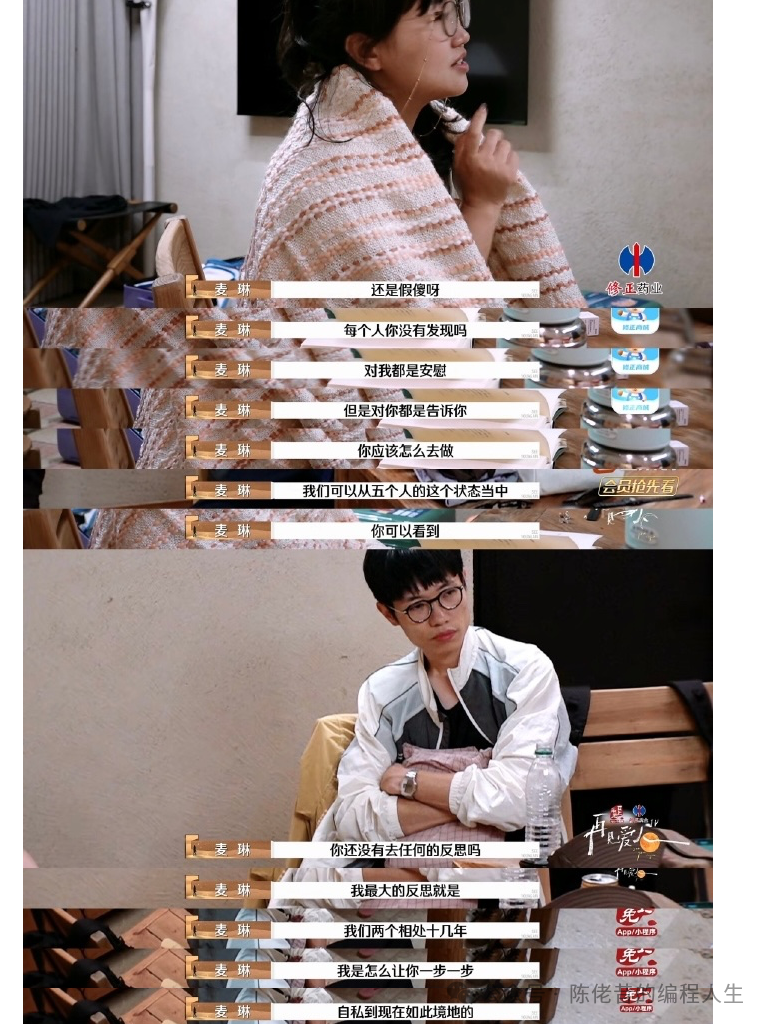
I don't think most people can withstand that kind of trample-and-isolate behavior.
When one person dismisses you, maybe you can still hold to your own view. But when it's a crowd — can you still?
The odds of this happening may be low, but if it does happen it could be devastating, so it's worth thinking about.
If it happens at work — a manager dismisses you for a long stretch, and slowly your colleagues start doubting whether you're really capable — how would you handle it?