AI Recreated the Whole Adobe Suite in Weeks—Is the Software Industry Doomed?
News that "the whole Adobe suite has been recreated" has been appearing on social media one after another. These products were built by decompiling. What sets them apart: small size, full functionality. Many people gasped: the software industry is finished. But is that really so?
I've been getting a lot of Adobe promotional emails lately, which struck me as odd—after all, I haven't used their products in ten years. These past two days, seeing the news about "the whole Adobe suite being recreated" pop up on social media, it suddenly clicked.
The project is at: https://getartcraft.com/apps
From the page, nearly every Adobe product has been recreated:
- Photoshop -> PhotoCraft
- Illustrators -> VectorCrafti
- Effects -> EffectCraft
- Premiere -> FilmCraft
- Lightroom -> LightCraft
- Acrobat -> PdfCraft
- InDesign -> DesignCraft
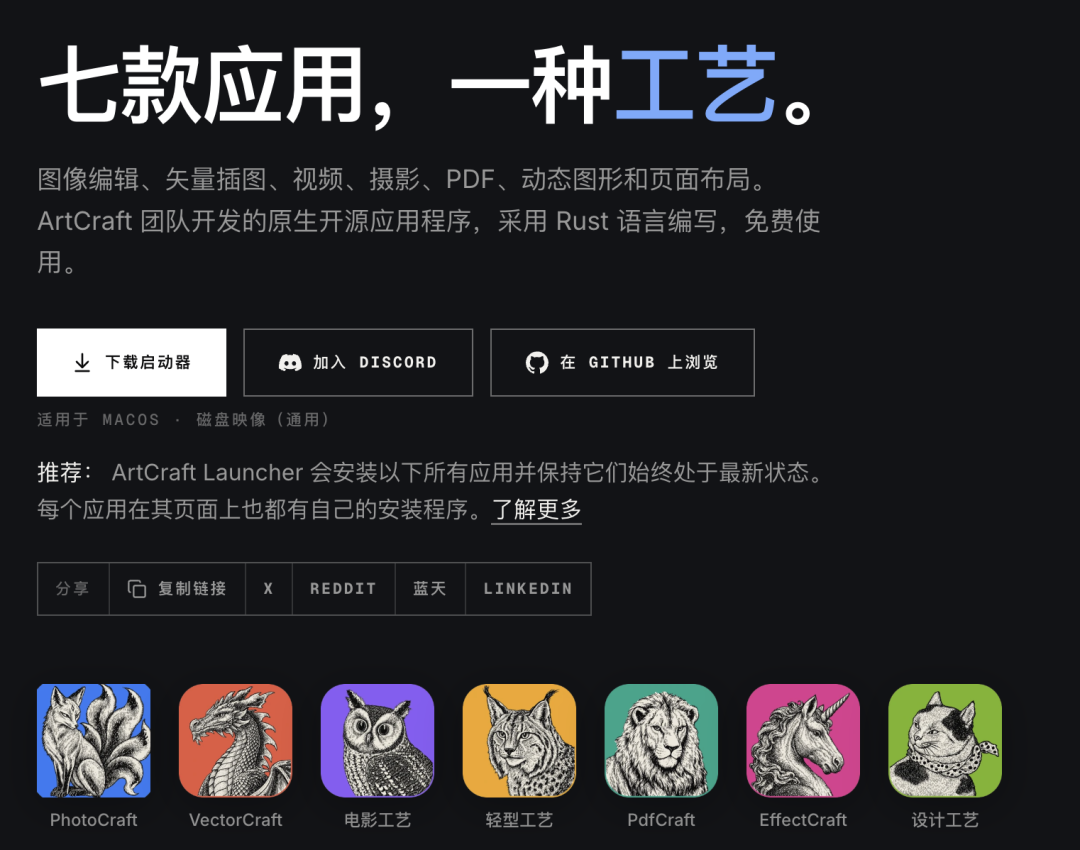
The official claim is that these products were decompiled and then rewritten in Rust, somewhat like the reverse-engineering development process of domestic Chinese cars. The selling points: small size, full functionality.
Reading this, many people gasped: the software industry is finished, who's going to pay for software from now on? If AI can recreate a professional application in a few weeks, does this industry really have a way forward?
Those thoughts aren't unreasonable.
First, development costs have fallen off a cliff. In the past, building Photoshop took a team of dozens of people working for years; now one person, a few weeks, with AI assistance, can get the core functionality working.
Second, the "vibe coding" development mode has become widespread, and code itself is no longer scarce.
Then there's the project's rebellion against the "old model": it is itself a direct counterattack against Adobe's subscription model, frequent price hikes, forced cloud connections, and similar business practices.
The project wants to prove one thing: if all you do is recreate features, the moats of today's giants aren't as insurmountable as they seem.
But in actual use, it doesn't feel the same.
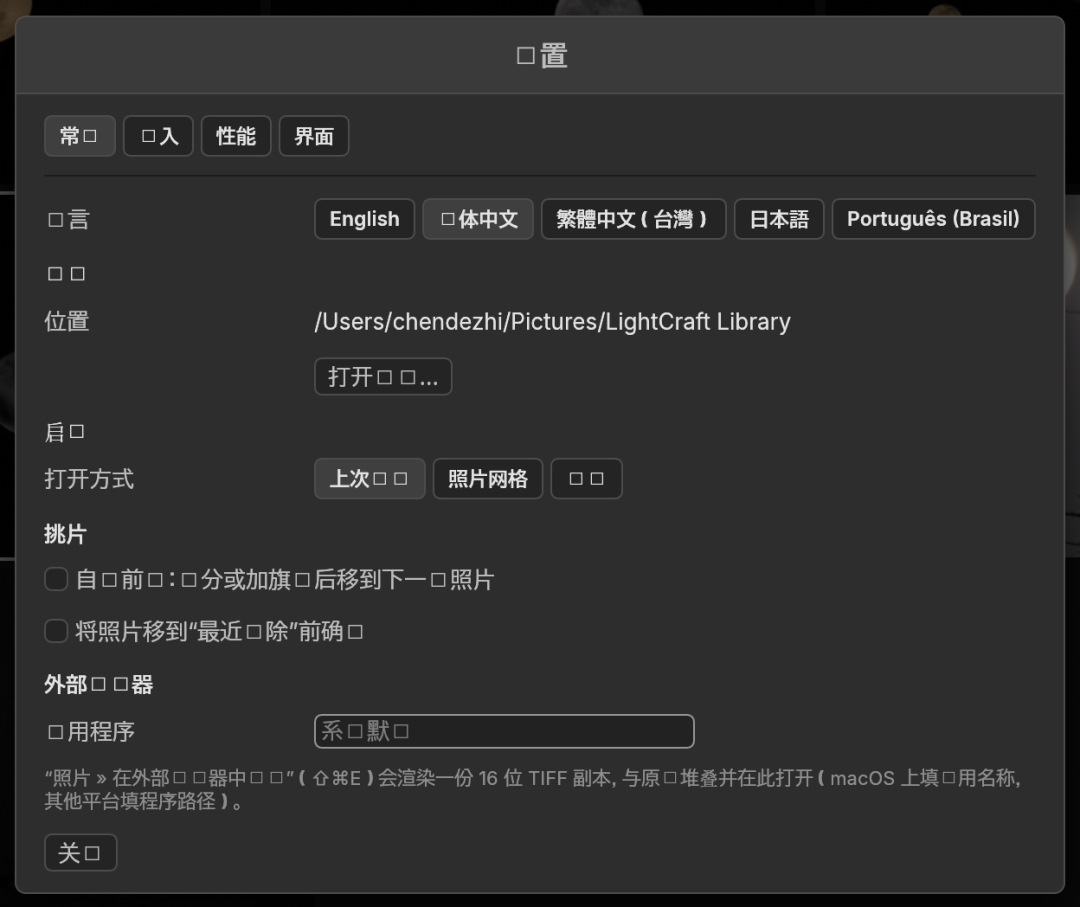
First, the project has quite a few bugs. The most obvious is the Simplified Chinese issue: many places display as empty boxes.
Second, the official claim that it can replace 99% of the functionality doesn't hold up. Photoshop's smart selection, for example, is still stuck roughly where it was around 2010—it can't select more precisely, and there's certainly no AI recognition.
Third, the official site has already started posting prices. It's much cheaper than Adobe, but it still hopes to make money by selling services.
Looking at it calmly, there's a huge gulf between "a prototype that runs" and "a usable productivity tool."
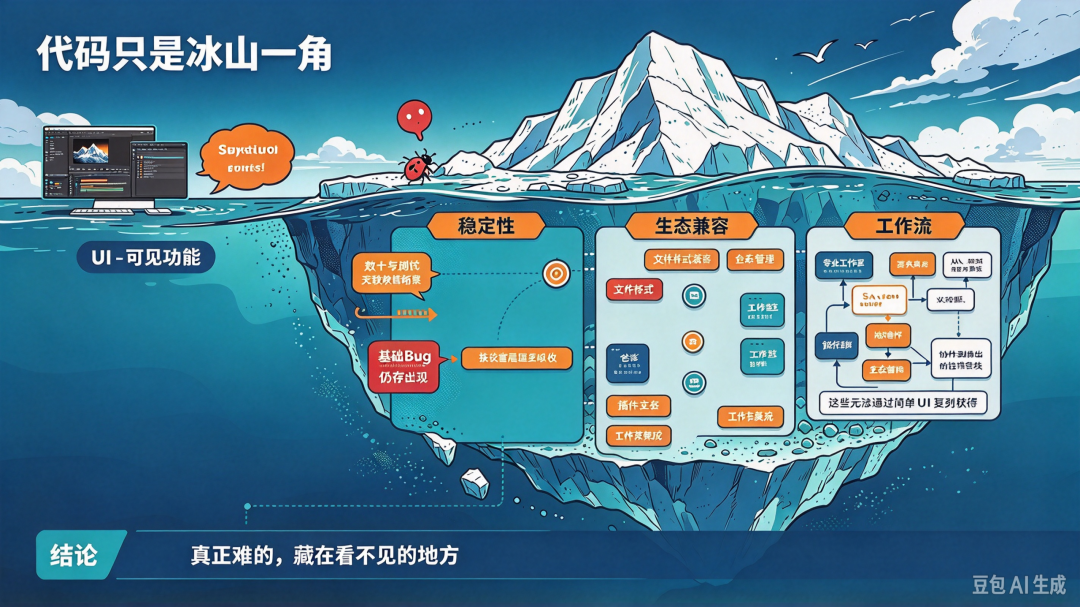
The first kind of friction: code is only the tip of the iceberg.
ArtCraft's founder himself admits that the early bold claim of "feature parity within a month" has turned into the more pragmatic expectation of "99% feature parity within a few months."
The reason is that what's really hard about professional software is the invisible "dark matter" behind it—extreme stability: Adobe's software has been tested over decades, across countless extreme scenarios, while ArtCraft is still in "early alpha," with users reporting basic bugs such as "the free transform tool won't exit";
and deep ecosystem compatibility: the value of professional software lies in file-format compatibility, color-management accuracy, and seamless integration with third-party plugins and studio workflows—none of which can be gained by simply recreating the UI.
The second kind of friction: what enterprises buy is "risk transfer," not just "code."
When companies pay big money for SaaS software, they're buying not just features but compliance, a security endorsement, and the transfer of legal liability. If a company processes customer data with an AI-generated internal tool and a data breach occurs, there's no vendor to hold accountable and no security patch to buy. That's a risk enterprises cannot bear.
The third kind of friction: the "legal and security minefield" of AI-generated code.
ArtCraft claims a "clean-room implementation," but that is legally highly controversial. Critics question whether AI-generated code, whose training data very likely included Adobe's copyrighted code, amounts to "rewriting someone else's work," and could expose the project to enormous lawsuits.
On top of that, the logic flaws and security risks that AI-assisted programming tends to introduce need a lot of manual auditing to root out.
So the software industry will not die, but certain things from the old software era certainly will.
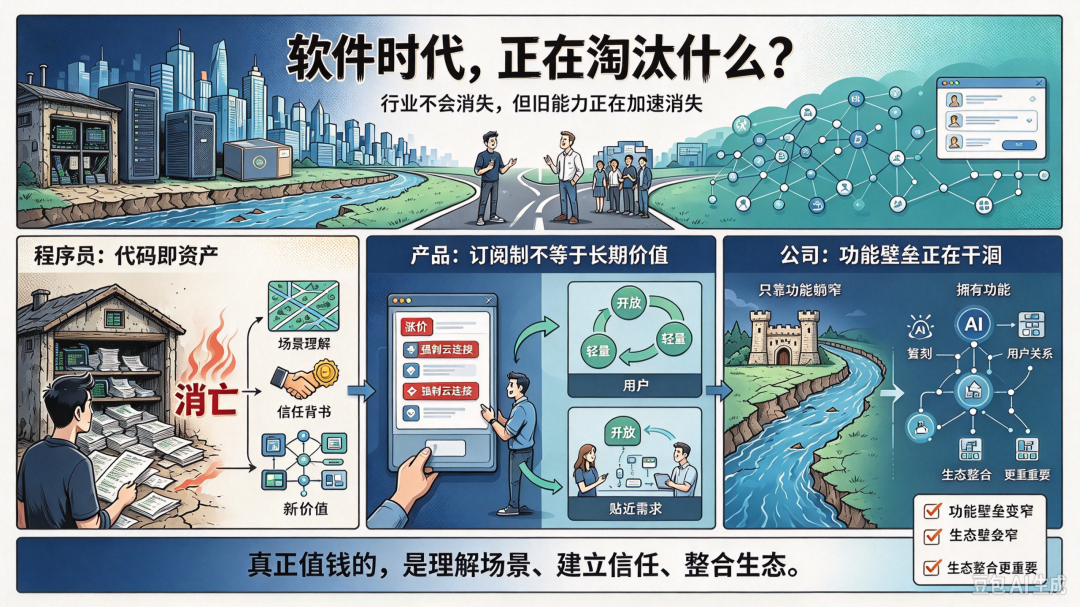
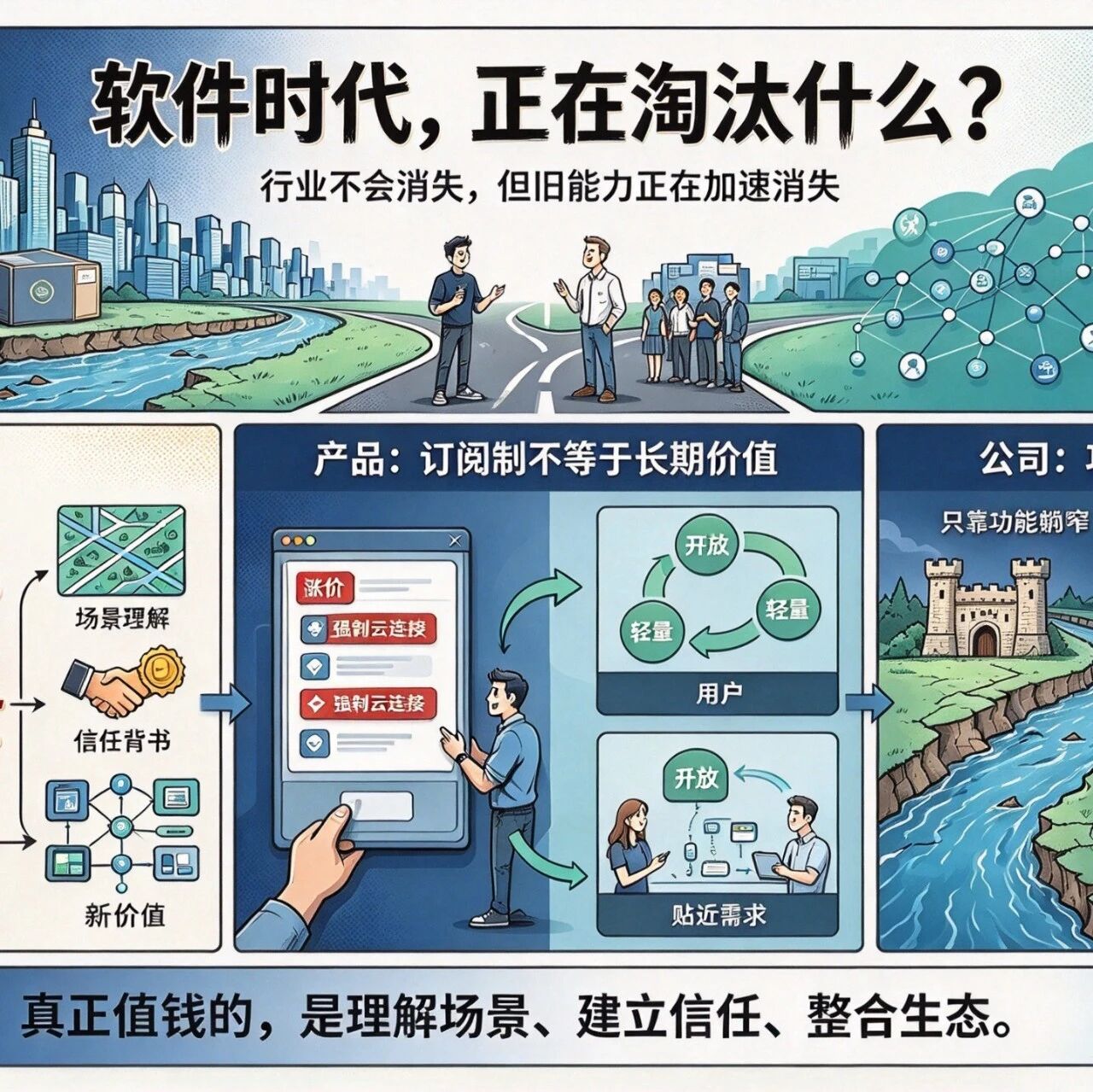
For programmers, what dies is the old mindset of "code is an asset." When code is no longer scarce, what's genuinely valuable is scenario understanding, trust endorsement, and the ability to integrate an ecosystem.
For products, what dies is the subscription model that treats users as a crop to be harvested. Frequent price increases, forced cloud connections, and denying users a choice will accelerate the migration of users to more open, lighter alternatives. Then there's failing to match user needs: Adobe added too many bells and whistles and ended up being abandoned by its users, while Figma and others that stay closer to what users need have won people over.
For companies, what dies is the business model of coasting on feature moats. If your software is merely "it has a certain feature" and AI can recreate that quickly, your moat is drying up.
What will not die:
- The relentless pursuit of stability and security. The core value of enterprise software was never "it has features" but "nothing goes wrong."
- Deep scenario understanding. Knowing what users need in which scenario matters more than what features you can build.
- Trust and responsibility. Software will evolve from a tool you have to learn to use into an intelligent system that understands your intent and proactively executes tasks.
In short, instead of agonizing over "the industry is gone," ask yourself one question: when code is no longer scarce, what real value can you offer? A better understanding of a particular industry's scenarios? The ability to shoulder responsibility others dare not take? Or the ability to integrate ecosystems others cannot? Once you've thought that through, you won't be anxious anymore.