From One-Sentence Generation to Near-Perfect Replication: Where AI Game Development Hits Its Limits

After DeepSeek 4.1 Flash's 10-17 update, everyone gasped at how big the improvement was.
Quite a few people started using it to make games, and the results were surprisingly good.
The most common one is "generate a racing game from one sentence." I tried it once too: the prompt was a single line, "make a 3D racing game," thinking effort set to High, costing 2 yuan, with a 99.7% cache hit, taking nearly 45 minutes.
The result ran on the first try—the only problem was that the left and right keys were reversed, which one conversation fixed. After the fix it was basically usable, but not much fun: just hold down the up arrow the whole way and you win, and it gets old fast. The only small surprise was that the car can change color.
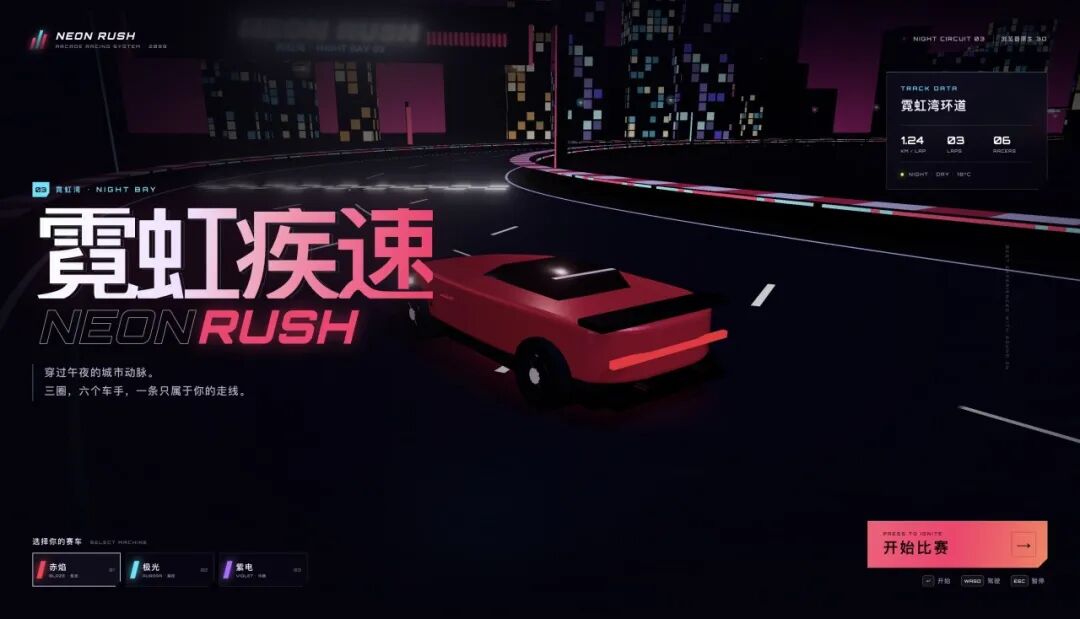
The conclusion: AI can already produce a "playable demo" at close to zero cost, but there's still a clear distance between that and "a fun game."
What's genuinely impressive is a different game, The Little Prince (not generated by DeepSeek):
The 3D visuals are excellent, almost precisely reproducing the soothing style of the original illustrations. You can watch the sunset with the little prince, admire the flowers in the rose garden, wait in the desert alongside the pilot, and even watch the sun and moon trade places on the lamplighter's planet.
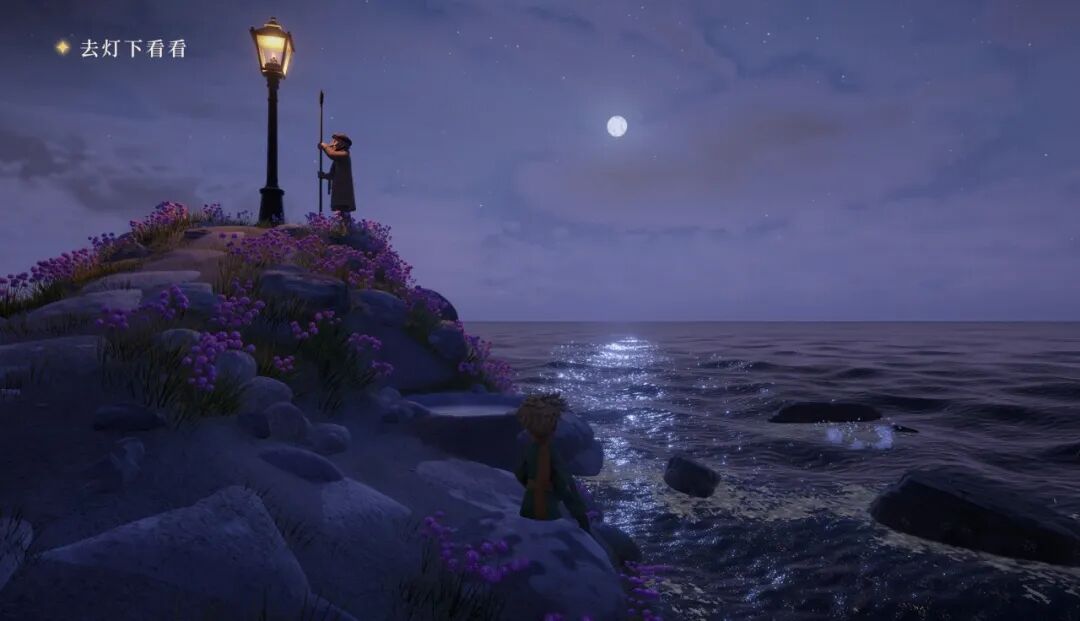
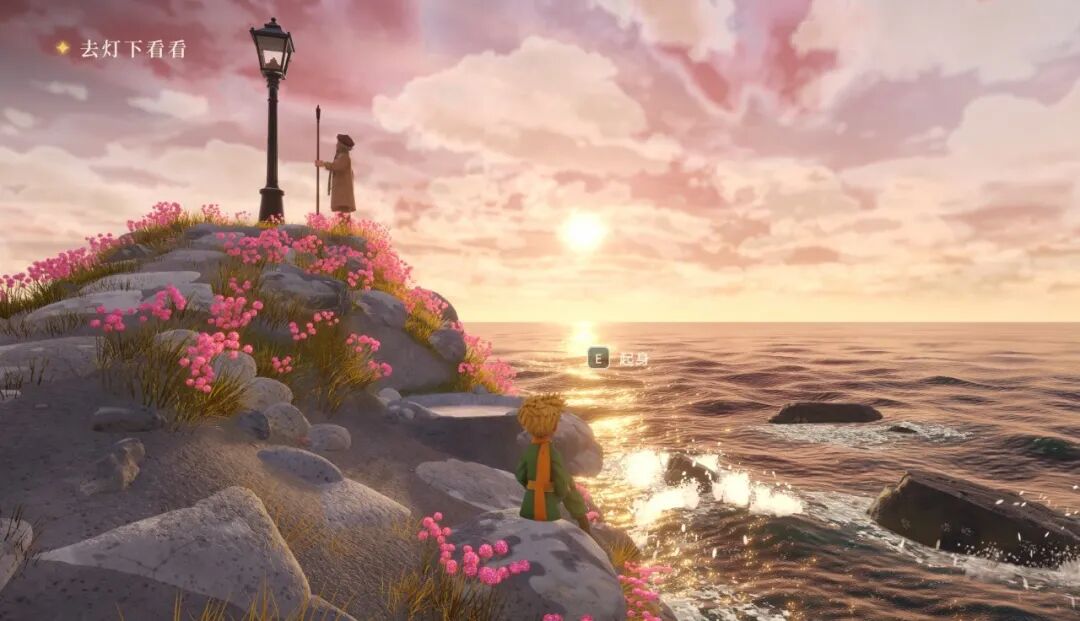
As the sun and moon trade places, the sea glitters—beautiful and real
The author spent 16 days on it, using Opus 5.5 + Tripo (which turns 2D photos into 3D models) + Blender. The comment section is all praise, but what's more worth reading is the development process he made public.
The overall chain: five stages
| Stage | Tool | Responsibility |
|---|---|---|
| Requirements | Fable 5.1 | Write the PRD: core scenes, characters, story arc |
| Concept art | Image 2.5 | Generate scene reference images and character T-pose four-view sheets |
| 3D assets | Tripo | Generate scene props and character models |
| Code / assembly | Opus 5.5 | Drive Blender + Unity to build scenes and write the core code |
| Iteration and bug fixing | Astra | Improve the experience and fix problems |
Tooling: Blender CLI + the Auto-Rig Pro plugin (rigging and skinning); Unity + Unity CLI + the Pipeline package (using the official Unity MCP so Claude can operate the project directly).
Scene construction: three steps
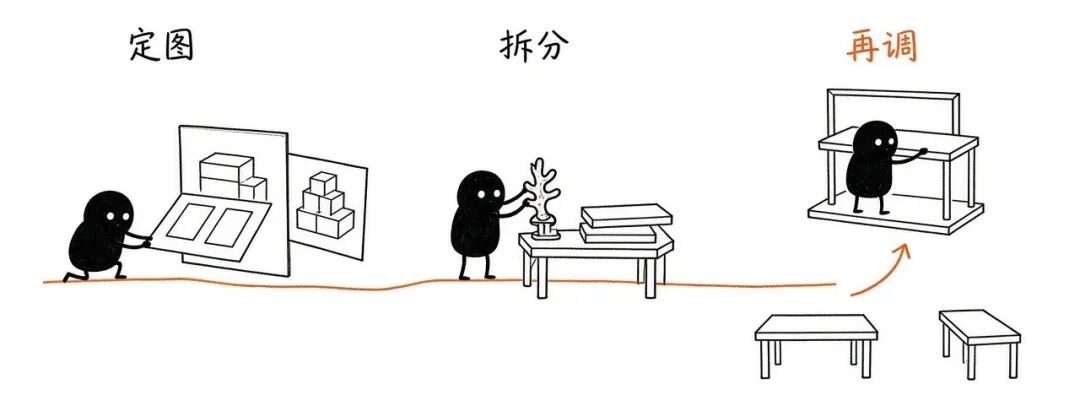
- Image 2.5 produces the references: first settle on an overall effect image you're happy with, then add a top-down view (to convey the layout) and an oblique side view (to convey height and layering).
- Have the AI break down the assets: decide which objects suit Tripo generation and which are better built directly in Blender; in Tripo, use the H3.1 model to guarantee precision.
- Opus 5.5 replicates the scene: hand it the Tripo assets plus multi-angle reference images, and it drives Blender + Unity to place props and adjust scale and position; then feed back front and side screenshots, iterating over several rounds until it's right.
Character modeling: five steps
- Image 2.5 generates the T-pose four-view sheet, keeping the details consistent across all views.
- Tripo's "multi-view to 3D": use Smart Mesh P2.0 (controllable polygon count, easy to rig and animate), quad topology, precision maxed out; once the untextured mesh passes, generate the texture maps, and regenerate unreasonable areas locally with edit mesh.
- Auto-Rig Pro for automatic rigging and skinning: test raising an arm, bending a leg, and turning around, and fix deformation, stretching, and clipping.
- Download motion FBX files from Mixamo, and have Opus check the bone matching and hook them up.
- A second pass on complex interactions (like picking up a kettle): pick a close Mixamo motion as a base, then fix the details with Auto-Rig Pro's arm IK plus finger-grip work, avoiding clipping, the object slipping out of the hand, or floating.
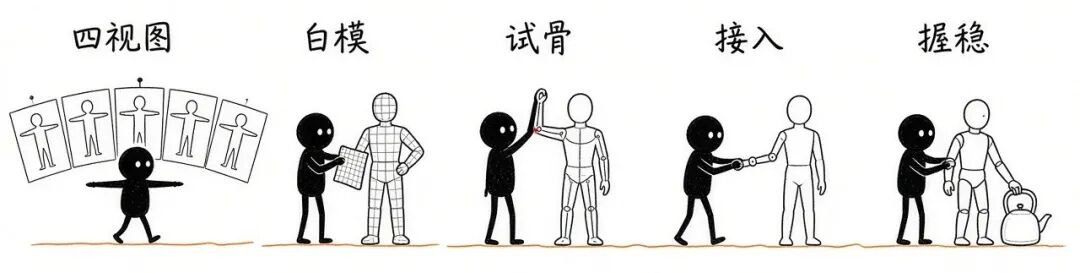
The core methodology
Generous reference images + screenshot feedback from multiple camera angles + repeated iteration—that's the key to getting AI to deliver a "near-perfect replication."
Prompts need to be specific down to verifiable details—things like "the bones align with the joints" and "the palm stays in stable contact with the handle"—rather than a vague "make it look nicer."
Put the two cases side by side and the boundary becomes clear:
The floor has been pushed extremely low. One sentence, 2 yuan, 45 minutes, and you have a 3D game that runs immediately. But its ceiling is equally obvious at a glance—hold down the arrow key and you beat it; the novelty doesn't survive ten minutes.
The ceiling isn't being raised by AI; it's being raised by "process." In those 16 days on The Little Prince, what was really valuable wasn't how strong Opus 5.5 is, but that five-stage chain: who handles the images, who handles the modeling, who builds the scenes, who fixes the bugs—and every step had a verifiable acceptance criterion (bones aligned with joints, palm in stable contact with the handle). AI is an efficient executor inside that process, but the process itself was designed by a human.
So the more accurate way to put it is: AI didn't make making games easier—it made making games cheaper to get wrong. The former would mean anyone can ship a finished product; the latter means people with patience, taste, and a willingness to iterate can try dozens more times than everyone else, and end up with a far more impressive product.