Trae SOLO Takes On a Full-Stack Bookkeeping App and Burns Through Tokens
Trae SOLO shipped officially with 3.0, and it's aimed squarely at Cursor's Agents.
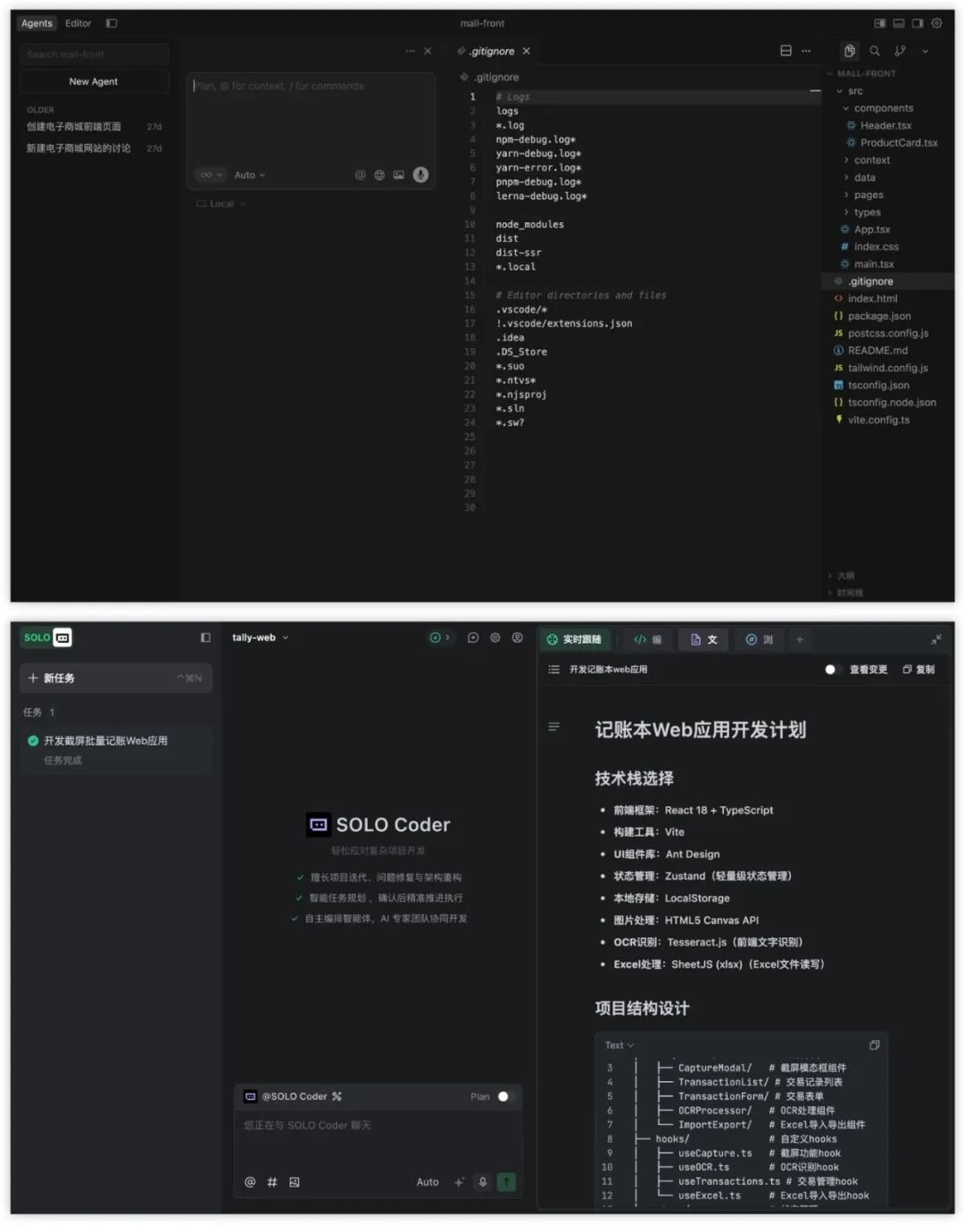
Compared with the layout change in Cursor Agents that gives the conversation the main spot, Trae SOLO is more aggressive, with three obvious features:
First, real-time tracking, which shows the files the AI is editing. It has that hacker-in-a-movie effect, lines of text spilling out one after another, the screen constantly refreshing — the atmosphere is dialed all the way up. What is Vibe Coding? This is Vibe Coding.
Second, plan mode. It lays out the development plan first, then waits for the user to confirm before executing.
There's also a code diff tool, so every step can be reviewed and rolled back.
Starting development
This time the challenge was to finish a full-stack build without touching the code by hand, using SOLO alone: a bookkeeping app, one of the three apps indie developers love most.
The first two attempts failed. One was having it build an iOS app, the other a web app. The iOS app wouldn't launch, and attempts to fix it came to nothing; the web app couldn't adapt to phones, and I gave up after several tries.
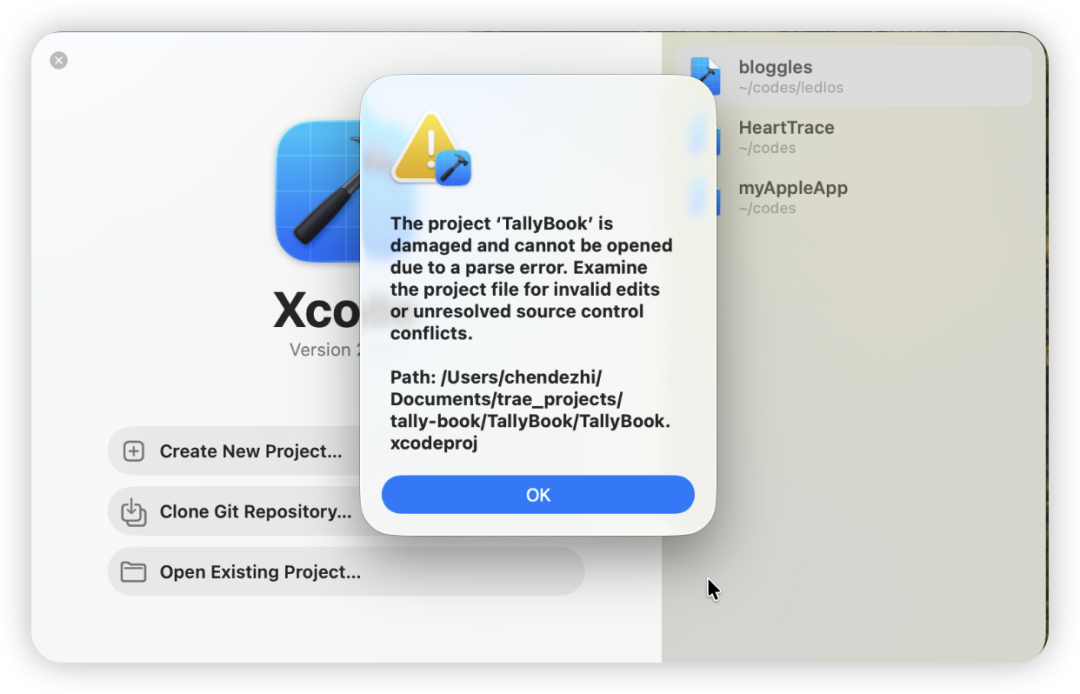
Suffice it to say the underlying model's ability still isn't quite enough.
In the end I changed the prompt to "build a multi-platform app" and used the prompt optimization feature, and finally got a development plan that fit reasonably well.
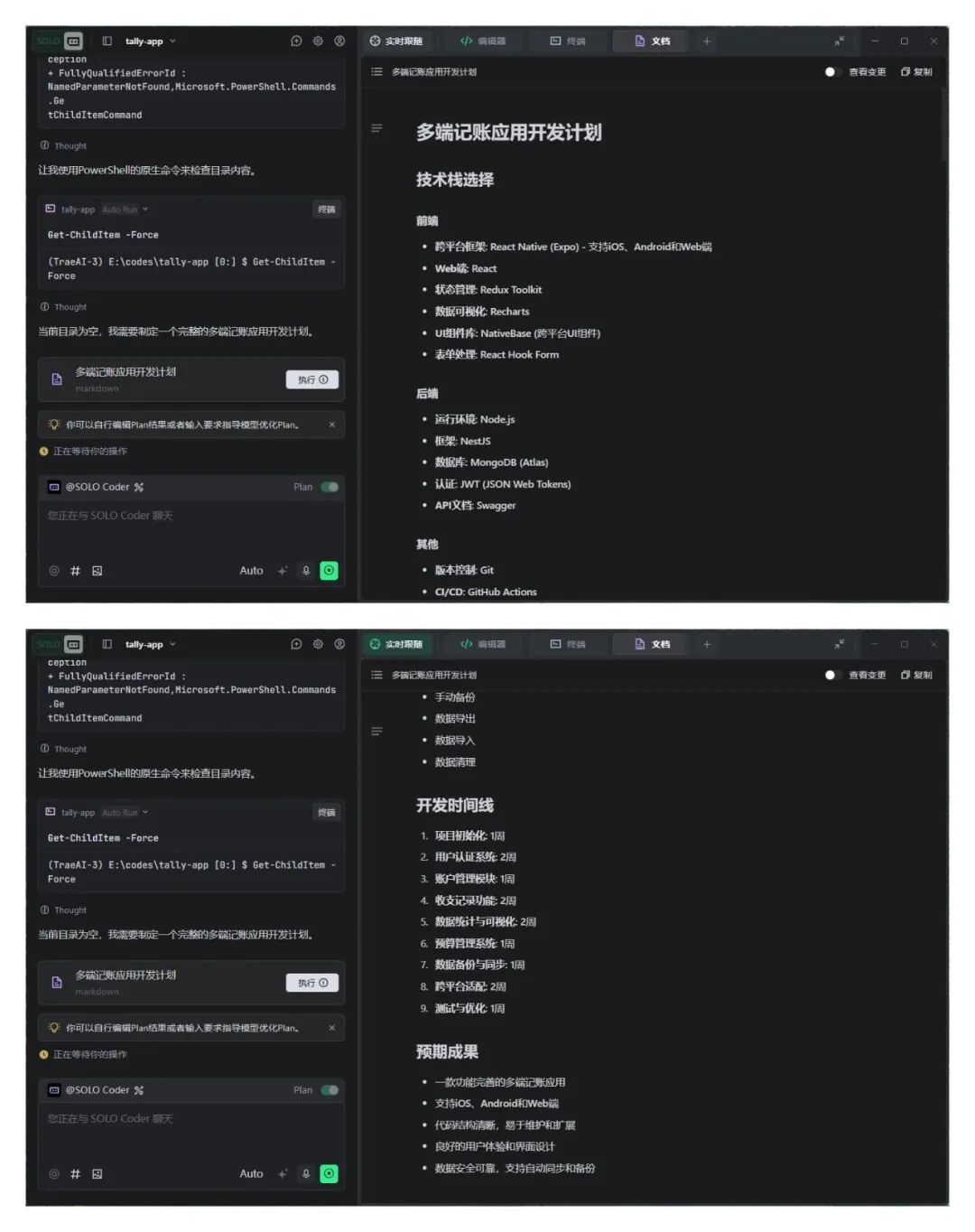
The funny part is that, judging by the development timeline, this was clearly a human's development plan.
Once I confirmed the plan, it started writing code on its own.
About an hour later, the front end and back end were done. When I started it up, I found that MongoDB wasn't installed on my machine. Following the prompts, I fumbled around for half an hour before it finally ran.
Worth noting: during this process you may have to handle the command line yourself, type a Y, or choose a tech stack or tool. It isn't fully automatic.
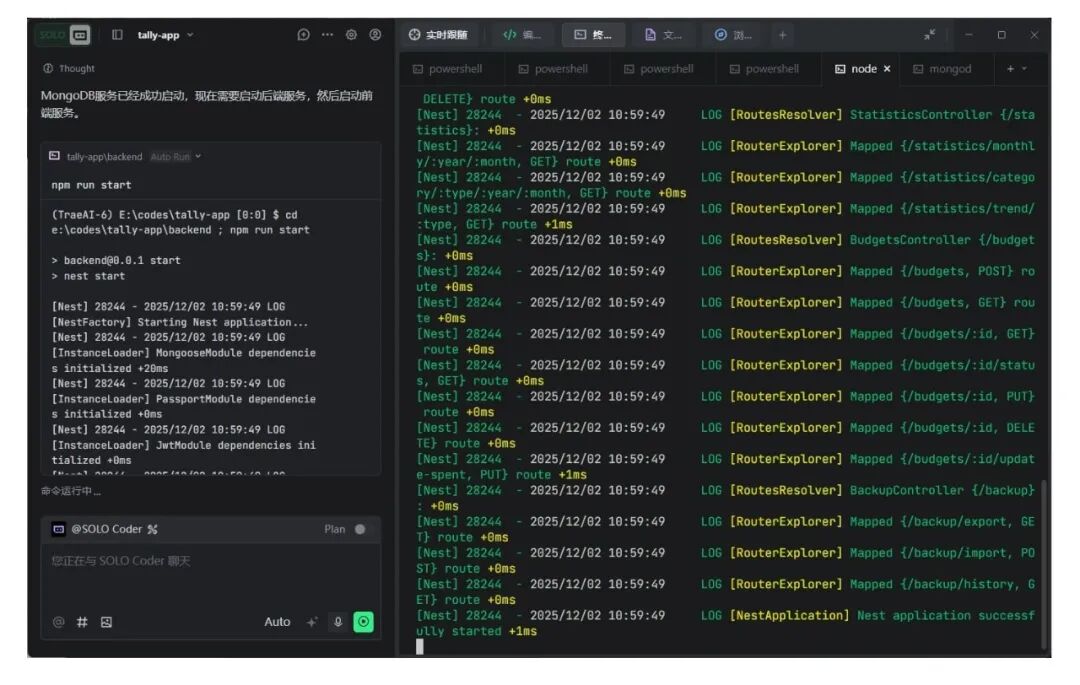
The first version of the interface was still in English; after adjustments it became Chinese.
Let's just say the interface was fairly complete, but overall it was still too plain, and clearly in the style of a web app, with interactions that didn't really suit how people use phones.
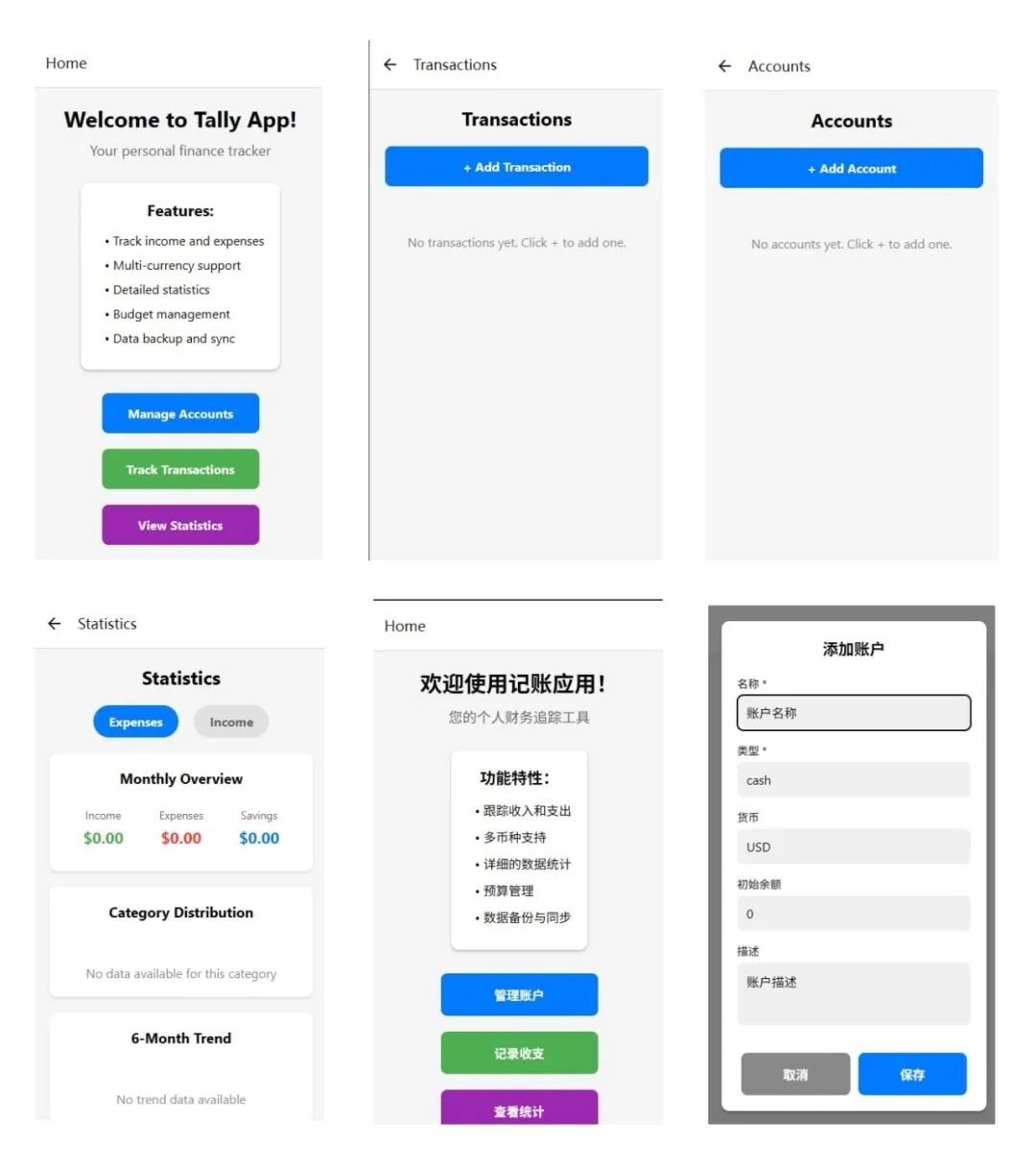
Even though it was already using a mobile tech stack and components, trying keywords like "look more like a phone app" and "follow phone interaction habits" made no difference in the end.
It seems a large language model is still a language model. If you have requirements for the interface, you can only adjust it based on your own experience.
That was the result after two hours. What followed was refinement work.
Refinement
After that I spent another hour adjusting pages and fixing some bugs before it started to look halfway decent.
But then I got stuck on the stats page not updating: every endpoint returned an empty array, the numbers in the monthly overview stayed at 0, and half an hour of fixing changed nothing.
I had no choice but to start a new task and have it redesign.
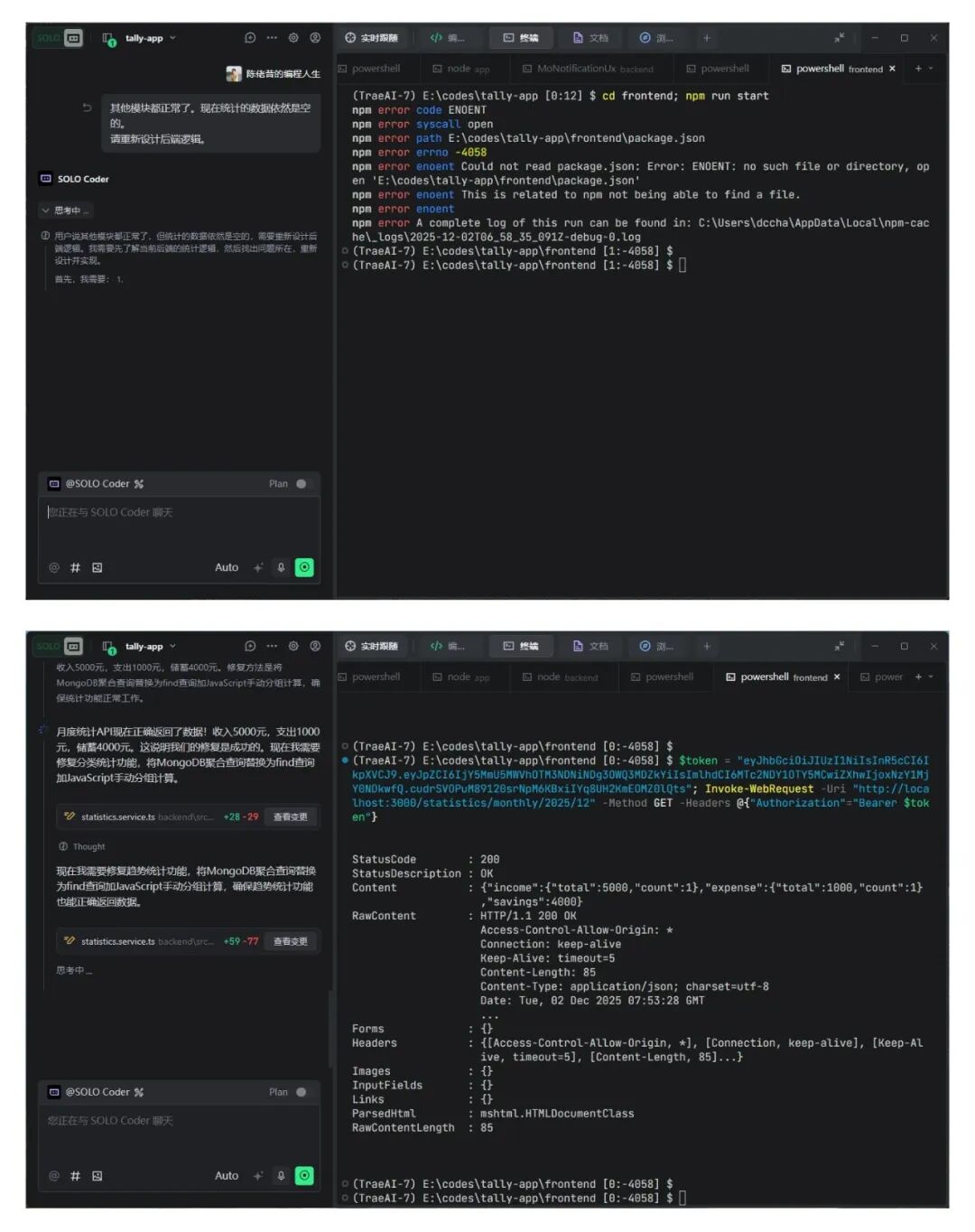
Redesigning the flow; an hour later, it finally worked
An hour went by, and it was finally fixed.
I nearly gave up — it had taken far too long.
I think I understand now why some people say the plans for Claude Code and Qoder Code aren't enough. If Trae hadn't whitelisted me, I'd probably be over my quota by now.
Here's the final result:
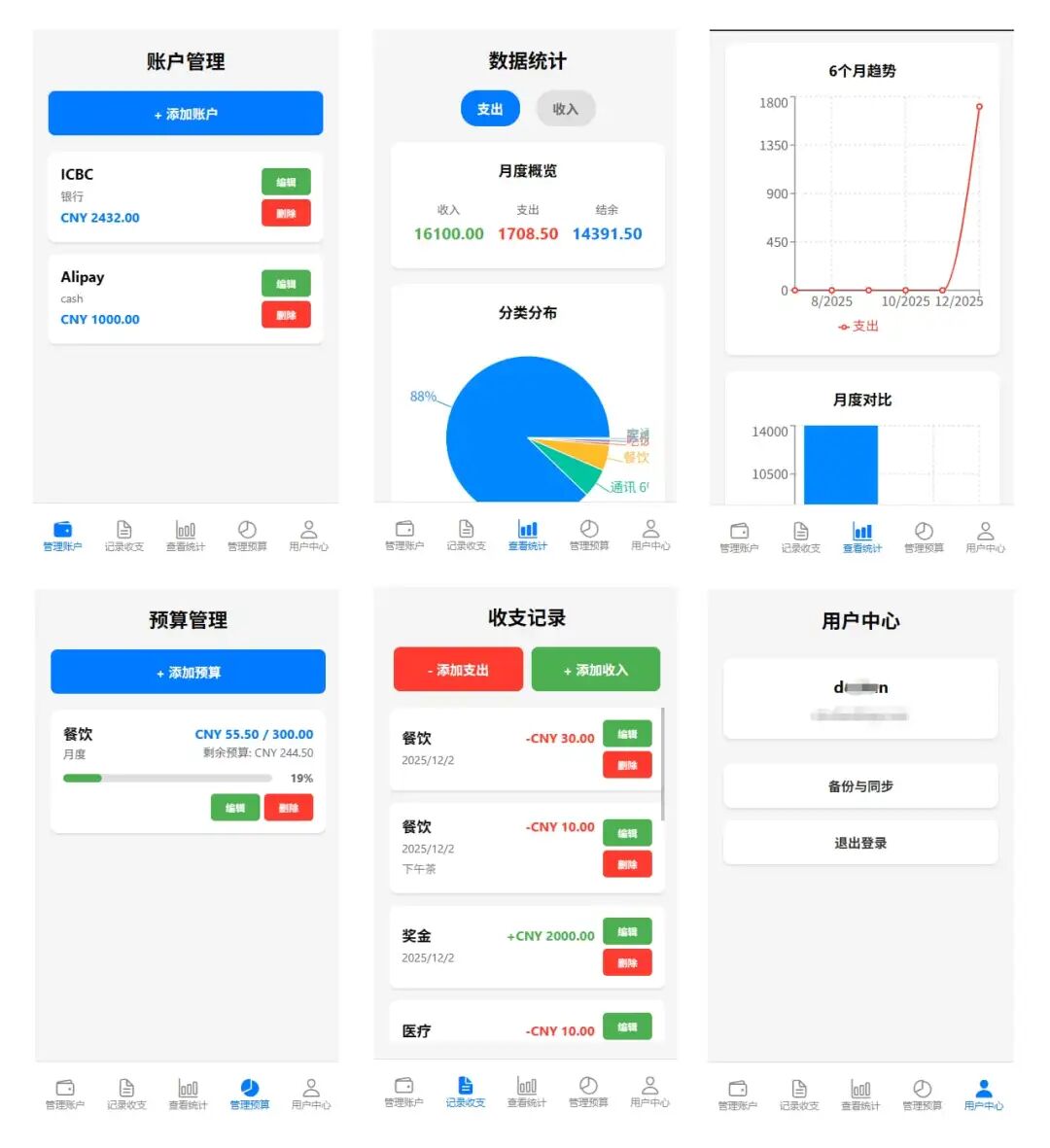
Overall it looks much better, and the data flow is connected end to end, but in fact there are still quite a few bugs, and plenty of interaction problems.
Suffice it to say it's good enough as a prototype, or for personal use. For commercial use, though, it's a long way off; I doubt anyone would pay for an app this bare-bones.
So polishing it to the point where it's genuinely easy to use would probably take several more hours of work.
Summary
All in all, SOLO mode really does let someone who doesn't understand code complete simple app development work.
But the token consumption must be staggering. If Trae ever charges for this feature, it will probably have to price it at the top tier.
As a programmer, I feel lucky: I can read the code instead of waiting for the AI to loop endlessly hunting for the problem.
Like Cursor's Agents, Trae's SOLO is meant to bring more people into Vibe Coding and development work. Its aim is to remove manual code edits and hand the whole process to the AI. It suits junior developers or product managers better.
After using Cursor Agents twice, I quietly switched back to the editor's working view; the same thing happened after this Trae SOLO review.
Still, this time the AI did complete the challenge, and I'm a little less resistant to AI writing all the code. Trae SOLO is a success after all.