From Taking the Blame to Getting the Boot, and Still Worth It

Right after I finished the previous post, "My One-Third of an Acre Is None of Your Business," I stopped grinding on it in my head and decided to take the C and start over. What I didn't expect was that not long after, without quite noticing how, I was out of a job — and truly on the road to starting over.
Was I sad? Personally, I don't think so. There was a bit of reluctance to leave, though; after all, I had worked in this familiar environment for five years, and getting along with most of my colleagues was a lot of fun.
As for taking the blame, I figure I have a fair amount of experience by now, so let me share some of it here.
I think there are three situations in which you can decide to take the blame.
Case One: Taking the Blame Helps You Grow
When you settle on a technical approach, nobody can really predict the consequences. I tend to pick the more aggressive option, and it's usually the one I personally like better; sometimes I can't even put into words exactly what is in it, and can only say it came down to intuition.
For example, five years ago, when I first started working on projects, Vue and React were both sitting in front of me, and I ended up with Vue, the framework fewer people were choosing at the time.

Vue was simple, but this was only shortly after Vue 2.x was released, and the overall ecosystem wasn't as good as React's. The UI framework, for instance, was just Element. Not many people on the market knew Vue, and my team members basically had to learn it from zero. So overall the difficulty was quite high.
But I still wanted to give Vue a try. So I picked a small project to validate whether Vue was feasible for development work. Going through the whole development experience with the team, things went smoothly and we completed the task. Then I talked with the technical lead and decided to move most of our frameworks over to Vue, quietly taking on the responsibility in case the project failed.
After that I hired a fair number of front-end developers with solid fundamentals (and only a little Vue experience), and we worked through the development problems step by step — dynamic routing, tab page caching, and so on. The biggest pressure was rendering large tables; in the end, through discussion, we reached an agreement on how tables would be used and that settled it for the time being.
And just like that, trembling with nerves, I standardized most of the department's projects on the Vue framework.
At the same time, the group's own technology selection independently landed on Vue, which also reduced the follow-up work of changing frameworks.
Taking the blame that time completed the team's overall framework transition, and my personal sense of achievement was full. So I think it was very much worth it.
Also, through one technology selection after another, taking the blame actually improves your own technical judgment. This is also where the intuition I mentioned comes from.
Case Two: Taking the Blame Speeds Up the Project
Very often, on any project there are people who think this is bad and that is bad. But if you ask them carefully, they actually can't say why.
At that point, if you analyze it and figure that with our approach you're 60–80% confident you can finish it, then we might as well take the blame ourselves.
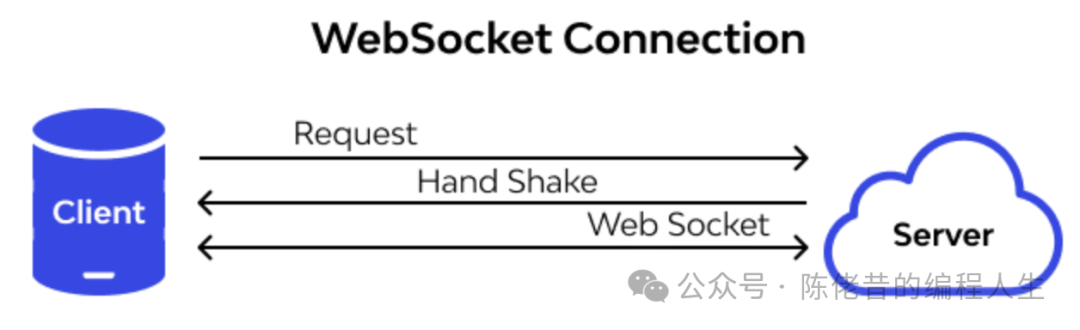
This situation usually comes up between front end and back end. For example, should an auto-refresh feature be done on the front end or the back end? Doing it on the back end would mean introducing web socket, which the system doesn't have. With no prior experience, we could run into all kinds of situations, and web socket also puts certain demands on the server. Our system is fairly complex — would it affect other backend services and cause unpredictable problems?
Given that, I decided the front end would handle this auto-refresh feature; it's just a looped call plus some constraints, and that solved it. Does the front end carry risk? Yes. It could be used in the wrong place, causing some API to be called constantly and taking down the backend service.
But this feature had been dragging on for a long time. Rather than keep hesitating, it's better to make a good plan and push the project forward as early as possible.
In this situation, taking the blame not only improves your own abilities as in case one, but also advances the project well — that's also very worth it.
Case Three: Taking the Blame Gives the Team Better Cohesion
After I became the front-end team lead, I noticed that my team members often didn't dare to do certain things (especially to refuse). So I gave my team members a green light: if a problem comes up, they can send the product manager to me.

For example, the front end and design had agreed on certain standards, and the cases those standards can't cover are often gray areas, often the difficult points, and even more often exactly what product wants to break through. If you agree to these requirements, it takes a very long time to develop them; if you don't, you may be holding back the project's user experience optimization. Team members were quite miserable when they received this kind of request.
At that point I had the team members refuse uniformly, and then had product come to me. The decision was made on my side, and I arranged centrally whether to make the change. If the overall impact is big, we definitely do the development, but the timeline must be discussed with product and stretched out appropriately.
When you take the blame for your team members, they can also go into development with peace of mind, the whole team develops an understanding, and the team's cohesion goes up.
So I think this is a blame very much worth taking.
Summary
There are three situations in which you can take the blame:
- If taking the blame for something helps you grow, then you should take it.
- If taking the blame for something can greatly speed up progress, then you should take it.
- If taking the blame for something gives the team better cohesion, then you can take it too.
Of course, to be on the safe side, I think taking the blame also has certain preconditions. That is, the team has some tolerance for error and supports you when you make mistakes, rather than coming down hard on you. And the people or teams you work with aren't the kind who only know how to shift the blame onto others.
Does this count as a heavy punishment? Actually, overall I think it's fine. When I think that I'm already past 40 and still not hurrying to do what I love, that really would be a great disrespect to time.
If you don't go out and walk around, you'll think this is the whole world
— Cinema Paradiso
If this place won't have me, there's surely a place that will!
And I wish everyone new development and new growth in 2024!