Two Big Trends in Development Languages: Rust Rewrites Everything, TypeScript Takes the Full Stack
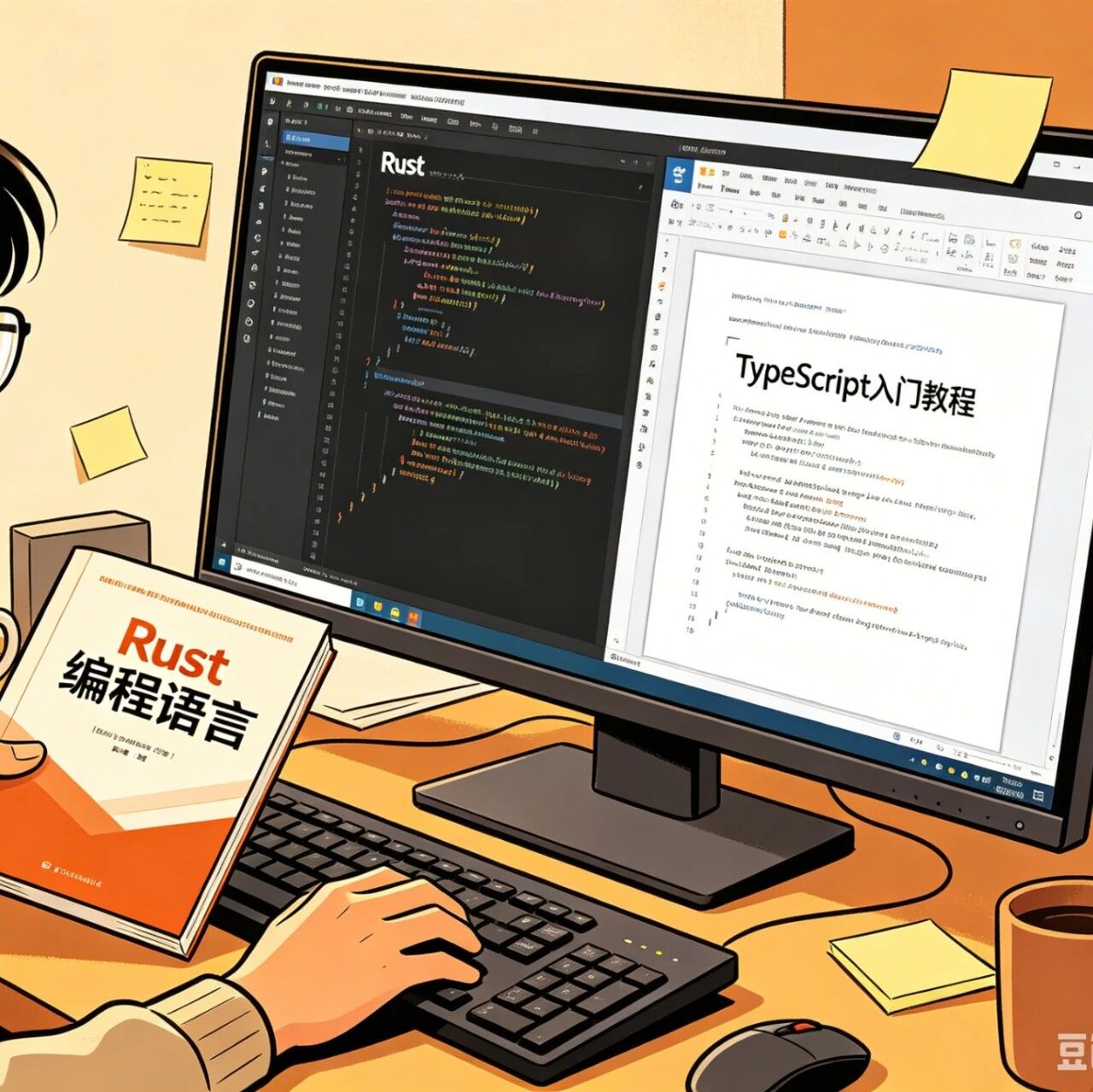
Something really interesting has been happening on GitHub Trending lately:
Popular projects are converging at high speed in two directions — either they get rewritten in Rust, or they get written in TypeScript.
## THE RUST WAVE: EVEN BUN HAS "DEFECTED"
Bun first made its name as a Zig project — founder Jarred Sumner hand-wrote the JS runtime, bundler, test framework, and package manager in Zig, and for a while it was considered the best advertisement the Zig language ever had.
But recently the Bun team carried out a large-scale Rust rework. You can see it in Bun's commit history: over this period the team migrated a large number of core modules from Zig/C++ to Rust.
The language breakdown in the Bun repo today: Rust is at 46.5%, ahead of Zig at 32.3%.
Why? The answer is simple: Rust's mature ecosystem, fast runtime, and excellent memory management have made it the top choice for people building tools.
Just look at how the toolchain has shifted in recent years:
| Tool | Original language | Current language | Reason |
|---|---|---|---|
| SWC | Go | Rust | Performance + ecosystem |
| Turbopack | - | Rust | Vercel chose Rust to rewrite its bundler |
| Deno | Go/TS | Rust | Core modules migrated to Rust one after another |
| ESBuild | Go | - | The only major tool still sticking with Go |
| Bun | Zig | Rust+Zig | Crushed on ecosystem maturity |
| Perry compiler | - | Rust | A new project went straight to Rust |
See the pattern? New tools choose Rust, and old tools migrate to Rust.
Go once looked unbeatable in the toolchain space (Docker, Kubernetes, ESBuild), but in the specific lane of "system-level toolchains," Rust's zero-cost abstractions and lack of GC are turning it into the new default.
## TYPESCRIPT: FROM THE BROWSER TO NATIVE
If Rust is taking over toolchains, what is TypeScript taking over?
TypeScript is taking over every platform.
An interesting project called Perry recently showed up on the GitHub trending list.
Open-source repo: https://github.com/PerryTS/perry, currently with 3k+ stars.
Put simply, Perry is a TypeScript-to-native compiler. It uses Rust (Rust again) to write both the compiler front end (based on SWC) and the back end (based on LLVM), and it can compile TypeScript code straight into a local executable.
I gave it a try and built a calculator that runs on both iOS and macOS.
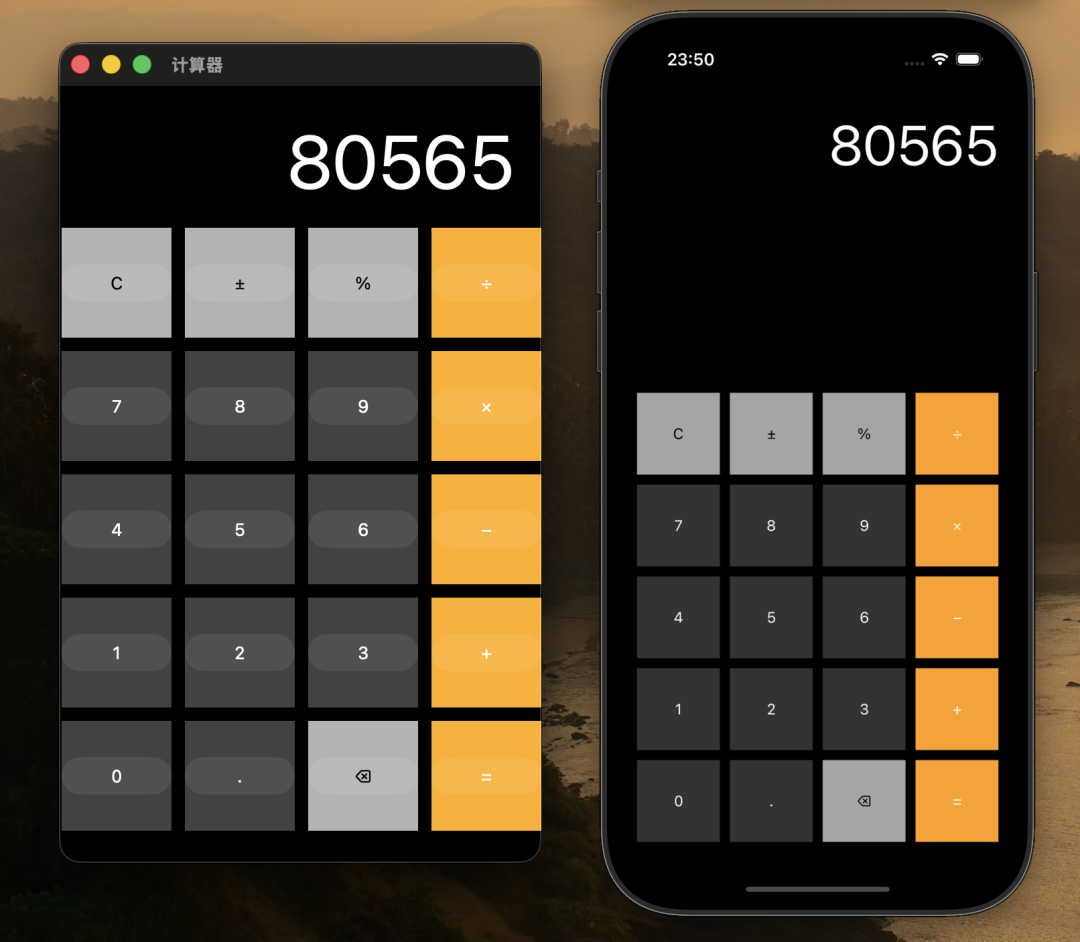
One line of code, compiled to every platform. None of Electron's hundreds of MB, none of the JVM's startup delay, none of Node.js's runtime dependency — the output is a single self-contained local binary.
Perry currently supports:
- Native GUI: SwiftUI (Apple), GTK4 (Linux), Win32/WinUI (Windows)
- React renderer: write React/JSX and compile it to native
- Database drivers: pure TypeScript drivers for PostgreSQL, MySQL, MongoDB, and SQLite
- Platform bindings: StoreKit, Google Play Billing, push notifications, WebGPU
From what I've experienced, Perry solves a long-standing pain point: frontend developers who want to build cross-platform native apps have had to make a painful choice between React Native (a performance compromise), Flutter (learn Dart), and Swift/Kotlin (learn two stacks). Perry lets you keep writing TypeScript and still get native performance.
Of course, Perry has a few real-world problems:
1. Limited AI training material
Perry is too new, and there isn't much discussion on GitHub yet. When you run into a problem, there is almost no Perry corpus in the AI's training data, so debugging mostly comes down to letting the AI retry over and over — it takes some patience.
2. HarmonyOS is not supported yet
Huawei's ArkTS is itself a customized variant of TypeScript (it strips out some dynamic features and adds declarative UI syntax). In theory, transpiling TS to ArkTS should be even simpler than TS to SwiftUI.
But Perry hasn't taken HarmonyOS development into account. If you need to ship on HarmonyOS, for now you'd probably have to write a compiler plugin yourself.
Still, the overall direction is right: TypeScript is turning from "the language of the browser" into "the common language of apps on every platform."
Faced with this trend, if you're a developer, my advice is: learn both Rust and TypeScript.
And when it comes to tech selection, it comes down to two sentences:
- Can a tool be rewritten in Rust? Rewrite it right away.
- Can the frontend/full stack be written in TypeScript? Use TypeScript for all of it.